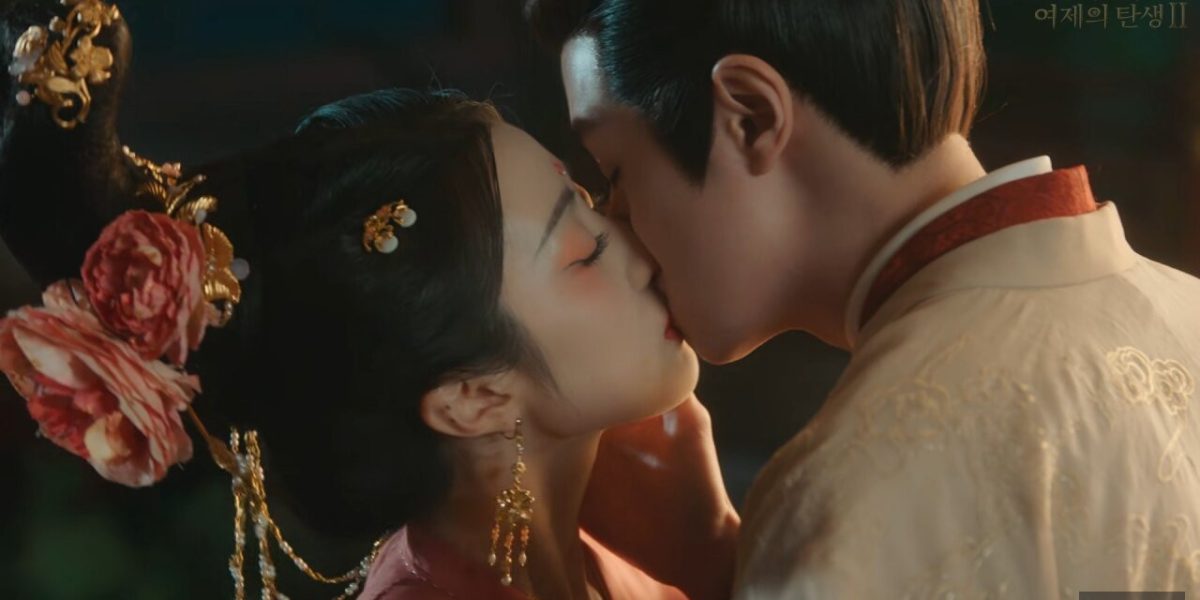
“Sungse Cheonha: The Birth of the Empress” has officially reached its conclusion. While the first chapter chronicled the survival of the newly enthroned courtier, Bi‑bin, the sequel propels her from mere survival to the apex of power, ascending to the throne as an emperor.
Developed by New One Studio and overseen by BAFTA‑winning producer Demi Guan, the game retains its identity as a premium, cinematic interactive experience available on PC and mobile. The two installments are less separate titles than two halves of a single, cohesive narrative, with the first part serving as a tutorial that seamlessly transitions into the second’s opening scenes.
Guan explained in an interview that the story splits at a pivotal turning point in the protagonist’s destiny, a structure that makes completing the first part almost a prerequisite for fully enjoying the second. The narrative, while grounded in real historical events, is meticulously woven with the director’s distinctive flair, balancing factual skeletons with dramatic tension.
The core theme of the second chapter is choice. Where the first focused on survival, the sequel explores growth—particularly the arduous journey of a woman ascending to imperial power—through a series of consequential decisions that shape the plot’s direction.
Unlike its predecessor’s romantic court intrigue, the middle and later sections pivot toward a full‑blown political drama, mirroring the genre shift seen in the Korean drama “Yaein Si‑dae.” This transition may feel jarring to fans who were enamored with the palace romance, but it broadens the narrative scope and stakes.
Visually, the game delivers a stunning tableau of imperial China, with opulent costumes and meticulously crafted sets that elevate the cinematic quality to the pinnacle of Chinese historical dramas. Even casual viewers will appreciate the dense, immersive aesthetic that has earned praise from dedicated fan communities.
The cast’s performances are a standout, with lead actress Evie Huang embodying authenticity and emotional depth. Her portrayal ranges from a naive young woman to a seasoned political strategist, drawing players into the story’s emotional core. In contrast, the male cast’s presence feels somewhat underutilized, a minor imbalance that does not detract from the overall impact.
The “rewind” mechanic has been refined, allowing players to backtrack from incorrect choices without the frustration of failure. This design choice enhances narrative tension by letting players explore alternate futures before converging on a single, definitive outcome.
However, the game’s emphasis on a single correct answer limits the true freedom of choice. The multi‑ending structure is more a guided puzzle than an open‑ended experience, a compromise that stems from the practical constraints of filming extensive FMV content.
After assuming the throne, players engage in a mini‑game that simulates imperial governance. While the concept is engaging, it feels more like a filler than a meaningful extension of the main narrative.
Externally, the game has sparked controversy over its portrayal of Northeast Asian history, raising concerns about cultural appropriation and national sensitivity—an issue that could shadow its reception in global markets.
From a directorial standpoint, the sequel is more ambitious, featuring more romantic scenes and a faster pacing that caters to mobile audiences accustomed to short, snappy content.
Despite these strides, the gap between promised freedom of choice and the actual gameplay experience remains, leaving some players disappointed. Yet, when viewed as an immersive drama with interactive elements, many aspects become more palatable.
The first part runs roughly seven hours, while the sequel stretches to about ten, combining 4K footage with dramatic storytelling to elevate FMV into a premium interactive experience.
Guan highlighted the game’s unique appeal compared to Western titles like “Detroit: Become Human,” emphasizing the visceral experience of palace intrigue and survival in ancient China.
By transferring proven FMV techniques from the studio’s BAFTA‑winning thriller “The Invisible Guardian” into an Eastern historical drama, the game expands the genre’s boundaries and offers a fresh narrative perspective.
Although the single‑answer structure is a limitation, the game’s significance lies in showcasing FMV’s emotional range to both Korean and global audiences, proving that high‑production, live‑action interactive storytelling can still thrive.
With its debut on the G-Star 2025 stage and a clear focus on the Korean market, the franchise’s future hinges on whether it can cultivate a dedicated fanbase that appreciates its blend of drama and interactivity.
In summary, “Sungse Cheonha 2” is recommended for fans of Chinese historical dramas, those who enjoy cinematic storytelling with interactive elements, and players who wish to see the full arc of a woman breaking barriers to become an emperor. Conversely, players seeking truly branching narratives, a romance‑centric experience, or those who prefer to jump straight into the sequel without the first part should approach with caution. Since the sequel’s narrative is built on the first part’s completion, new players are best served by starting with the original to fully appreciate the story’s depth.
❓ Frequently Asked Questions (FAQ)
What platforms is Shinsecheonha 2 available on?
Shinsecheonha 2 is available on both PC and mobile devices, offering a premium, cinematic interactive experience across these platforms.
How does the game's structure connect the first and second parts?
The first installment serves as a tutorial and narrative foundation, seamlessly transitioning into the second part’s opening scenes. Completing the first part is almost a prerequisite for fully enjoying the second, as the story splits at a pivotal turning point that carries over into the sequel.
What is the main thematic difference between the first and second installments?
While the first game focuses on survival and the protagonist’s initial challenges, the second installment centers on choice and growth, exploring the arduous journey of a woman ascending to imperial power and the decisions that shape that ascent.
News Source: Co





Comments
Be the first to comment.