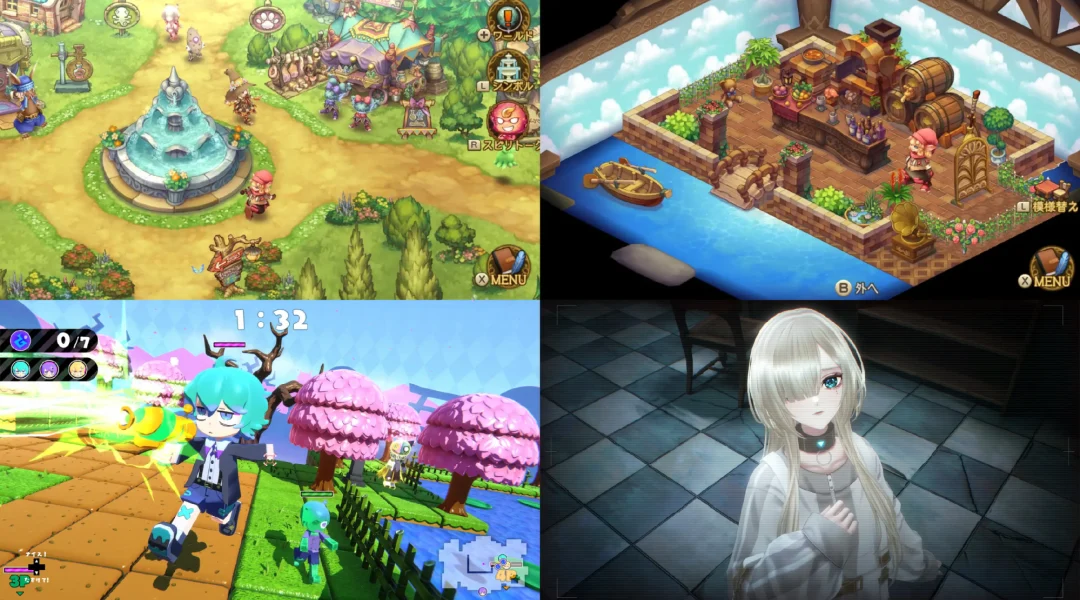
In a bold move that signals a new era for Japanese game development, MUTAN—the studio behind celebrated titles such as the Atelier and Final Fantasy series, as well as original IPs like the Goonie franchise—has broadened its horizons by acquiring Brownies, a studio renowned for its focus on wholly original projects, last May. This strategic expansion has positioned the combined entity as a versatile powerhouse in both contract and in‑house development.
Today, the two companies are rolling out a sweeping recruitment drive that transcends traditional departmental boundaries. Rather than posting separate job listings for MUTAN and Brownies, they will open a single application portal. Candidates will then be matched to the studio that best aligns with their skills, aspirations, and cultural fit—an innovative approach that promises to streamline talent acquisition while preserving each studio’s unique identity.
Both MUTAN and Brownies bring distinct strengths to the table: MUTAN’s seasoned expertise in high‑profile collaborations and Brownies’ passion for fresh, original storytelling. Together, they are seeking a diverse roster of talent across the creative and technical spectrum, including Game Designers, Programmers, Technical Artists, Character and Environment Designers, VFX and Motion Artists, Set‑Up Designers, 3DCG Generalists, and UI/UX Specialists.
In an exclusive interview, the companies’ leaders—CEO Hiroyuki Watanabe of MUTAN and Chairman Shunichi Kameoka of Brownies—delved into the rationale behind the merger, the nuances of their recruitment strategy, and the future direction of their joint venture. Their candid insights shed light on how the studios plan to leverage their combined resources to push the boundaries of interactive entertainment.
In an industry that has become increasingly cautious about recruitment, both MUTAN and Brownies are actively seeking new talent. While the prevailing narrative suggests that the era of contract work is fading, the decision to bolster hiring at this juncture may seem bold—and perhaps even risky.
Hiroyuki Watanabe (hereafter “Watanabe”) reassured us that the situation is under control, laughing, “It’s fine. Thanks to the variety of contract projects we’re handling, both MUTAN and Brownies are fully engaged in development, so there’s no issue at all.”
Kei Ioka explained that their company operates on a simple, all‑hands‑on‑deck model: when a major project comes in, everyone jumps in; when there’s none, the entire team feels the impact. “In that sense, it’s fortunate that we’ve been fortunate enough to secure work lately,” he said.
Watanabe acknowledged a staffing shortfall, noting that while larger studios are raising salaries to attract talent, smaller developers must highlight other appeals. “We’re in a tough era where we need to showcase unique strengths beyond pay to win the best people,” he added.
In the realm of small to mid-sized studios, the opportunity lies in recruiting the next generation of ambitious creators—young talent eager to take center stage and shape their own visions. For example, developers in their early thirties who are ready to step into directing roles or similar leadership positions, and who are driven to bring their own game concepts to life, represent the ideal candidates for these studios.
Brownies is a company that leverages its original concepts and unique worldviews to secure larger projects. While MUTAN’s original side competes on its own resources, Brownies distinguishes itself by operating in a low-pressure environment that allows for bold experimentation.
Watanabe echoed the sentiments of Kameoka, admitting that he, too, once operated in a one‑man show mode. However, once the team grew beyond forty members, interpersonal conflicts began to surface, and he started hearing voices asking, “Do we really have to tolerate this?”
Watanabe’s response was clear: “We’re here because we want to make games. Whether or not someone likes us is irrelevant. The real question is, are you making a game?” This statement was chosen to realign everyone toward a shared goal.
Mr. Watanabe outlines his ideal business model as a 90‑percent contract‑work, 10‑percent original‑content split. Yet he admits that the original side often swells beyond that target, sometimes reaching around twenty percent.
He explains that original projects are essentially risk‑taking experiments: they may or may not sell, and until they hit the market they generate no revenue at all. In contrast, contract work delivers a guaranteed income stream once the product is handed over.
When the proportion of original work climbs too high, it can erode the company’s financial stability. Although Mr. Watanabe strives to keep the ratio near ten percent, the excitement that builds toward a project’s final stages often leads to a surge in original development, especially when talent becomes available.
On the hiring front, Mr. Watanabe notes that even before merging with Brownies, MUTAN’s relatively low public profile did not deter applicants. The company’s reputation for producing solid original titles seemed to resonate with candidates, suggesting that a strong creative identity can be a powerful recruitment tool.
News Source: Automaton-media


daebak news! Interesting move by MUTAN and Brownies—merging recruitment coud really speed up hiring and spark fresh ideas between contract work and original IPs. Hope this means more polished tittles like Atelier and Goonie down the line.
ganbatte! MUTAAN and Brownies merging hiring is a smaart move—combining Atelier’s polish with Brownies’ originality could lead to some killer new IPs. Hope they keep that creative freedom intact while scaling up
Smart move by MUTAN and Bronwies! Merging recruitment like ths could really boost creativity—imagine devs from Atelier projects collabing with Goonie’s original IP team. Excited to see what they cook up. daebak news
This is a samrt move! Combining MUTN’s AAA experience with Brownies’ original IP focus could lead to some fresh, high-quality projeccts. Love that theyre keeping both studio identities while streamlining hiring
Nice to see MUAN and Browies streamlining recruitment—smart move for studios juggling big farnchises like Atelier/FF while pushing original IP. Curious if this’ll speed up dev cycles or just spread talent thinner.
smart move merging talent pols—this could relaly push creative boundaries for both studios. Excited to see what oriignal IPs and AAA collaborations come next! gomawo!
mUTAN and Brownies merging recruitment is smart—combining FF/Atelier’s polish with Brownies’ originality could be huge. But will they maintain creative freedom, or just pump out more contract work? Cautiously optimistic. mamma mia
Smart move by MUTAN and Brownies—merging recruitment while keeping studio identities intact could really bosot their original IPs and contract work. Excited to see what fresh talent brings to their next projects!
Smart move by MUTAN and Brownies—merging recruitment while preserving studio identities could raelly boost thier creative output. Love seeing studios like this invest in talent for btoh cotnract work and original IPss. daebak!