Greetings, fellow gamers! Evgeny Maloshenkov here, creature design lead at Frogwares, the studio behind the chilling world of The Sinking City 2. We’re thrilled to finally unleash this new chapter upon you, and we can’t wait for you to experience the terror that awaits.
A New Descent into Darkness
When we embarked on developing the sequel in 2023, our vision was clear: evolve the franchise while staying true to its core. The original The Sinking City offered an open-world Lovecraftian detective adventure. For this installment, we’re plunging headfirst into a semi-open-world survival horror experience, amplifying the emphasis on visceral combat, relentless exploration, and desperate survival – all drenched in that signature Lovecraftian dread.
Investigation remains a key element, but now it’s an optional layer for players who crave deeper engagement with Arkham’s mysteries. Those willing to delve into the secrets will be rewarded with invaluable knowledge, crucial resources, tactical shortcuts, and other vital advantages. This standalone story picks up after a mysterious flood engulfs Arkham, leaving behind a city teeming with barely sane survivors and unspeakable Eldritch abominations.
Meet the Monsters: A Creature Feature
Combat plays a pivotal role in The Sinking City 2, so we thought it would be fascinating to take you behind the design process of five of our most memorable enemies and how they transformed from initial concepts into the creatures you’ll encounter in the game.
Slither Worms and Abominations
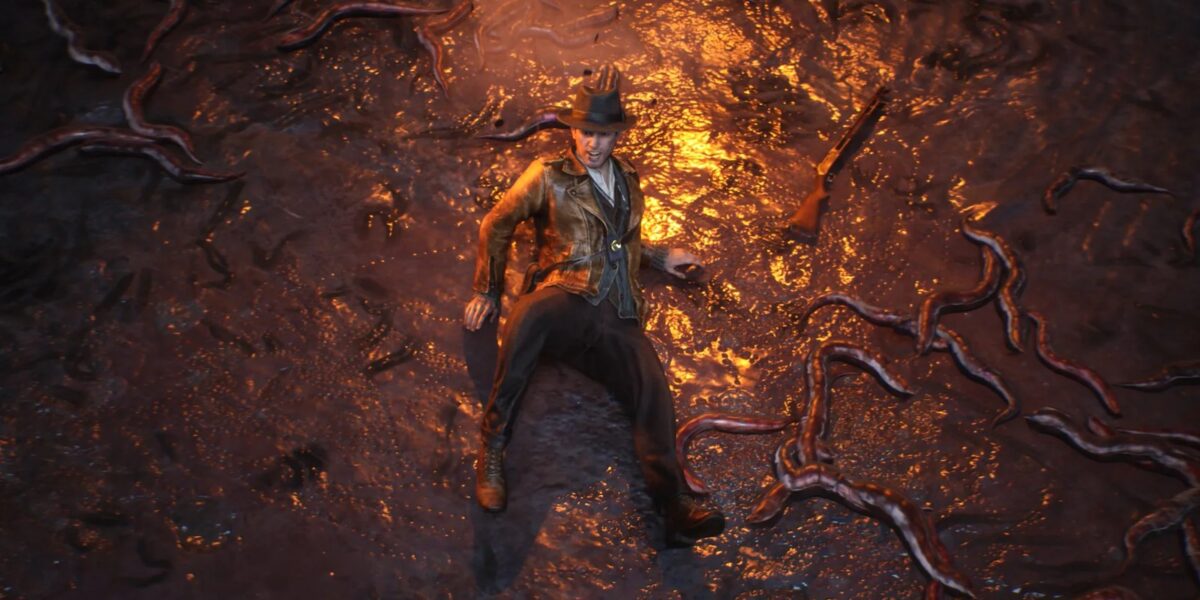
The Slither are among the most common threats lurking in Arkham, and we conceived them early on as something beyond “just another zombie.” We envisioned these as worm-like deep-sea parasites, ranging from finger-sized nuisances to monstrous worms long enough to wrap around an arm. Individually, they possess limited sentience, but when they coalesce into colonies, they form a terrifying hive mind capable of puppeteering human corpses in service of Yog-Sothoth.
Explore the depths of Arkham’s horrors.
One of our biggest design challenges was visualizing what a corpse looks like when controlled by something that has never before inhabited a human body. The worms exert indirect control, manipulating muscles from within, resulting in movements that are less than perfect. We strived to convey this through animations and behavior: dislocated shoulders, limbs moving erratically – a constant reminder of the unnatural force at play.
We also imagined the colony gradually “learning” how to operate its new body, leading to tangled legs, overextended arms, and strange practice movements. These ideas formed the foundation for the two stages of Slither infestation, with the creature’s appearance and behavior evolving as the colony grows stronger and more confident.
Stygian Harvester
Don’t let its size fool you; the Stygian Harvester is a dangerous foe. This creature relies on speed, numbers, and surprise attacks. It dodges attacks, sets up ambushes, and retreats into hiding when threatened, waiting for the opportune moment to strike again.
The Harvester moves using long human arms ending in hands, allowing it to squeeze through tight spaces, cling to its surroundings, and move in ways that feel distinctly wrong. It prefers darkness, where it can remain hidden and turn the environment itself into part of the ambush.
Acheronian Juggernaut
The Acheronian Juggernaut makes a triumphant return from the original game, and for good reason: we absolutely love its design! This creature is a grotesque mass of fused bodies, boasting six arms, six legs, and a massive maw stretching from head to torso. It can even swallow an entire human body and hold it inside while it slowly decomposes.
The Acheronian is incredibly powerful and resilient, although its size makes it one of the slower enemies. Originally found in Oakmont, this colossal Wylebeast has now made its way to Arkham. While we were already thrilled with its visual design, we completely redesigned its behavior and attacks for The Sinking City 2, making it a truly formidable opponent that will test your combat skills.
Lethian Revenant
Originally known simply as the Lethian, the Lethian Revenant is a human transformed into a humanoid Wylebeast. The infection leaves the creature visibly diseased and unstable, but its most disturbing feature is its head. It splits open vertically, allowing the Revenant to spit blobs of bacterial fluid at the player from a distance.
Its behavior reflects its physical condition. The Revenant appears to be in constant pain and avoids direct confrontation whenever possible, relying on ranged attacks and retreating behind cover. For The Sinking City 2, we rebuilt this creature from scratch. Its model and textures were completely remade, while some animations from the original game were reused and expanded. We also reworked its wounds to create a much more fleshy appearance, with torn skin, exposed muscle, and dark pus oozing from its body.
Deep One Raider
No Lovecraftian game would be complete without Deep Ones! These ocean-dwelling creatures are humanoid in shape but distinctly fish-like in appearance. They can survive on land for extended periods and are biologically immortal, dying only through violence or accident.
The Deep One Raider is a terrifying close-range opponent. It possesses immense physical strength and devastating claw attacks, but what makes it particularly unsettling is the way it moves. It can dodge in strange, inhuman ways, drop onto all fours, and suddenly burst into a sprint before knocking its victim to the ground.
Welcome to the Flood
We’re incredibly excited to announce that The Sinking City 2 is now available on PlayStation 5! The journey to get here has been challenging. Developing a game is difficult under normal circumstances, and doing it with a team in Ukraine while a war continues around us presented unforeseen challenges. There have been struggles along the way, but seeing the game finally in players’ hands makes us incredibly proud of what we’ve accomplished.
Thank you so much for reading, and we hope to see you in the flood!
Source: PlayStation Blog



Comments
Be the first to comment.