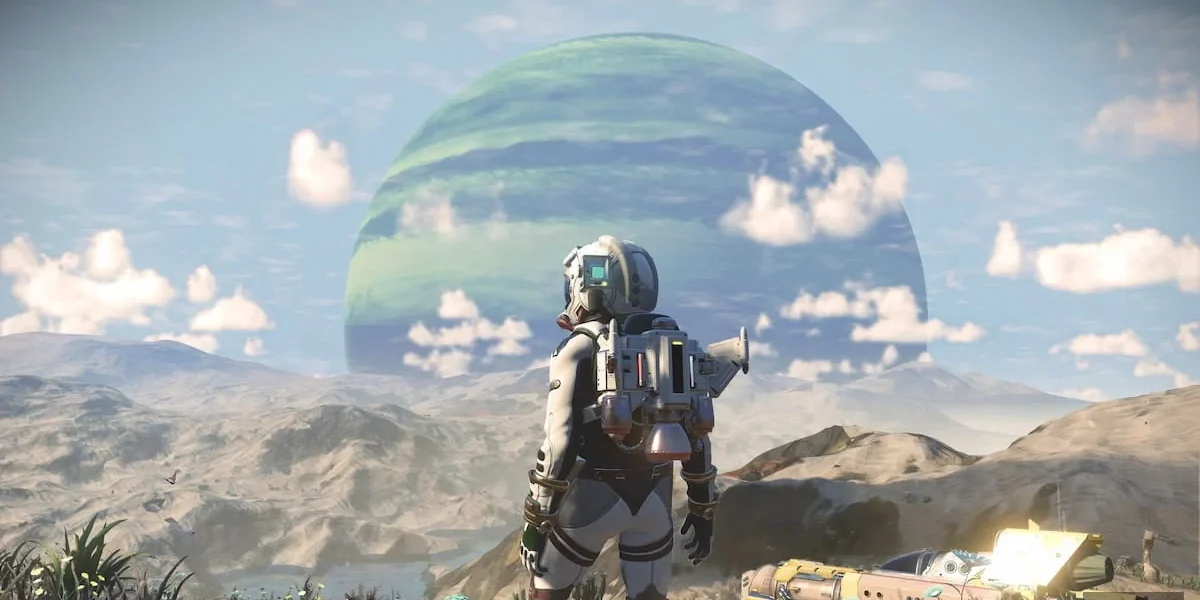
On August 9, 2016, a decade ago, No Man’s Sky entered the market to widespread criticism. The backlash stemmed largely from lead developer Sean Murray’s numerous ambitious promises that ultimately fell short.
Today, the narrative has shifted dramatically. Over ten years of continuous, free, expansive updates have turned No Man’s Sky into one of the most distinctive and content‑dense titles available, with Hello Games keeping all post‑launch additions free after the initial sale.
For a period, the game ranked among Steam’s lowest‑rated titles, garnering merely about 20% positive feedback. Players felt let down by the $60 purchase, citing a shortage of content and unfulfilled promises highlighted in trailers and Sean Murray’s public statements.
Features such as climate‑shifting planets tied to stellar proximity, authentic monsters and ecosystems, or manual interstellar travel were absent, leaving many announced elements unrealized.
Numerous announced features remained unimplemented, a fact that Hello Games openly acknowledged.
When No Man’s Sky finally hit the market, its creator, Alex Murray, kept the hype alive, but the reality that followed was stark. Within a single month, the launch cohort shrank by more than 95 %—from over 212,000 players to a mere 9,000—revealing that the initial buzz was largely illusory.
As the player base continued to dwindle, the community watched as the concurrent player count slipped to a mere 1,000. During this period, Hello Games went almost entirely silent across all social channels, leaving fans uncertain about the future and fueling speculation that the studio might shut down the game altogether.
Instead of engaging the community, the team chose to focus their energies on the game itself, delivering a series of substantial updates. By 2017, the release of Foundation, Pathfinder, and Atlas Rises had slowly attracted around 20,000 players, but the real turnaround didn’t begin until 2018 with the highly anticipated Next update.
Subsequent releases—Abyss, Visions, Beyond, Synthesis, and Living Ship—along with dozens of free updates, pushed concurrent players close to 100,000. By 2026, No Man’s Sky had not reclaimed its launch‑day peak, yet its journey from near collapse to a celebrated redemption story remains one of the most compelling narratives in gaming history.
No Man’s Sky now boasts an 85 % positive rating on Steam, a dramatic rise from the 20 % approval it garnered in 2016. Over the past decade, Hello Games has rolled out 42 major updates, each adding fresh content and refining the experience, which has steadily reshaped the game’s reputation.
With the franchise’s tenth anniversary looming, it’s highly likely that Hello Games will unveil a fresh milestone. The cumulative effort of these updates hints at a deliberate roadmap aimed at celebrating a decade of growth.
Sean Murray has spent the day deeply engaging with the NMS community, acknowledging the challenges the title once faced and highlighting how the company has turned those setbacks into a robust, almost hotel‑like ecosystem of features.
Looking ahead, there is genuine optimism that Hello Games’ next venture will replicate the transformative success of No Man’s Sky. A recent video, widely regarded as one of the best overviews of the game’s evolution, underlines this potential and is featured below.
❓ Frequently Asked Questions (FAQ)
What was the initial reception of No Man's Sky at launch?
At launch on August 9, 2016, No Man's Sky was met with widespread criticism and negative reviews. Many players felt the $60 price tag did not match the content delivered, citing missing features such as climate‑shifting planets, authentic monsters, and manual interstellar travel. The game even ranked among Steam’s lowest‑rated titles, with only about 20% positive feedback.
How has No Man's Sky evolved over its decade in the market?
Over the past ten years, Hello Games has released continuous, free, and expansive updates that have added a wealth of new content, features, and quality improvements. The company kept all post‑launch additions free, turning the game into one of the most content‑dense titles available and restoring player trust that had been eroded by the initial launch.
What influence has No Man's Sky's post‑launch strategy had on the gaming industry?
The sustained, free content strategy has set a new benchmark for post‑launch support, encouraging other developers to prioritize long‑term engagement over short‑term sales. By demonstrating that a game can thrive and maintain a loyal community through regular, no‑cost updates, Hello Games has inspired a shift toward more player‑centric, long‑term development models.
News Source: Destructoid






Comments
Be the first to comment.