For years, the semiconductor battlefield was framed as a simple story of containment—Western sanctions strangling China’s ambitions one export ban at a time. But beneath the headlines lies a quieter, more decisive truth that could reshape everything from your next PC build to the AI chips powering tomorrow’s games: Chinese memory giants are quietly loading up on Western machinery before it vanishes entirely.
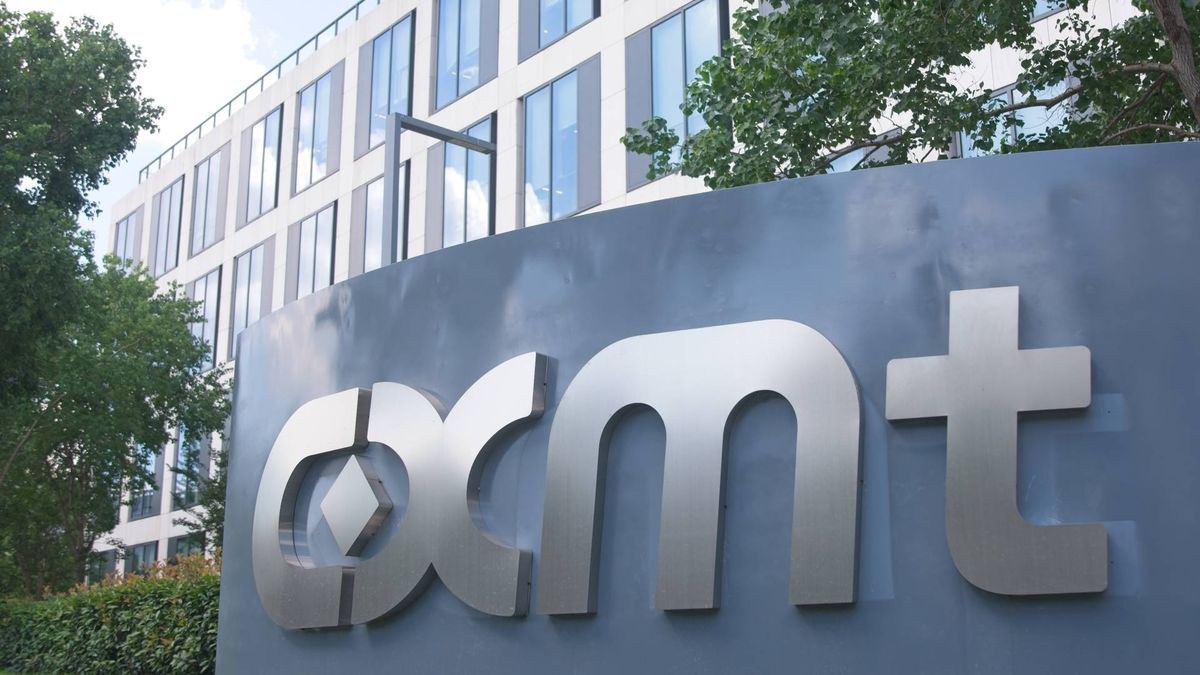
A fresh report reveals that memory manufacturers CXMT and YMTC have secured enough deep ultraviolet (DUV) lithography machines from Dutch powerhouse ASML to fuel roughly three years of planned expansion. In an era where a single export restriction can stall an entire foundry, this strategic hoarding is nothing short of a masterclass in supply-chain chess—and it carries profound implications for the hardware that gamers rely on.
The Anatomy of a Catch-Up Strategy
To understand why this matters to us, we need to separate myth from machinery. The narrative often suggests China has been entirely cut off from cutting-edge fabrication technology. In reality, much of its production capacity still runs on equipment purchased from Western firms—most notably ASML, whose lithography systems set the global standard for precision.
The machines in question are DUV units rather than the bleeding-edge extreme ultraviolet (EUV) tools that dominate headlines. DUV technology isn’t obsolete—it remains workhorse equipment used across the industry, including by titans like Samsung and TSMC, which already deploy low-NA EUV systems alongside older DUV lines for a wide range of chip production.
The significance lies in timing and volume. By front-loading purchases now, before export controls tighten further, these memory makers are buying runway. As one industry observer noted, the strategy is straightforward: “buying some ready-made from ASML will do the job.” In semiconductor terms, three years of guaranteed equipment access translates into sustained production capacity that competitors cannot easily disrupt.
Why Memory Matters to Gamers
The stakes extend far beyond national policy. China’s memory sector directly impacts the components inside every gaming rig and console. Companies like CXMT have already begun supplying RAM modules that ship here in the West, a concrete signal of how rapidly their technology has matured.
This isn’t just about raw capacity—it’s about market pressure. As domestic Chinese customers increasingly favor homegrown memory over Western alternatives, it squeezes companies like Samsung and SK Hynix on price and availability. For PC builders chasing the best value-per-dollar configurations, that competition can mean faster innovation and more aggressive pricing on DDR5 kits down the line.
The Domestic Dilemma
Here’s where the story gets complicated. Despite this ASML-backed expansion, there’s a parallel push—backed by both the Chinese government and industry leaders like Huawei—to develop indigenous chipmaking capability and eliminate foreign technology from domestic production entirely.
The problem is that domestic alternatives remain several years behind ASML’s productivity levels. This creates an uncomfortable dependency: China can accelerate its near-term plans using Western machinery, but long-term self-sufficiency remains elusive. The government’s dual strategy—stockpile now, build later—is a pragmatic acknowledgment of where the technology actually stands.
Industry Impact & Community Reaction
The broader implications ripple through the entire tech ecosystem that gaming depends on. Every GPU, CPU, and memory module traces back to lithography equipment capable of etching microscopic circuits onto silicon. When China secures a multi-year buffer of production capacity, it doesn’t just strengthen its own semiconductor ambitions—it alters global supply dynamics for everyone.
Analysts are watching closely whether this stockpile represents a genuine strategic advantage or merely a temporary reprieve. The reality is that the “east vs west” framing oversimplifies an intricate web of trade relationships, where even geopolitical rivals share critical manufacturing infrastructure. For gamers and hardware enthusiasts, the takeaway is clear: the supply chain wars will continue to shape availability, pricing, and performance for years to come.
As these memory makers convert their machine hoard into production capacity, one thing becomes certain—the next generation of gaming hardware may well be built on a foundation shaped by this very race. The chips are coming, and the competition is intensifying.
Frequently Asked Questions
Q: What exactly have Chinese memory makers stockpiled?
A: Companies CXMT and YMTC have secured enough deep ultraviolet (DUV) lithography machines from ASML to support approximately three years of planned expansion, according to a source with knowledge of the matter.
Q: Are DUV machines considered outdated technology?
A: Not entirely. While EUV systems represent the cutting edge, DUV remains widely used across the industry—including by Samsung and TSMC—for a broad range of chip production, making it far from obsolete.
Q: How does this affect gamers and PC builders?
A: China’s memory sector directly influences RAM availability and pricing. As domestic alternatives gain ground, Western memory makers face competitive pressure that can drive better value for consumers building gaming systems.
Q: Can China fully replace its reliance on Western chipmaking equipment?
A: Not yet. Domestic alternatives remain several years behind ASML’s productivity levels, forcing a dual strategy of stockpiling foreign machinery while simultaneously investing in indigenous capability for the long term.




Comments
Be the first to comment.