

At a Glance & Key Specifications
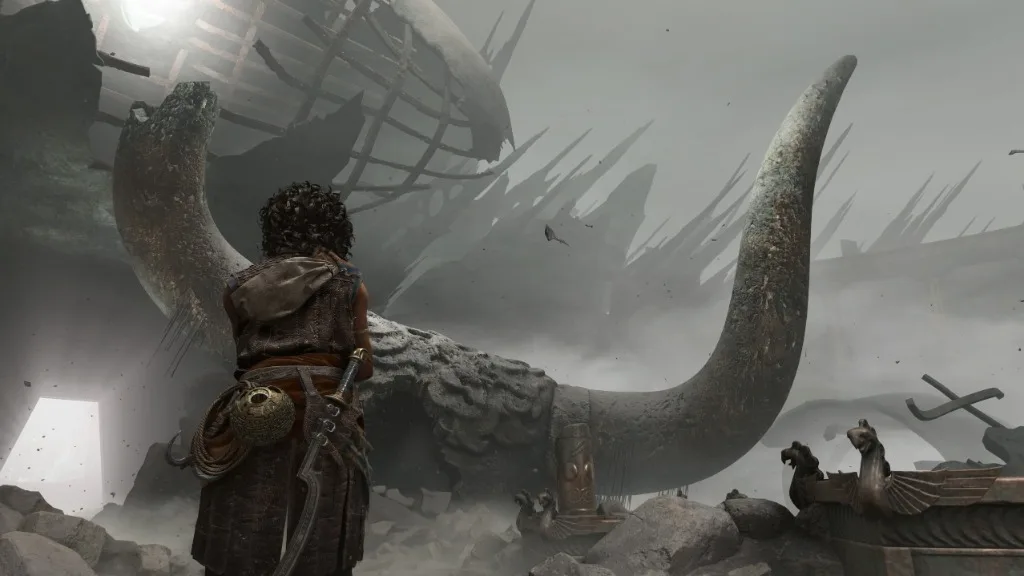
Sitting down to play Resonance: A Plague Tale Legacy, I’ll admit I carried a healthy dose of skepticism. Innocence and the soul-crushing finale of Requiem closed Amicia and Hugo de Rune’s tragic arc on such a raw, unforgettable note that any follow-up risked feeling like a needless cash-in. Instead of pushing awkwardly forward, Asobo Studio takes a brilliant step 15 years backward into the turbulent youth of fan-favorite smuggler Sophia. Trading the mud-soaked, plague-ridden marshes of 14th-century France for the sun-bleached limestone cliffs and suffocating subterranean catacombs of Crete, this prequel transforms the franchise’s core mythology without losing an ounce of its heart.

A Deeply Moving Story That Lands Every Emotional Beat
What immediately hooked me — and kept me glued to the screen late into the night — is just how naturally the narrative unfolds and how deeply emotional it gets. Asobo doesn’t rely on cheap melodrama or heavy-handed exposition. We knew Sophia in Requiem as the battle-hardened, fiercely protective sea captain with a sharp tongue and a loyal compass. In Resonance, we meet her in her early twenties: cornered by Venetian bounty hunters, haunted by the crew she couldn’t save, masking deep guilt beneath bravado and anger.
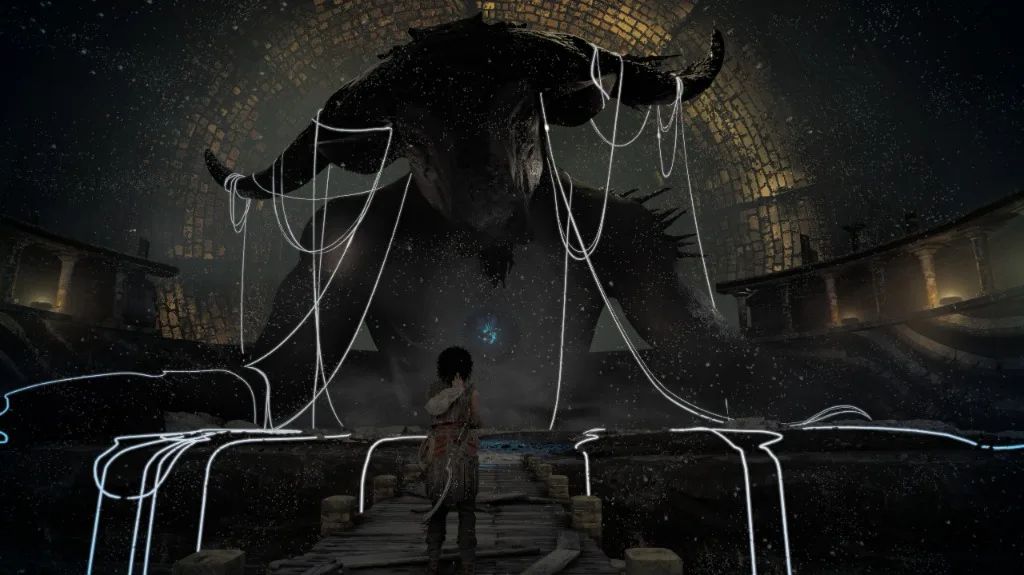
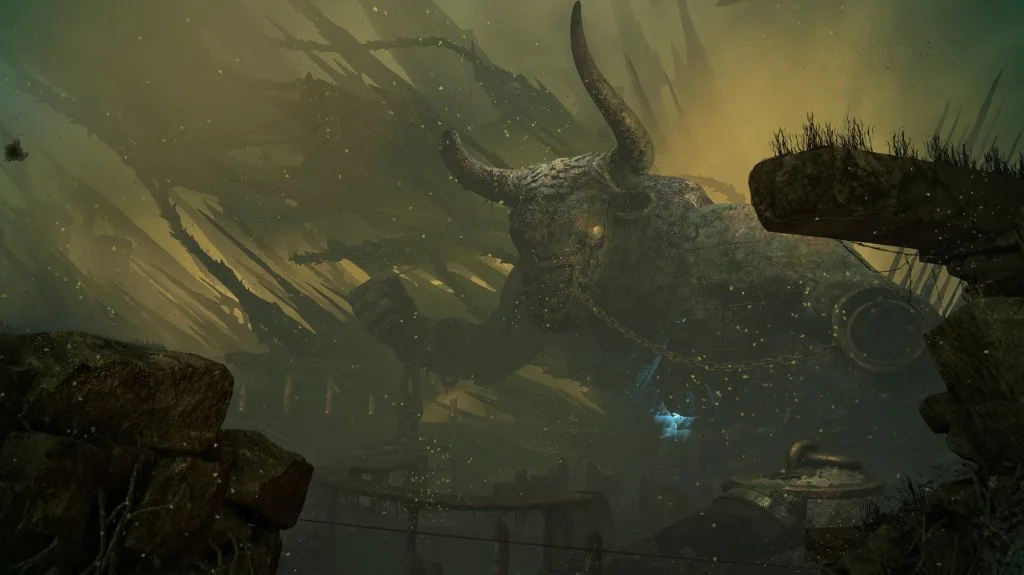
When her search for a stolen Minoan relic pulls her beneath the ruins of Knossos, the reveal hits like a gut punch. The ancient Cretan myth of the Minotaur isn’t treated as shallow fantasy — Asobo seamlessly weaves it into the lineage of the Prima Macula as a primordial Protector warped by centuries of isolation, sulfur, and grief. Watching Sophia’s own fractured loneliness mirror the suffering of that chained, towering creature creates a lump-in-the-throat connection that reminds you why A Plague Tale stands above almost every other narrative adventure on the market.
Puzzles That Hit the Golden Sweet Spot Between Easy and Medium
One of my biggest pet peeves in cinematic action-adventures is puzzle pacing. Too often, games either insult your intelligence with mindless one-button switches or slam the brakes with obtuse, pixel-hunting riddles that force you to tab out and check a walkthrough. Resonance nails the balance almost effortlessly.
Every puzzle sits comfortably in that sweet spot between easy and medium — engaging enough to make you feel clever, yet never tedious or frustrating enough to stall the story’s momentum. Armed with her bronze Minoan Refraction Sphere, Sophia channels shafts of Mediterranean sunlight and torchlight across ancient prisms to ignite trapped sulfur pockets, swing open flooded cistern gates, and carve safe passages through the dark. They flow like water, giving you welcome breathing room between tense stealth stretches without ever wearing out their welcome.
Let’s Talk Combat: Where the Fights Fall Short
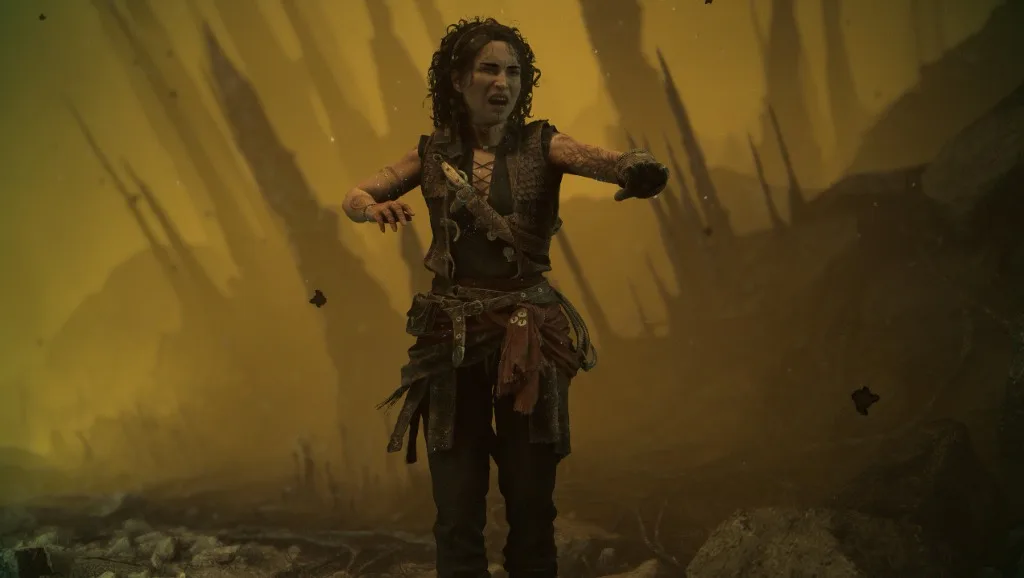
As much as the story and puzzles shine, honesty demands calling out the game’s weakest link: the melee fights feel underdeveloped and stiff.
In trailers, swapping Amicia’s sling for Sophia’s curved scimitar and timed parries looked like a thrilling evolution. In practice, Asobo Studio still feels noticeably out of its comfort zone designing close-quarters action. One-on-one duels offer a decent metallic clang when you nail a parry, yet the moment three or more armored Venetian guards corner you in a narrow limestone passage, the cracks show quickly:
- Cramped Camera & Lock-On Friction: Fighting multiple enemies inside tight subterranean ruins causes camera lock-on to snag on pillars and walls, turning tactical spacing into awkward guesswork.
- Shallow Move Set: After a handful of chapters, combat settles into an overly repetitive loop: parry, slash, dodge back, toss limestone dust. Without deeper combos or weapon variety, encounters start feeling less like exciting action and more like a speed bump between story beats.
- Predictable Enemy AI: Guards either rush in blindly or politely wait on the perimeter to swing one by one. Fortunately, stealth, grappling hooks, and environmental traps remain viable through most chapters, letting you sidestep clumsy brawls whenever you play smart.
Visuals & Audio: Sunlit Aegean Contrast Meets Subterranean Dread
Visually, Asobo’s proprietary engine remains an absolute showstopper. Crete’s coastal cliffs, swaying olive groves, sea spray, and weathered Minoan frescoes showcase razor-sharp photogrammetry that contrasts brilliantly against the choking yellow spore fog and gothic arches buried beneath the island. And composer Olivier Deriviere delivers another masterclass — trading medieval French strings for Cretan lyra, oud, lute, and rumbling bronze percussion that reverberate hauntingly through every chained cavern.
PC Optimization & Console Performance Benchmarks
Compared to Requiem‘s notoriously demanding launch, Resonance ships in a remarkably mature technical state. DirectX 12 memory allocation behaves cleanly without shader-compilation stutters, and both DLSS 3.7 and FSR 3.1 Frame Generation keep frame pacing remarkably tight across mid-range and enthusiast rigs.
| Resolution | हार्डवेयर / Preset | Upscaling | Avg. FPS | 1% Low | VRAM |
|---|---|---|---|---|---|
| 1080p Full HD | RTX 4060 / High | DLSS Quality | 74 FPS | 58 FPS | 6.8 GB |
| 1440p QHD | RTX 4070 Ti S / Ultra | DLSS Quality + FG | 108 FPS | 82 FPS | 9.2 GB |
| 4K UHD | RTX 4080 S / Ultra | DLSS Balanced + FG | 76 FPS | 61 FPS | 12.4 GB |
| PS5 (Quality) | Dynamic 4K Target | Native FSR 3.1 | 30 FPS | 28 FPS | Shared |
| PS5 (Performance) | Dynamic 1440p | Reconstruction | 60 FPS | 52 FPS | Shared |
Console players on PlayStation 5 and Xbox Series X should stick with Performance Mode for the 60 FPS target — barring rare dips to 52 FPS during heavy sulfur particle detonations, responsiveness remains noticeably smoother during stealth escapes.
The Good
- ✓ Organically woven, emotional story: Sophia’s grief and past tie seamlessly into the Macula lore.
- ✓ Well-paced easy-to-medium puzzles: Clever light-refraction mechanics that never stall progression.
- ✓ Haunting Minoan atmosphere: Stark visual contrast between Aegean sunlight and sulfur catacombs.
- ✓ Olivier Deriviere’s score: Authentic Cretan instrumentation elevates every quiet and terrifying moment.
- ✓ Polished PC launch: Clean DX12 frame pacing alongside responsive DLSS 3.7 and FSR 3.1 support.
The Bad
- ✕ Underdeveloped melee fights: बंद करें-quarters scimitar combat lacks depth and stumbles in group brawls.
- ✕ Tight corridor camera: Lock-on angles frequently snag when surrounded indoors.
- ✕ Minor console dips: Brief frame-rate drops inside dense sulfur spore chambers.
Frequently Asked Questions
Have thoughts, questions, or benchmarks on this topic? Join the discussion on our forums.
Join Discussion ➔






















बातचीत में शामिल हों