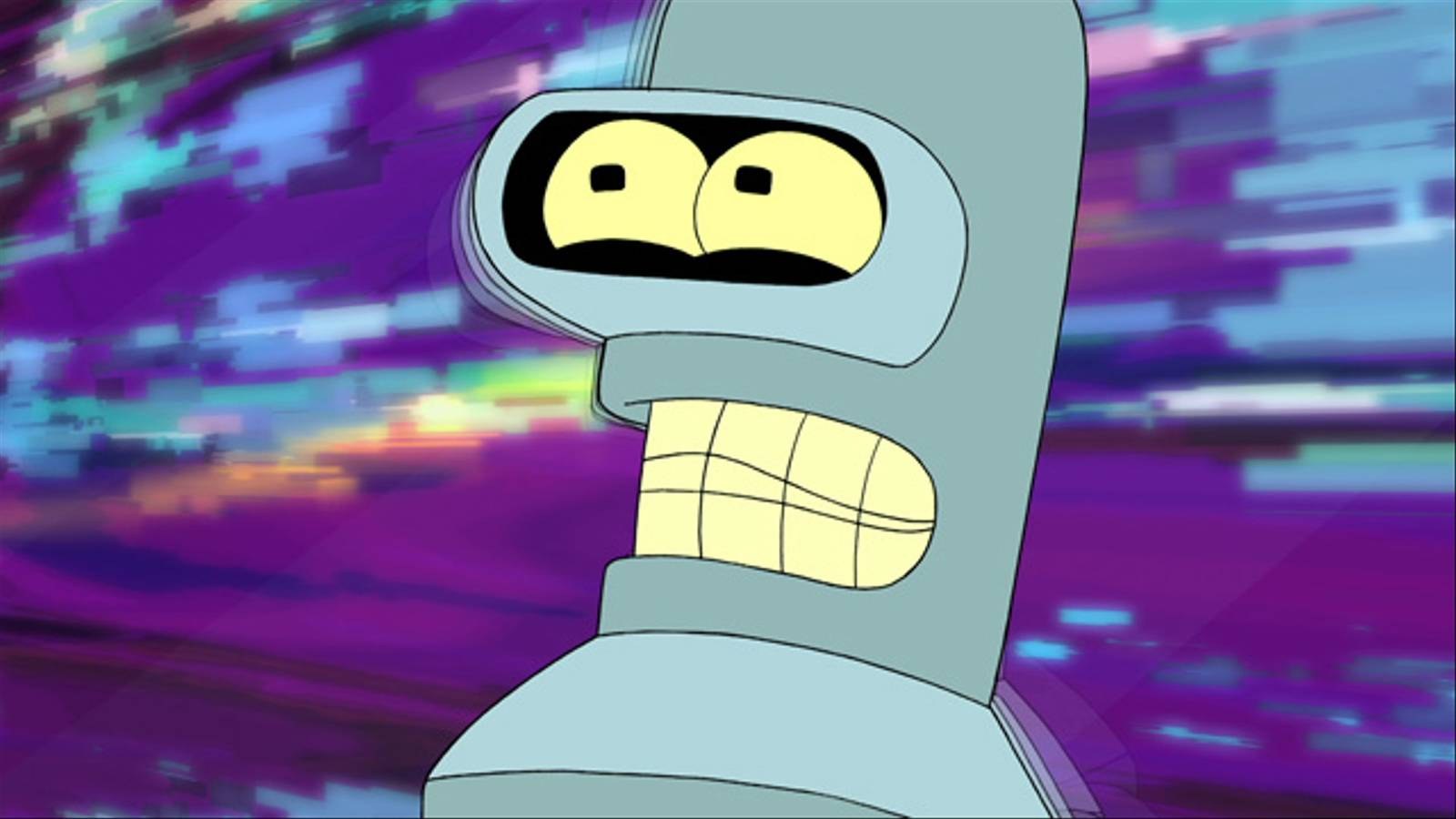
As David X. Cohen prepares for yet another series conclusion, the Futurama showrunner reflects on a peculiar distinction his long-running animated comedy has earned over its two-decade history: writing more potential finales than any other show in television. In an interview with Polygon last week, Cohen addressed the latest of these “last episodes ever,” titled “Final Ending: The Last Conclusion,” which premiered as part of Futurama’s upcoming slate of three animated specials slated for release next year.
“One thing we take pride in at Futurama is that we have a lot of practice writing last episodes ever,” Cohen said. Yet despite the episode’s name, this will not be the official ending of the series. Instead, “Final Ending: The Last Conclusion” was written as another potential series finale — the sixth such attempt in the show’s history.
The reveal comes with a caveat that has become almost customary for Futurama fans: despite its title and Cohen’s confident framing, this is not the official ending of the series. Three animated specials are scheduled to arrive sometime next year, one of which will presumably deliver what many expect to be the show’s true conclusion.
A Show Defined by Its Finales
Futurama has aired across four distinct eras: its original run on Fox spanning four seasons, four straight-to-DVD movies, four seasons on Comedy Central, and finally four seasons on Hulu. Throughout this history, the show has repeatedly found itself at a crossroads where cancellation seemed imminent, prompting writers to craft potential endings that would later be reversed.
This recurring pattern provides an interesting lens through which to evaluate each finale not merely as standalone episodes but specifically as conclusions. As Cohen noted in his Polygon interview, the show’s willingness to hedge its bets has become a defining characteristic of its storytelling approach.
“Overclockwise” (2011)
The first potential finale came toward the end of Futurama’s second Comedy Central season, when it was unclear whether any future seasons would be ordered. Writer Ken Keeler crafted “Overclockwise” as a “just in case” season finale centered on Bender.
The episode follows Bender (John DiMaggio) after his factory settings are overclocked by Cubert (Kath Soucie), transforming him into an omnipotent supercomputer. Mom (Tress MacNeille) takes Professor Farnsworth (Billy West) to court for voiding his warranty on Bender, while Leela (Katey Sagal) grows restless in her relationship with Fry and leaves Planet Express before eventually returning.
The episode ends with Fry and Leela reading a report prepared by Bender during his time as a god-like being, revealing their future. While the moment between the couple is touching, “Overclockwise” struggles as a finale because it fails to put its protagonist front-and-center. Futurama is fundamentally Fry’s show, and any true series conclusion must anchor itself on the hero rather than relegating him to a B-plot.
“The Devil’s Hands Are Idle Playthings” (2003)
This touching episode follows Fry as he attempts to learn the holophonor, a hologram-projecting musical instrument, in order to impress Leela. On Bender’s advice, Fry seeks help from the Robot Devil (Dan Castellaneta), who offers to trade hands with any robot in the world — only for the randomly-selected robot to be the Robot Devil himself.
Fry becomes an expert at the holophonor and writes an opera to impress Leela, though the Robot Devil ultimately reclaims his hands. The episode closes with a sweet, crude hologram projection made by Fry’s earnest yet sub-par skills.
“We thought there was probably a 50/50 chance [this was the final episode], so we kind of wanted to hedge our bets and not have everyone literally wave goodbye at the end, but to at least go out on a sweet note.”
David X. Cohen
While many online sources claim this episode was intended as a finale, showrunner David X. Cohen’s original DVD commentary reveals a more nuanced reality. The sweetness of the episode is undeniable, yet viewers can feel that the writers were hedging their bets rather than delivering a satisfying conclusion.
“Otherwise” (2024)
The most recent prior finale introduced the concept that the Planet Express crew may not always be the same versions of characters across the Futurama multiverse. This high-concept wrap-up helped explain away continuity errors while acknowledging events from other episodes, particularly the previous finale “Meanwhile.”

Though not a clip show, the episode dedicated significant time to housekeeping and references. While Futurama proved especially adept at playing with these ideas, the story itself felt like it lived in the shadow of “Meanwhile,” even sharing a similar title. As a result, it doesn’t fully stand on its own.
“Final Ending: The Last Conclusion” (2026)
The most recent finale, written by Margot Pyrceman, is very good despite its placement in this ranking. It follows Fry revisiting his first PG-13 movie with his brother in the late 20th century, only to be kicked out before the ending. Determined to learn how it concluded, Fry embarks on a journey to find what may be an entirely lost film.
Meanwhile, the Professor proposes a theory about wanting to know story endings as an evolutionary trait. Cohen explained this concept in his Polygon interview:
“It’s based on this idea I have that human beings actually evolved to need to know the ends of stories… So, I think that is an evolved need, like eating and breathing and reproduction, that humans have, to hear the end of stories.”
David X. Cohen
As opposed to more emotional entries on this list, “Final Ending” explores finales as a concept rather than delivering the most satisfying story. However, unlike the multiverse shenanigans seen across numerous sci-fi shows, Cohen’s musings feel like an entirely original idea born from having to write so many series finales.
“Into the Wild Green Yonder” (2009)
The direct-to-DVD era saw each of the four movies broken up into four regular-length TV episodes, creating structural issues with odd act-breaks and smaller stories designed to satisfy these demands. That said, Futurama proved itself a rare show capable of scaling between small stories and grand, end-of-the-universe narratives.
“Into the Wild Green Yonder” feels appropriately big for a potential finale. While it may not have been the perfect conclusion, the scale of its story felt grand enough to conclude the series — though fortunately it wasn’t, otherwise fans would never have received the show’s best-ever “last episode ever.”
“Meanwhile” (2013)
The crowning achievement among Futurama’s finales is “Meanwhile,” a tight 22-minute story that combines the heart of “The Devil’s Hands Are Idle Playthings,” the grandiosity of a Futurama movie, and a high-concept idea that lingers long after viewing.
After Leela experiences a near-death moment, Fry decides to propose. Meanwhile, Professor Farnsworth invents a “Time Button” allowing people to travel back ten seconds in time. When Fry breaks the invention, freezing time for everyone except himself and Leela, the two grow old together in a touching sequence within a frozen world.
The Professor eventually arrives, explaining he’s been tunneling through time searching for the missing button. He repairs it, restoring everything to just before the break — causing Fry and Leela to revert to their younger selves without memory of their frozen lifetime together.
The episode is beautiful and poignant while remaining funny and distinctly Futurama-y. It stands as the only finale that doesn’t feel like the writers hedging their bets in hopes of renewal. While the Professor undoes the events, he cannot erase how they made viewers feel.
Looking Ahead
A decade after “Meanwhile,” Futurama returned to television, yet it remained the one time the show ended and felt like it perhaps should have ended. As fans enjoy the show’s revival and anticipate next year’s episodes — including another finale — many believe the series will never be able to outdo “Meanwhile.” By the way subsequent finales acknowledge the episode, it seems the Futurama writers know this too.






















1 comment