
When publisher Krafton announced last month that a brand-new entry in its PUBG franchise was in development, it immediately excited fans of the battle royale genre and set a high bar for its team. The title, Ded.Net, is being developed by Madison—the Wisconsin studio also known as PUBG Madison—and takes the series’ core formula in an unexpected direction.
The result is described as a “grungy splatterfest” that applies a rogue-like structure to battle royale fundamentals. To understand how it works and what pressures come with carrying such a well-known name, I spoke with creative director Dave Curd ahead of Gamescom in Cologne, Germany.
“I was charged with spreading the gospel of PUBG to an audience that might not already appreciate it or like it or understand it,” Curd told me at Gamescom. “And that required breaking it down to its fundamentals. What is PUBG? Is it a blue zone? Is it the level three helmet? I think [it’s] desperate survival. I think it’s survival of the fittest, it’s dog eat dog.”

Curd said he had an inkling those same themes could translate to a different kind of game—giving rise to Ded.Net. At its foundation, it is a third-person battle royale shooter much like its predecessor: players are dropped into a map where an ever-shrinking circle forces them to fight over spoils for victory. But here, characters are contestants in what amounts to a violent gameshow, sending up the pulpy action and violence of 1990s media.
The game’s key twist comes from borrowing pick-three-style roguelite mechanics—where players choose upgrades from three options—as they play across multiple consecutive matches. After finishing one match, many of the power-ups and character-altering abilities selected can have a positive or negative impact on subsequent games.

“If you chop off your arms and replace them with giant blades in one match, you may have an available power-up that leans further towards melee attacks in the next one,” Curd explained. “But you could also be assigned injuries you need to work around: you might fail to reload on occasion, for instance, or find it harder to swim.”
Pushing into more challenging matches earns additional rewards as risks pile up—but cashing out may prove wiser. For Curd, this structure addresses the frustration factor common in many battle royales.
“You never want to go out on a loss, but after two or three losses you’re like, all right boys, it’s time to go to bed. In Ded.Net, you can still get wrecked but then, in the out-of-game, it’s like ‘oh my God, the akimbo ability came up. I can finally dual-wield those shotguns, maybe I can play one more match.'”
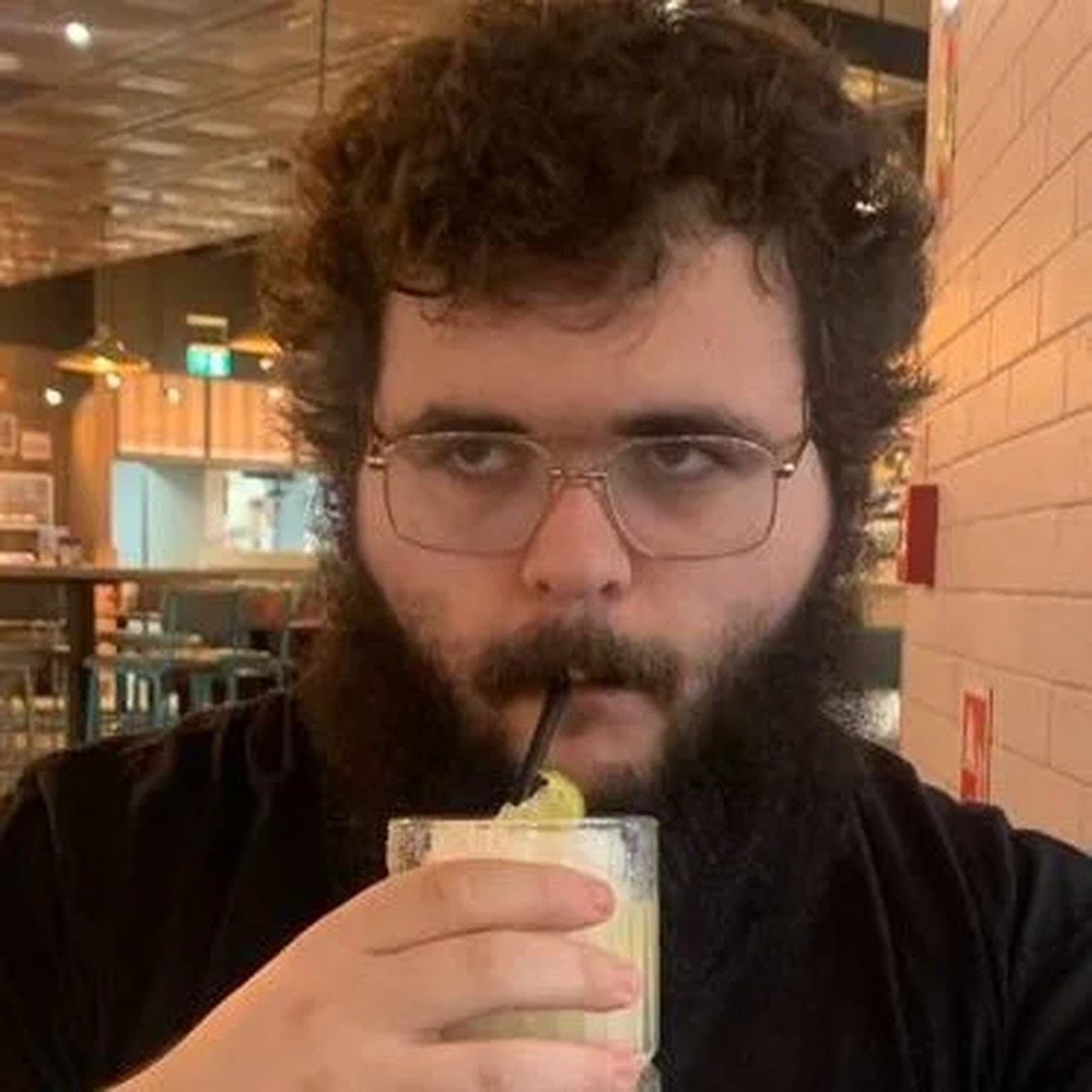
Dave Curd, creative director of Ded.Net
“That’s been the theory—that chasing your fantasy of fun takes the edge off losing,” he continued. “If you’re trying PUBG today, you’re going up against guys with potentially five to six thousand hours of play. Starting this new journey with fans together, where unfairness is baked into the experience purposefully, I don’t think those wins and losses are as crushing.”
Curd also wanted Ded.Net to capture PUBG’s strengths, particularly its ability to organically create “keystone moments”—where gameplay elements coalesce into thrilling climaxes that linger long after you turn off your computer. Winning a match while managing a mess of upgrades and injuries is different from an ordinary victory.
He was keen to stress that Ded.Net does not go as granular as other roguelites, rejecting incremental upgrades that add small bonuses like firing speed or stamina recharge.
“I don’t want players doing nerd shit. I don’t want our players doing math. I don’t want the mental load of trying to figure out how many stacks of aim-down-sight speed is optimal […] There’s never a case where my bullets hit twice as hard as your bullets. Our powers are very purposefully strategic gameplay opportunities.”
Dave Curd, creative director of Ded.Net
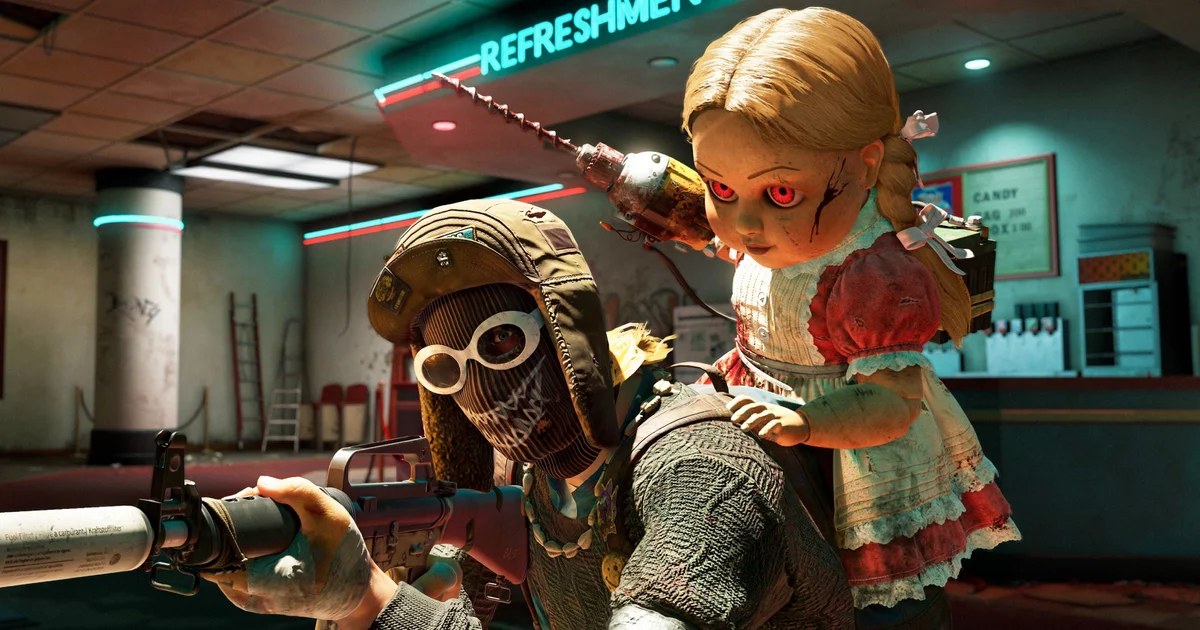
Many of those powers are surprisingly out-there for a battle royale bearing the PUBG name. The aforementioned sword arms, for instance, are gained by slamming your limbs into a broken pinball machine and stop you from shooting guns for the rest of the match. Players can also transform into a porcelain Chucky-esque living doll that jumps on allies’ backs to hitch a ride—and hops onto enemies, occasionally giggling to warn them something tiny is crawling over them. When leaping in for the kill as the doll, it steals items from whoever it attacks.
Curd said the team has worked carefully to ensure these wackier elements feel meaningful rather than gimmicky. Multiple players can be a creepy doll in the same match thanks to several attachment points, and if both an ally’s and an enemy’s doll are on you at once, there is reportedly a bespoke doll-fighting system.
“It might sound silly, but that’s sort of the point,” Curd said. “We’re in the entertainment business. If you’re not smiling, I’m f up. The whole development process when we’re considering what to put in the game has been: does it make us laugh? Is it an intriguing fantasy? Do we think about it the next day? If the answers are all yes, we usually try it out.”
The game also lets players hack certain objects for mischief—a truck can be set to explode after a set time. It reportedly features a dedicated seatbelt system too, meaning crashing a car at speed without one will fling you through the window.
Ded.Net is not the first game to attempt a Running-Man-style murdershow, but in a genre Curd describes as saturated with military simulations and family-friendly cartoonishness, it represents a refreshing spin. Asked whether battle royales are getting stale, he replied: “It’s mature. The big boys have found their lane. But that’s an opportunity. It’s evolve or die out here, and I’d like to keep pushing it.”
Given the prestige of the brand, I wondered whether the Ded.Net team is feeling significant pressure.
“Pressure is a privilege,” Curd said. “I’m incredibly fortunate to be in the position to be trusted with taking a swing with a very precious IP. And I think if you fixate on that, you will second-guess yourself and you will tie yourself in knots. My executive producer has been nothing but supportive; we’ve had a great working relationship. He told me, ‘Don’t worry about the numbers. Worry about pleasing the fans, worry about making something memorable.’ He’s interested in big swings.”
“We have always developed responsibly, we believe lean teams innovate,” Curd added. “So we’re not this big huge monster that has to work or everybody is in trouble and everybody’s in danger. We’ve thoughtfully—with the fans—incrementally been building something we think people will love.”
H1Z1 built the foundation of the battle royale genre, PUBG certainly shaped it into the form that remains hugely successful today. We would not have seen the battle royale craze of the late 2010s without it, and millions of people around the world wouldn’t know the brutal arena thrills of red loot crates, welding helmets, and the clang of steel frying pans.
Developer: PUBG Madison
Publisher: Krafton
Platform: Played on PLATFORM
Availability: TBC on PC (via Steam, PlayStation 5 and Xbox Series X/S)
Fortnite might have stolen the battle royale crown, but PUBG’s name still means something even today.























Join the conversation