

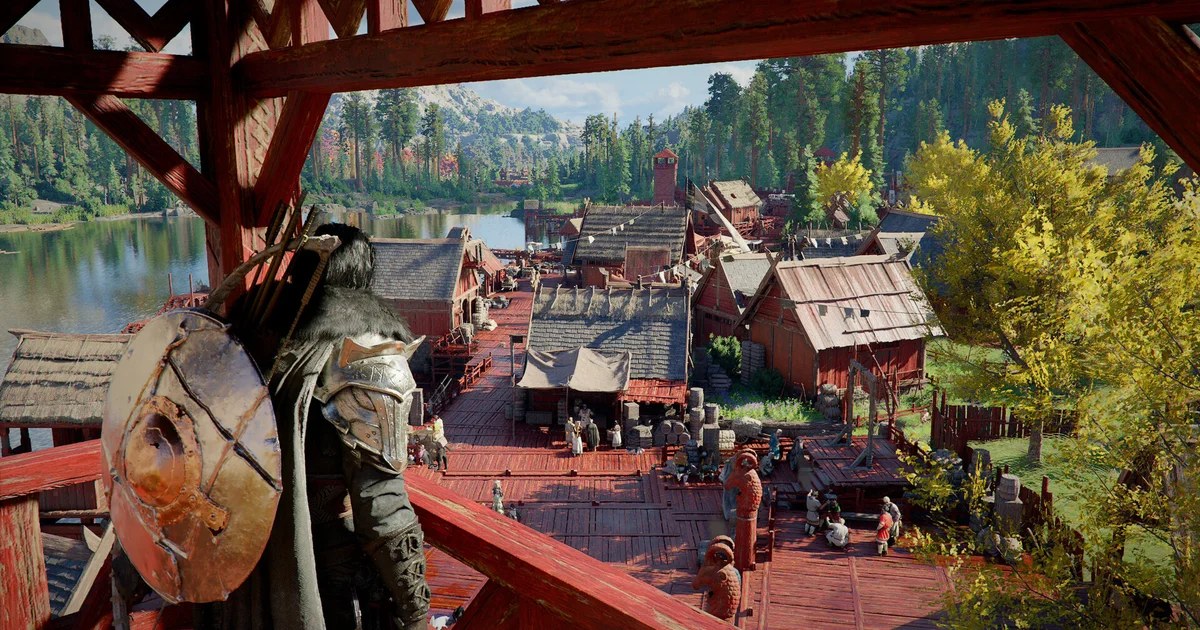
The European CEO of developer Pearl Abyss has suggested that the lower critic scores for Crimson Desert stem from reviewers not having sufficient time to play through the open-world title in full.
Lybee Park, speaking to The Game Business, said critics received a build “not the exact same version as the launch game” and were working under limited time. She argued that the studio’s appeal lies outside its main quest line.
“I do believe both parties have fair points, especially critics. They had to play the build that is not the exact same version as the launch game. They also had limited time. Usually, the classical approach when they review the game is following the main quest line. But our unique charm is spread all over our in-game world. All those tiny details that are hidden… I don’t think critics had a fair chance to explore those during the review period.”
Lybee Park, European CEO of Pearl Abyss
Park’s comments come as developer and publisher scores for Crimson Desert appear to diverge. Coverage from outlets including European Gamer suggested reviewers generally found it a solid game.

The observation that critics often face tight deadlines is not new, with many receiving review codes only days before launch. For a title of this scale, that can limit how thoroughly a reviewer can engage with its contents.
A critic’s role differs from that of an average player: the aim is to identify friction points and what works or does not, rather than simply enjoying the experience. Reviewers are attempting to convey how a game made them feel so readers can decide whether it suits them.
The distinction matters even for those who enjoy games frequently criticised by others. Titles such as Sonic Adventure 2, Final Fantasy 15 and Drakengard 3 may contain flaws, yet still offer qualities that appeal to their players.
A negative or middling review of a game someone likes does not make them wrong; it is simply the critic doing their job.























Join the conversation