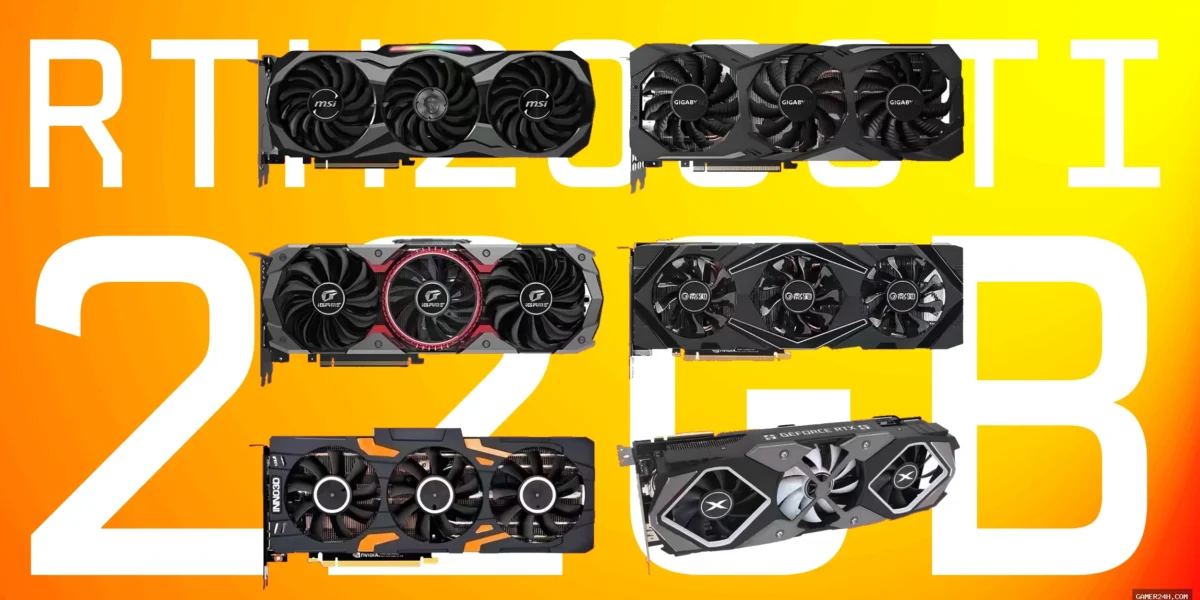
Since its debut nearly eight years ago, the GeForce RTX 2080 Ti shipped with 11 GB of GDDR6. Today, upgraded variants boasting double that memory are hitting the market as plug‑and‑play GPUs, primarily aimed at AI and compute tasks.
On eBay, vendors are listing blower‑style RTX 2080 Ti cards that have been retrofitted with 22 GB of GDDR6, priced at $499. The catch? The manufacturer is not specified; sellers name brands such as Gigabyte, MSI, ASUS, and Leadtek as potential origins, with the actual model shipped at random.
The upgrade swaps the original 1‑GB GDDR6 sticks for 2‑GB modules. With eleven active memory channels on a 352‑bit bus, doubling each module’s size lifts the total capacity from 11 GB to 22 GB. The process also involves reconfiguring the card’s memory straps so the GPU can detect the denser chips.
While the extra memory doesn’t boost the GPU’s raw performance— the TU102 still houses 4,352 CUDA cores and remains a Turing‑based chip—it enables larger AI models, datasets, and image‑generation tasks to reside entirely in local memory.
According to the vendor, the 22‑GB variants operate seamlessly with NVIDIA’s stock drivers—no bespoke firmware is necessary. The memory upgrade incorporates all the hardware and firmware tweaks required for the extra VRAM to be detected. This compatibility is a relief, especially since NVIDIA continues to back Turing cards with first‑day drivers and has even rolled out new DLSS support years later.
❓ Frequently Asked Questions (FAQ)
What is the difference between the original RTX 2080 Ti and the pre‑modded 22‑GB version?
The original RTX 2080 Ti shipped with 11 GB of 1‑GB GDDR6 modules, whereas the pre‑modded variants replace each 1‑GB stick with a 2‑GB module, doubling the total memory to 22 GB while keeping the same 352‑bit bus and 4,352 CUDA cores. The core architecture remains Turing, so raw graphics performance is unchanged, but the larger memory pool enables bigger AI models and datasets to fit entirely in local memory.
Are the pre‑modded cards compatible with standard NVIDIA drivers?
Yes, vendors claim the 22‑GB variants run seamlessly with NVIDIA’s stock drivers. No custom firmware or driver modifications are required, as the memory straps and chip configurations are adjusted to be detected by the GPU under normal driver operation.
How does the memory upgrade affect performance for AI and compute workloads?
While the GPU’s raw compute power stays the same, the doubled memory capacity allows larger AI models, datasets, and image‑generation tasks to be processed entirely in GPU memory, reducing data transfer overhead and eliminating the need to swap to slower system RAM. This can significantly improve throughput and reduce latency for memory‑intensive workloads, making the cards attractive for small studios and researchers on a budget.
News Source: Videocardz





Comments
Be the first to comment.