The Genre Genesis: From Modern Titans to 1983 Pioneers
Explosive grid-maze action, destructible soft-block excavation, and competitive 4-player party combat—from Super Bomberman, Bomberman 64, and Super Bomberman R to countless multiplayer battle-arena games—were born in July 1983 with Hudson Soft’s Bomberman (originally titled Bakudan Otoko / Bomb Man).
Created and programmed in machine code by legendary Hudson Soft director Shinichi Nakamoto (who famously coded the entire Famicom conversion in a marathon 72-hour coding session) for the NEC PC-8801, Sharp MZ-700, and MSX, Bomberman holds monumental historical importance as the foundational ancestor of one of the longest-running and most beloved multiplayer franchises in gaming history.
Platform Context & Gaming Environment: The Grid-Bomb Sandbox
Bomberman was published on cassette tape and floppy disk across early Japanese personal microcomputers. The screen displayed a top-down geometric grid arena featuring indestructible solid pillars spaced every two tiles, surrounded by destructible brick soft-blocks.
The player controlled the robotic protagonist using the keyboard or joystick, laying ticking round bombs with a single button and escaping behind concrete pillars before the bomb detonated into a lethal cross-shaped fire blast.
Popularity & Cultural Standing: The Birth of a Gaming Dynasty
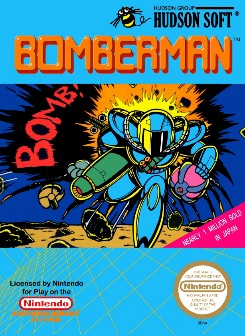
Bomberman was a massive hit in Japan, leading Hudson Soft to port and expand the game onto the Nintendo Famicom/NES in 1985 (where the iconic white-suited Bomberman design was introduced). It became one of Hudson Soft’s flagship franchises, generating dozens of sequels, anime adaptations, and tournament championships over four decades.
Gameplay Mechanics & Technical Innovations
Bomberman established the immortal gameplay grammar of the franchise:
- Grid-Based Bomb Placement: Drop ticking bombs on floor tiles; after a few seconds, the bomb explodes outward in four cardinal directions (Up, Down, Left, Right).
- Destructible Soft-Block Blasting: Blast through brick walls to clear paths and discover the hidden stage Exit Door and secret power-up tiles.
- Essential Power-Up Enhancements:
- Fire Power: Extends the blast radius of bomb explosions by one tile.
- Bomb Up: Increases the number of simultaneous bombs you can place on screen.
- Speed Roller-Skates: Increases walking movement velocity.
- Detonator: Allows remote manual bomb detonation via button trigger.
- Self-Blast Vulnerability: The explosion cross-fire is lethal to the player, requiring careful spatial corner positioning to avoid being caught in your own blast radius.
Historical Legacy & Archival Preservation
Bomberman is an immortal classic of Japanese video game history. By creating the explosive grid-maze mechanic and power-up progression systems, Shinichi Nakamoto launched a legendary franchise that has brought joy to generations of gamers worldwide.


