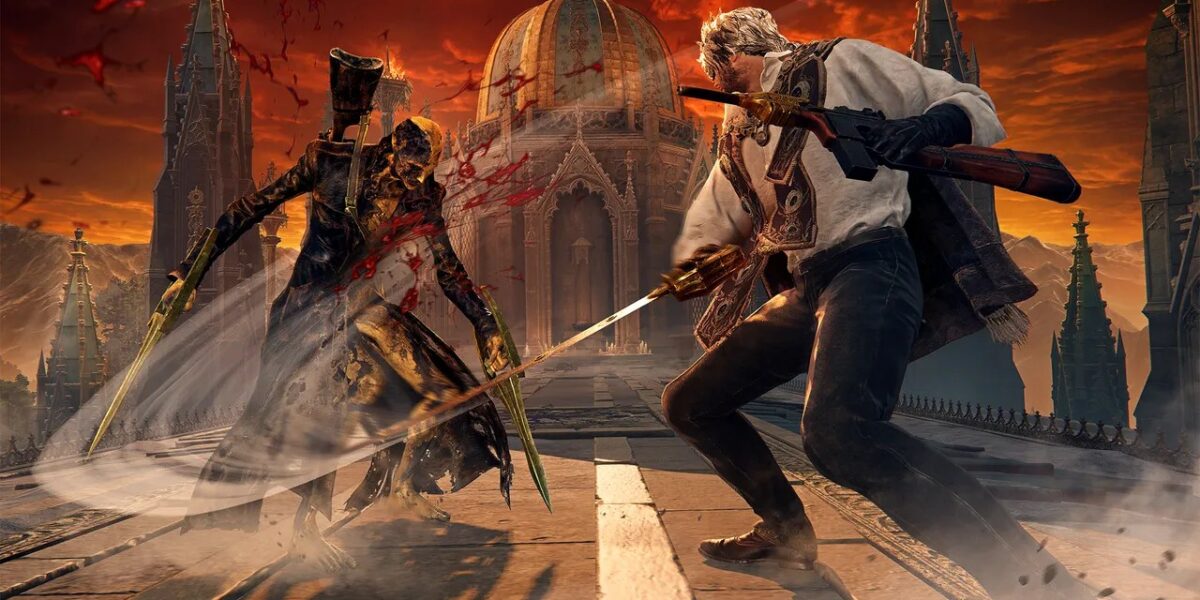
FromSoftware isn’t just innovating; they’re redefining what a multiplayer experience can be. While invasions have been a staple in the Souls games and we just came off of Elden Ring’s co-op twist with Nightreign, The Duskbloods is something entirely new. It’s more than just a PvPvE game; it’s a complex tapestry woven from challenging action combat, phase-based matches, and a compelling sense of mystery. After eight hours immersed in this Switch 2 exclusive, I can confidently say that The Duskbloods has the potential to be another landmark achievement for FromSoftware.
The Core Gameplay Loop
The build I played, identical to the network test, offers a glimpse into this intricate system. Eight players queue into matches as Bloodsworn, each with distinct weapons, ranged attacks, and special abilities. Every match unfolds in three phases, lasting approximately eight minutes each. The goal is to earn Virtue points to survive “The Culling.” While everyone progresses through Phase I, the bottom two players are eliminated after Phase II, and the bottom three are gone after Phase III. This leaves three players who advance to the “Moon Blood Bestowal,” a tense three-player PvP brawl under a blood-red sky.
Earning Your Virtue
Virtue points are earned through various means. “Commendations” reward players with the most PvE enemy kills (“Bloodfang Virtue”) or item collections (“Collector Virtue”). “Flame Virtue” is collected from purple embers on thrones within randomly spawning regions. “Repulsion Virtue” is awarded for defeating powerful computer-controlled enemies called Trespassers. Each Bloodsworn also has a unique objective, a “Sigil,” that rewards Virtue points upon completion.
My favorite method of earning Virtue involves “Rituals.” In the latter half of Phases II and III, sections of the map become designated Ritual Sites with multiple capture points. Capturing these points awards “Pledge Virtue,” but holding them requires a 10-second action button press, leaving you vulnerable to other players and enemies. Furthermore, other players can steal your capture point, taking away your Virtue and giving it to them. This creates intense King-of-the-Hill scenarios where PvP becomes crucial.
The element of surprise is key, as using your Bloodsworn’s abilities and map knowledge can quickly turn the tide. The push-and-pull dynamic this creates is thrilling. Respawning is frequent, so dying isn’t a permanent setback. While not mandatory, participating in Rituals offers high rewards but also carries significant risk. Goldstones boost Virtue gained from capturing points, while Redstones enhance kills of other players. Random map events can shake things up; one airstrike event allowed me to decimate anything within range, handy for keeping folks away from my precious Ritual spots.
The Final Showdown
Phases II and III may also get randomized map events to shake things up. One I kept getting allowed me to call in airstrikes from a zeppelin that lingers up in the sky, which can decimate anything within range, including yourself – definitely handy for keeping folks away from my precious Ritual spots. But some are opportunities to earn more Virtue, like one that rewards the first player to ring the bell atop the tallest building on the map. I was able to do this before anyone else by finding clever ways of climbing up the tower, and it was chaos having five others scrambling on the way up and taking potshots at each other.
I was able to consistently make it to the finale since I grasped the Virtue system quickly. But the three-player PvP brawl here at the end taps into a whole different skillset, and almost had us moving like it was a fighting game or one of those 3D arena brawlers. It can be overwhelming if you don’t know how to manage the chaos. There isn’t as much room for trickery in the closed arena, so it’s more about reading your opponents and really understanding what their specific Bloodsworn is capable of while keeping your head on a swivel, especially when everyone has a summoned NPC companion to fight alongside them. Each player has two lives so there are opportunities to make a comeback, but if you can’t hang with the speed and demand of head-to-head PvP, it can be rough going. That’s the Souls-style challenge, but damn is it rewarding when you pull it off in the end.
Progression and Customization
In-match leveling is crucial for staying competitive. Gaining HP and stamina, and building out your Bloodsworn’s capabilities is essential. Failing to defeat enemies at a solid pace can leave you underpowered later in the match. You gain EXP fairly quickly and end up around level 17 or 20 by the final phase, but you gotta be grinding.
Each Bloodsworn gains a new special ability at level 12, which are vital for tough battles. Trang Lanh’s cloaking ability is useful early on, but summoning a massive snake to deal AoE damage and knockback at level 12 is game-changing. The noble skeleton Senator Samir Patres can transform into a dinosaur that homes in on targets, chews them up, and tosses them aside.
We had access to six Bloodsworn (10 are planned for the full release), each distinct enough to form a unique approach. Sniper Layla emphasizes long-range shots, while Albert is an all-rounder. The pajama boy Bloodhand Jan sports an axe and mage-like fire spells. However, I can’t tell you how many times the armor-clad chicken man named Zork knocked me on my ass with his jetpack rushdown.
Furthermore, these characters have their own Sigils you can activate before a match. As I mentioned earlier, these are objectives unique to them – for example, Trang Lanh’s Sigil makes you seek out a certain player as a target and the Senator lets you propose to another player in hopes they’ll accept. This is one area that director Hidetaka Miyazaki told me he’s paying attention to with regards to player reception as these are one of the wild cards that can affect the typical cadence of a match.
Movement and Combat
The gameplay feel is comparable to Bloodborne or Nightreign, not quite Sekiro in terms of speed. You have a block, a parry with a perfect-timed block, and a sonic howl that will stagger enemies when executed in the parry window. You can then bite the neck of staggered enemies which causes big damage and heals you, and when done to weaker enemies, will turn them into minions who follow you around the map to fight for you.
NPC companions called Kin are crucial for success. You’ll find glowing symbols across the map to summon Kin who will accompany you for the rest of the match – depending on their type, they can either fight alongside you or provide support. They level up independently and are another way to create “a build” of sorts throughout the match. If they die, they’re on cooldown before returning.
The World of Lowanro City
While we only played one map, Lowanro City, it evokes the grim Victorian vibe of Bloodborne. Foggy swamps, a towering cathedral, dirty city streets, crowded rooftops, poisonous sewers, and a bridge – these interconnected regions offer varied gameplay. Markers indicate perks like Flame Virtue, weapon perks, or Kin EXP. Efficient navigation is key to success.
Verticality is a highlight. No double or triple jumps, but a quadruple jump and an airdash make movement fast-paced. Hopping across rooftops, boosting up to floors above, and airdashing isn’t typical for Souls games, but it works well for quick navigation. The movement feels like a character-action game like Devil May Cry at times, especially during PvP battles.
The Camera Conundrum
My main complaint is the lock-on targeting system. Souls games haven’t always been great with camera angles and targeting, exacerbated by this game’s speed and human players. The camera whips when a targeted player charge-jumps, and sometimes doesn’t read enemies. Smarter camera behavior or on-screen readability would help during chaotic PvP.
Matchmaking and Invasion
Matchmaking will account for skill level, but veteran players can assist newcomers. Story progression won’t rely solely on winning matches, so PvE aspects are still rewarding. An Invasion-style option where you drop into ongoing matches to fight other players is planned.
A Complex and Rewarding Experience
The Duskbloods is a complex game, but once you grasp the rules, matches flow naturally. It’s built for those who crave discovery, enjoy FromSoft’s unexpected nature, and thrive in meta-game environments. Balancing this complexity with accessibility will be key to its success. Miyazaki said he wanted to build something he would enjoy, and I can’t wait to see what The Duskbloods becomes when it actually comes out.






Comments
Be the first to comment.