

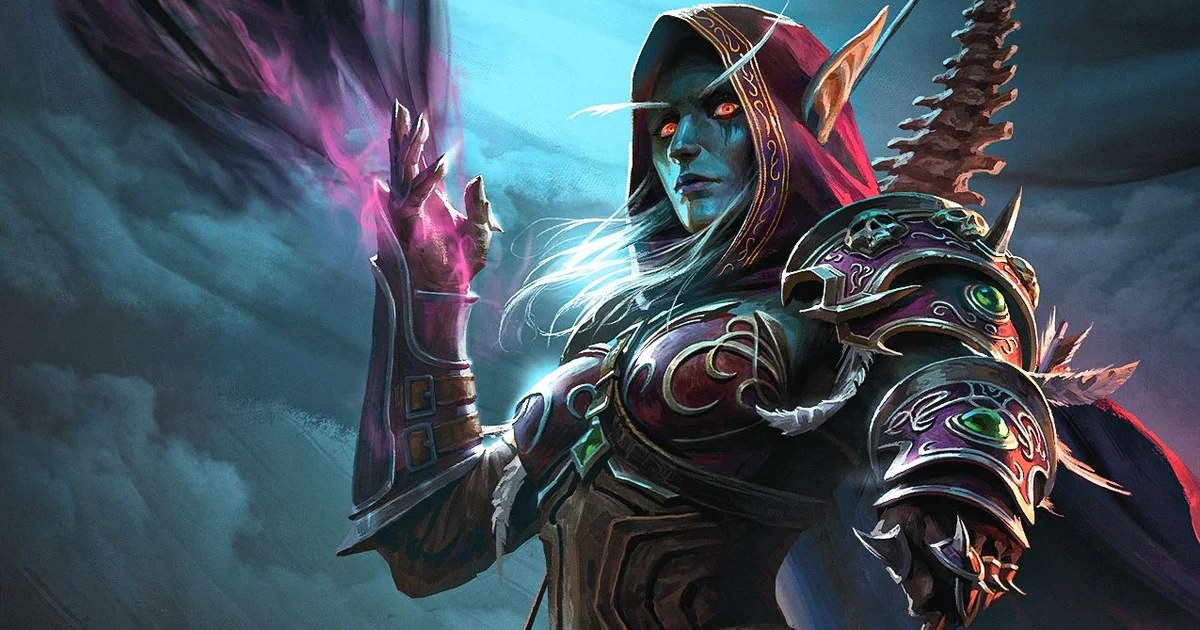
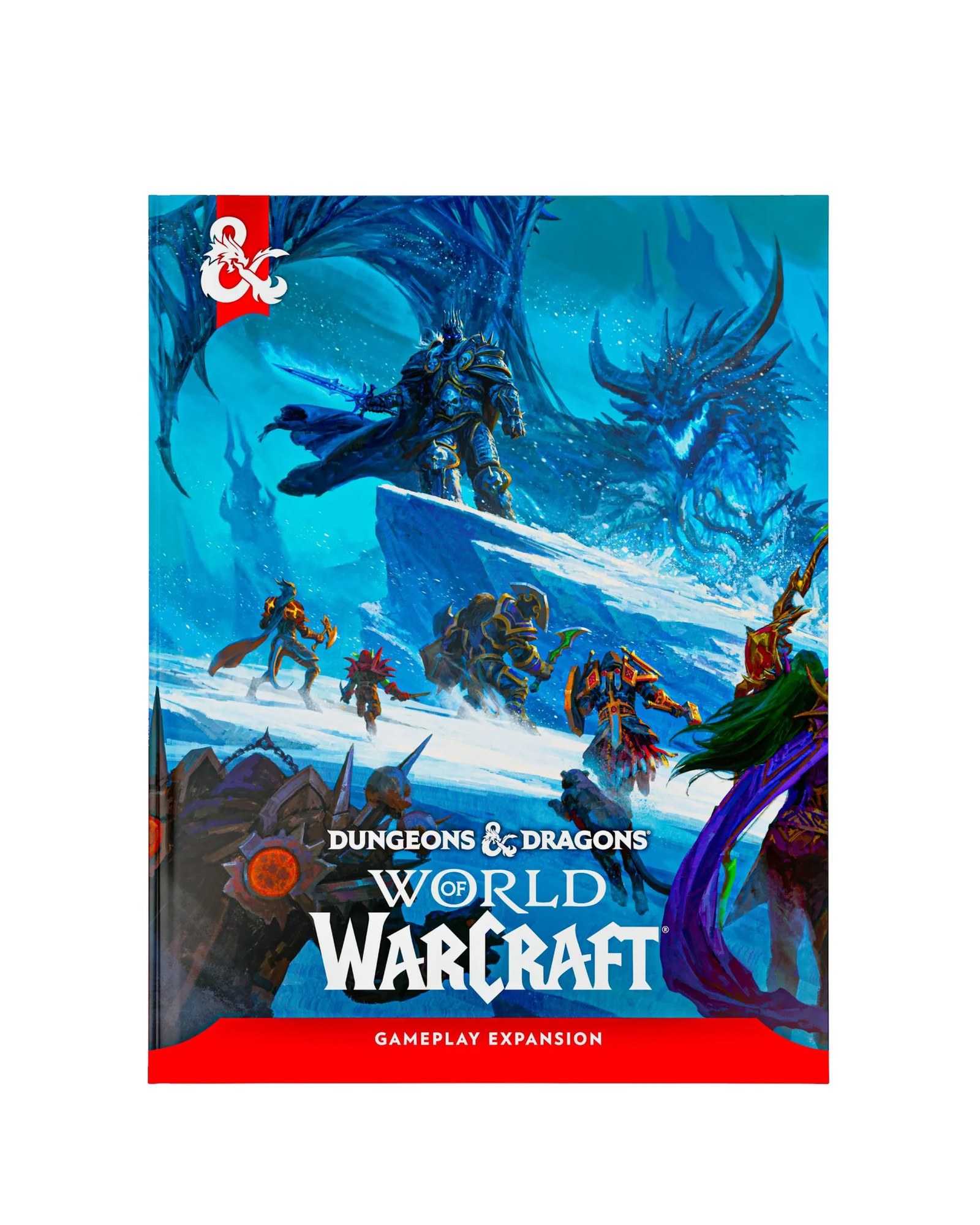
Wizards of the Coast has unveiled the full contents of Dungeons & Dragons: World of Warcraft, a 256-page hardback release scheduled for November 17 that adapts Blizzard’s massively multiplayer online universe into the tabletop roleplaying system. During a press briefing ahead of the book’s launch, principal designer James Wyatt made clear that this is not a mechanical copy of the video game but rather an interpretive adaptation designed to capture Azeroth’s atmosphere while respecting how D&D actually plays at a table.
The publication arrives 17 November and packs in substantial new content for players who want to run campaigns inside Blizzard’s fantasy world. It introduces sixteen playable species drawn from World of Warcraft, alongside dozens of new subclasses, sixty spells, adjusted crafting rules that bring professions into the fold, and a complete rendering of the continent of Azeroth, expansions included.
Azeroth Reimagined for the Table
The book brings sixteen playable races from World of Warcraft to D&D. Five of them—the Dwarf, Elf, Goblin, Human, and Orc—already existed within the system, while eleven new additions are being introduced: the Dracthyr, Draenei, Earthen, Forsaken, Haranir, Mechagnome, Pandaren, Tauren, Troll, Vulpera, and Worgen.
New subclasses round out the character options. Players can take up the Oath of the Ebon Blade or the Oath of the Holy Paladin, with the former designed to evoke the Death Knight class. Additional choices include the Demon Hunter Ranger, the Shadow Domain and Discipline Domain Cleric, and the Path of the Elements Barbarian. Several existing subclasses have also been updated for this setting, including the Sashbuckler Rogue, the Path of the Spiritual Guardian, and the Warrior of Mystic Brews Monk.
Beyond characters, the book delivers sixty new spells and reworks crafting to introduce professions into D&D. Perhaps most significantly, it recreates the entire continent of Azeroth for exploration, complete with some of the franchise’s most iconic figures. Players can encounter Burning Crusade boss Illidan, the fallen paladin turned Lich King Arthas, and Sylvanas, alongside reinterpreted versions of famous dungeons such as Dire Maul, Scarlet Monastery, Ragefire Chasm, and Shadowfang Keep.

A Paraphrase Rather Than a Translation
Wyatt was emphatic that the book deliberately avoids replicating MMO mechanics. There are no raids in the traditional sense; iconic raid-dungeons like Onyxia’s Lair have been scaled down into encounters for small groups of four or five players rather than the twenty-to-forty-person parties found on screen.
“The joke I always like to make is that most of us have enough trouble getting five people together around a table, let alone forty.”
James Wyatt, Principal Designer
The designer also stressed the importance of framing. “I’ve been trying to shift my thinking to talking about ‘paraphrase’, because we’re not doing a word-for-word translation of any WoW game mechanics,” he said. “The game you’re sitting down at the table to play is still D&D in the setting of World of Warcraft, and with a lot of the trappings of World of Warcraft, and hopefully evoking the feel of World of Warcraft without making you do the kinds of math calculations that an MMO is doing on your computer chip all the time that you don’t have to think about.”
This philosophy reshapes several familiar systems. Players will not grind bosses for tiered loot or equipment, since D&D combat takes much longer and avoids piecemeal armor sets. The game also discards resurrection mechanics like the Spirit Healer, which Wyatt argued would break immersion if players fought the same recurring characters repeatedly. Even the iconic Horde versus Alliance divide is left to the Dungeon Master to emphasize rather than being hard-coded into the rules.
A Busy Year for World of Warcraft
The tabletop release lands during a particularly active period for Blizzard’s flagship franchise. Blizzard revealed WoW: Forever at BlizzCon recently, and launched a closed beta for it, which was met with enthusiasm from the community. The title returns the game to its Classic origins while adding never-before-seen content, intending to chart its own course going forward.
For tabletop players, Dungeons & Dragons: World of Warcraft offers a chance to explore Azeroth through conversation and improvisation rather than grinding. As Wyatt put it, the goal is to let players interact with characters, creatures, and abilities they recognize while opening up the world in new ways. “You can talk to anybody that you meet, you can interact with anything you see,” he said, describing what he called the beauty of a tabletop game.























Join the conversation