In the early 2020s, Damian McCarthy was a name largely unknown outside niche horror circles. Then came a string of increasingly acclaimed films from this Irish filmmaker. First, there was
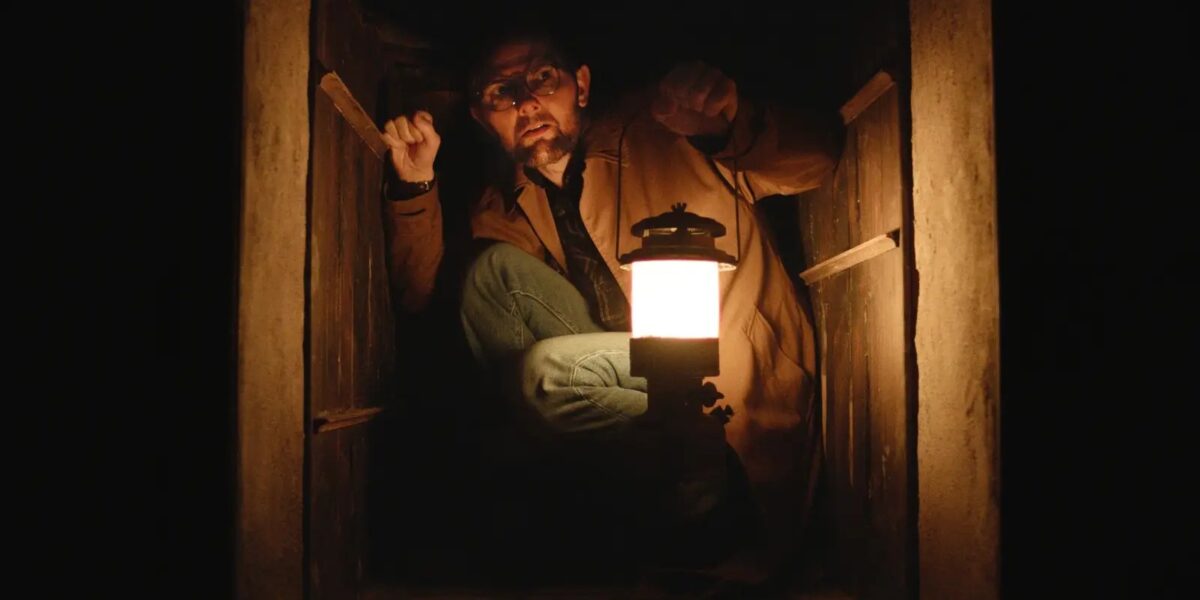
Caveat“>”Caveat”, a micro-budget film about a drifter taking a job caring for a psychologically disturbed woman in an isolated mansion. McCarthy followed that with Oddity“>”Oddity”, a 2024 Shudder exclusive focusing on a blind woman using her psychic abilities to seek revenge for her sister’s murder. Now, he takes his biggest swing yet with Hokum“>”Hokum”, starring Adam Scott as a writer trapped in a remote Irish hotel that may or may not be haunted by an evil witch (spoiler alert: it is, and she’s terrifying).
Like McCarthy’s previous films, “Hokum” takes place in Ireland and features an all-Irish cast (with the sole exception of Scott’s character). It relies heavily on a single physical location that shapes the story. (“Oddity” unfolds in an old country house; “Hokum” upgrades to a grand, creaky hotel.) And, like his previous films, “Hokum” is genuinely scary.
When asked about the effectiveness of his horror films, McCarthy attributes it to a deep familiarity with the genre, cultivated through weekly movie nights where he and his brother watch both new releases and old classics. He also possesses detailed theories on crafting perfect jump scares, requiring a mix of planning, restraint, and instinct.
“A lot of it is just gut feeling,” he says.
Polygon spoke with McCarthy about the origins of “Hokum” and its monstrous witch, how location can shape a story, and the secret to crafting truly terrifying jump scares. This interview has been edited for brevity and clarity.
The Genesis of Hokum
Polygon: Where did the idea for “Hokum” come from? How long have you been working on it?
Damian McCarthy: The original idea, a guy trapped in a haunted honeymoon suite trying to escape, goes back about 10 years. Over time, I added details and wrote drafts. After completing “Oddity,” I revisited the script and decided to make it work. Each film informs what I want to do next. “Oddity” was an ensemble piece with a non-linear structure; I wanted something more straightforward: a guy trapped in a room who has to survive the night.
Casting Adam Scott
Polygon: How did Adam Scott wind up in this movie? Did you always plan to cast a Hollywood star?
Damian McCarthy: I hoped for an all-Irish cast but wanted an internationally known actor. I was watching “Severance” and thought, “He’s so good.” He had seen “Oddity,” liked it, and was curious about what the director of “Oddity” would do next.
His character in the movie is a bit of a jerk. Was that always in the script?
Damian McCarthy: Yes, he’s intentionally unlikeable. I told Adam, “I hope you don’t mind playing him like that.” Adam went with it, understanding that connecting with the audience requires empathy, even for flawed characters.
A Personal Connection
Polygon: Your films often feature bleak stories. Is there a connection between your work and the main character?
Damian McCarthy: He’s a writer working on a trilogy, similar to my own filmography. During post-production for “Oddity,” I lived in a hotel for six months, experiencing isolation that influenced the story.
Folklore and Fear
Polygon: The movie features spooky folklore about an old witch. Was it based on a fairytale or something you invented?
Damian McCarthy: It’s entirely invented. Every country has its own take on the witch, and I wanted to explore that ambiguity and weirdness.
The Monster Within
Polygon: The witch in “Hokum” feels more like a creature than a human. Why did you choose that approach?
Damian McCarthy: She’s unknowable, which is what makes her frightening. I wanted to lean into a very simple creature feature: “She’s a monster. Watch out!”
Location, Location, Location
Polygon: “Hokum” and “Oddity” make excellent use of their settings. How does the location inform the script and story?
Damian McCarthy: The location is everything. I write the script without a clear visual idea, but once storyboarding begins, it’s about finding or creating the right setting. An interesting window or door can change the entire scary scene.
The Art of the Jump Scare
Polygon: Your movies are genuinely scary. What’s the secret to a good jump scare?
Damian McCarthy: It requires a real threat. Early, silly scares lose the audience. Establishing a genuine threat allows for suspense. The audience knows something is coming; it helps if the character does too. Stretching that out and misdirecting expectations are key.
The Power of Isolation
Polygon: All your films take place in Ireland. Do you think something about that setting lends itself to horror?
Damian McCarthy: In “Hokum,” the idea of an American character visiting a welcoming but foreign part of Ireland creates a sense of isolation and vulnerability.
“Hokum” opens in theaters on May 1.
Source: Polygon




Comments
Be the first to comment.