

AMD researchers have unveiled a breakthrough rendering technique that could dramatically ease the memory and performance burden of ray tracing in future games, cutting the GPU memory required to simulate a vast, animated forest scene from a staggering 80 GB down to just 1.7 GB. The innovation, developed by the company’s Advanced Graphics Program and led by Fellow Holger Gruen, relies on a clever geometric trick the team calls “tetrahedral cages” and could reshape how developers approach real-time global illumination in dense foliage environments. The results were shared publicly through AMD’s research channels, accompanied by a striking demo showcasing a lush Pacific Northwest woodland rendered with a fraction of the traditional resource cost.
Under conventional ray-tracing pipelines, a scene populated by roughly 25,000 independently animated plants—each composed of hundreds of thousands of triangles—can demand around 80 GB of GPU memory. On top of that, the hardware must spend approximately 300 milliseconds per frame determining which surfaces within the scene intersect with a ray, a task handled by a data structure known as a Bounding Volume Hierarchy, or BVH. For a densely packed environment like a forest, that overhead translates into slow, choppy performance. The new approach sidesteps much of that cost by replacing the heavy per-plant geometry with a lightweight surrogate that deforms in place.
How Tetrahedral Cages Work
The core idea is deceptively simple. A tetrahedral cage is a simplified mesh that wraps around the dense collection of plant geometry, so instead of thousands of individual polygonal leaves flexing in a simulated breeze, only the cage itself bends and reshapes. Rays are then traced against the cage’s streamlined surface rather than the full set of wibbly-wobbly vertices that make up each virtual tree. In effect, the expensive animation work is decoupled from the sheer triangle count.
“The dense geometry of an animated object and its BVH structures remain static and reusable,” Gruen explains. “During runtime, only the cage deforms. Rays are transformed back into a static reference frame before intersecting them with the dense set of triangles.” He adds that this means animation cost scales with cage complexity rather than triangle count, which is where the enormous savings come from. The trade-off, he acknowledges, is a loss of fine-grained animation control over every individual vertex—but he notes that this limitation is acceptable for many animation scenarios.
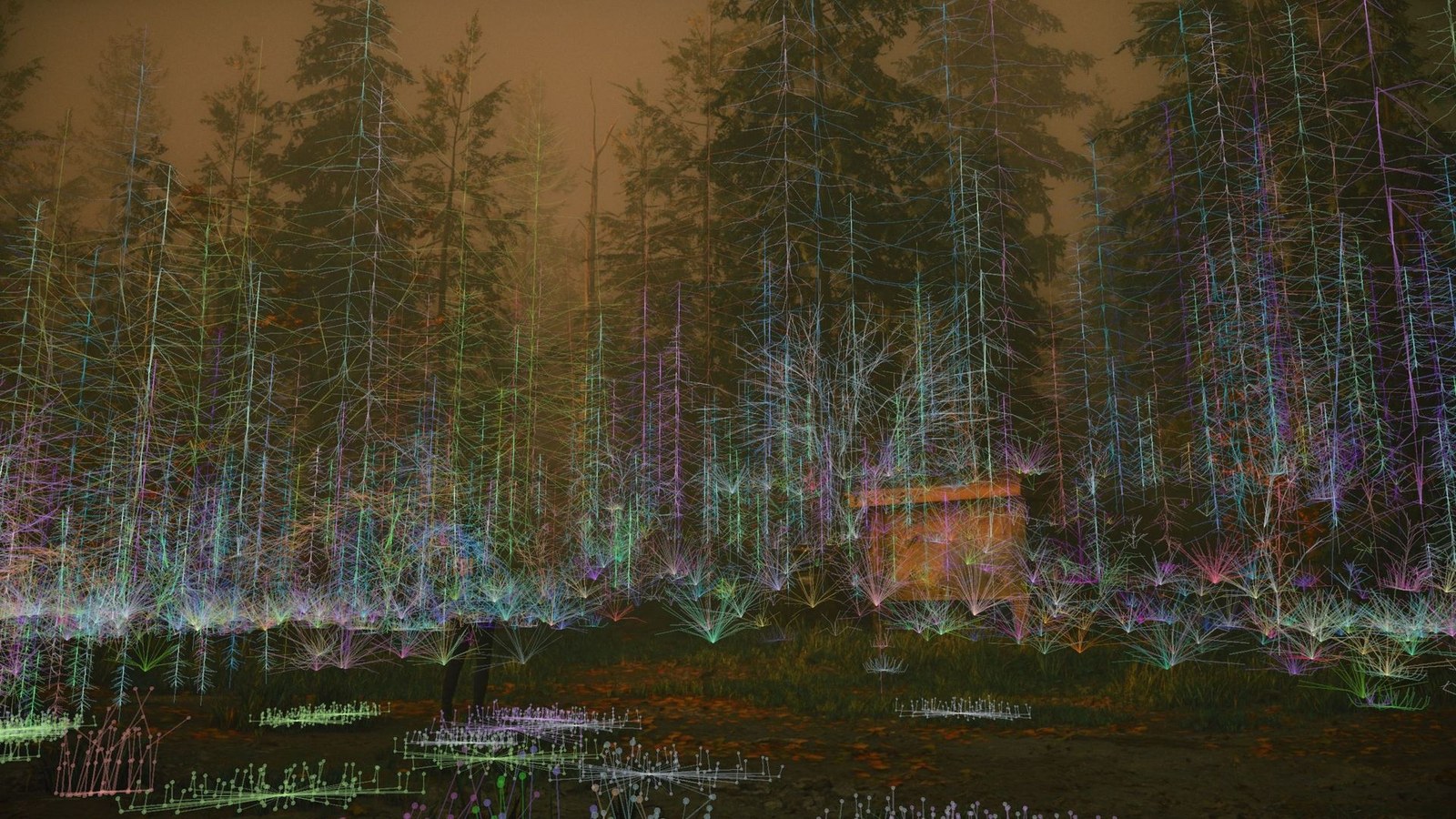
“The dense geometry of an animated object and its BVH structures remain static and reusable. During runtime, only the cage deforms. Rays are transformed back into a static reference frame before intersecting them with the dense set of triangles.”
Holger Gruen, AMD Advanced Graphics Program
According to AMD, the payoff is substantial: the tetrahedral cage demos consume only 1.7 GB of BVH memory and roughly 3.3 milliseconds per frame for all BVH updates, a dramatic improvement over the traditional figures. For a scene where the emphasis is on a sprawling field of foliage rather than the intricate fronds of a single plant, developers are unlikely to miss the ability to fine-tune individual animations. The technique is less suited to stylised 3D trees with distinctive personalities, where vertex-level control matters more than sheer scale.
What This Means for the Industry
The implications extend well beyond forests. Ray tracing has long been one of the most demanding features on modern hardware, and memory bandwidth is frequently the bottleneck holding real-time performance back. By shrinking the memory footprint of complex animated scenes, tetrahedral cages could help push higher frame rates and more elaborate lighting effects onto existing GPUs, or free up headroom for other graphical ambitions. The approach also aligns with a broader industry push toward smarter geometry and hierarchical structures that keep ray tracing viable as scenes grow more ambitious.
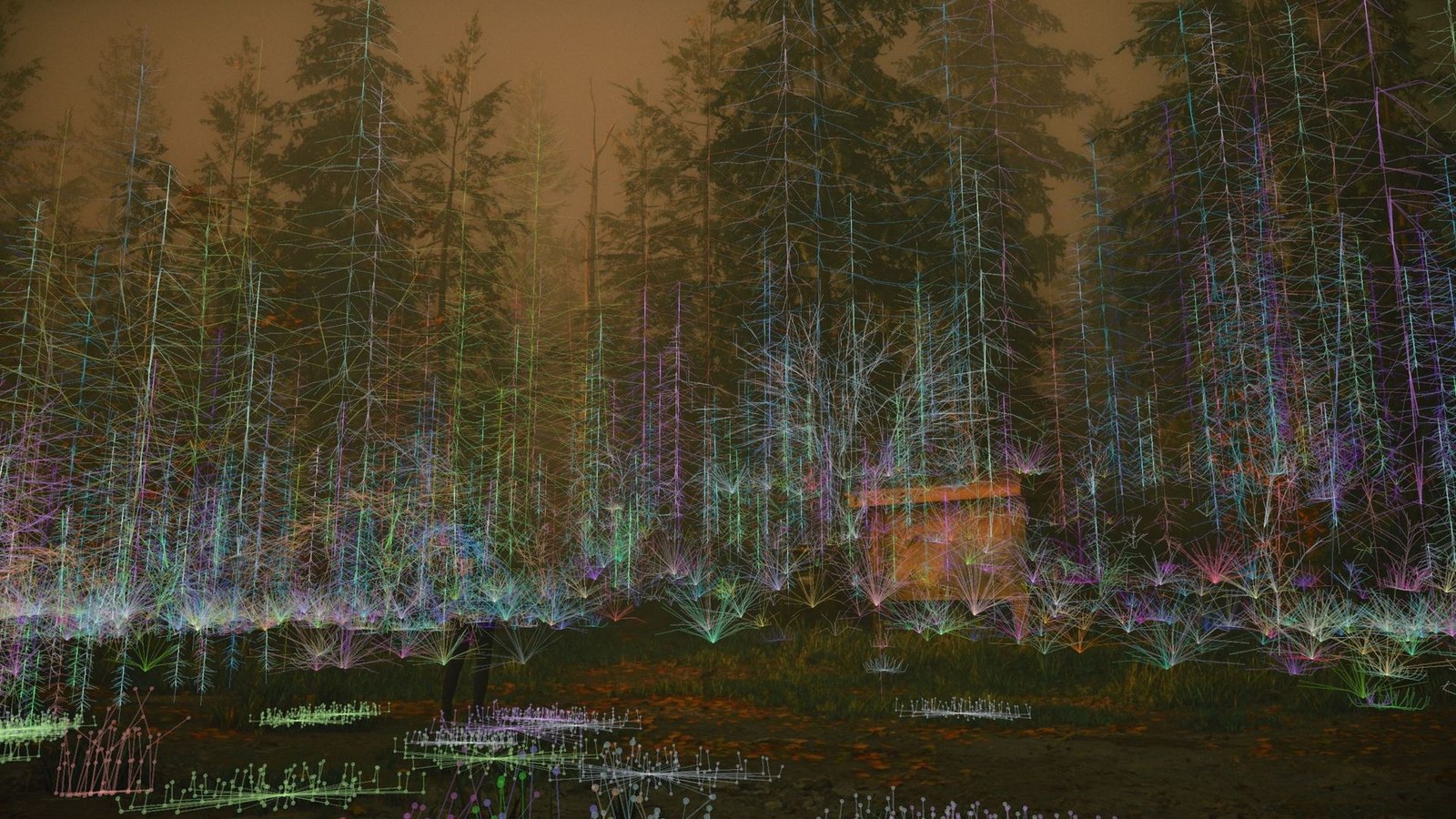
AMD has not announced a specific product or roadmap tied to this research, and the technique is currently demonstrated rather than shipped. Still, the concept is well within the realm of what could reach consumer hardware as ray tracing becomes increasingly standard across next-generation titles. The demo itself—featuring a serene expanse of greenery rendered with remarkable efficiency—serves as a compelling preview of where the technology could lead.
Looking Ahead
While AMD has yet to detail a release timeline or confirm which engines or APIs might adopt the method, the research represents a meaningful step toward more efficient real-time rendering. As developers continue to grapple with the cost of dense, animated environments, techniques like tetrahedral cages offer a promising path to richer worlds without proportionally richer hardware demands. Whether the approach gains traction in mainstream game engines remains to be seen, but the underlying principle—simplify the surface, keep the detail static—could prove as enduring as the forests it is designed to render.



1 comment
[…] Article: AMD Researchers Slash Ray-Tracing Memory Use by 98% With Novel ‘Tetrahedral Cage’ Technique … Kaynak: Rock Paper Shotgun […]