[Engaging, punchy, click-worthy English headline]
Paradox Interactive, the studio renowned for its intricate grand strategy games like Crusader Kings 3 and Stellaris, is venturing into uncharted territory with Afterworld, their first new grand strategy franchise since 2019’s Imperator: Rome. Set in a ravaged North America, this ambitious title blends real-time strategy (RTS) elements with the depth of a classic Paradox game, allowing players to rebuild civilization from the ashes – whether through terraforming or, perhaps more disturbingly, cannibalism. I recently had the opportunity to delve into an early alpha build, and while the core concept is undeniably compelling, it’s clear that Afterworld still has a long road ahead.
A Glimpse Behind the Curtain: The Alpha Build
It’s crucial to preface this by stating that what I played was an alpha build. Several features were inaccessible, including combat, highlighting just how early in development this title is. While the underlying framework is present – settling the wasteland, interacting with rival factions, and managing internal conflicts – much of it felt unrefined and unbalanced. The game’s systems are complex, and while I appreciate the depth, it requires significant polish before it reaches a playable state. My initial impression was that releasing this to the public at this stage might be premature.
The developers explained that they were eager to gather feedback from players early in the process, allowing them to iterate on the game’s design. I understand the value of community involvement, but I also felt a sense of urgency for the team to have ample time to refine and balance the experience. Releasing this before Q4 next year would be risky.
Building from the Ashes: Core Gameplay Loop
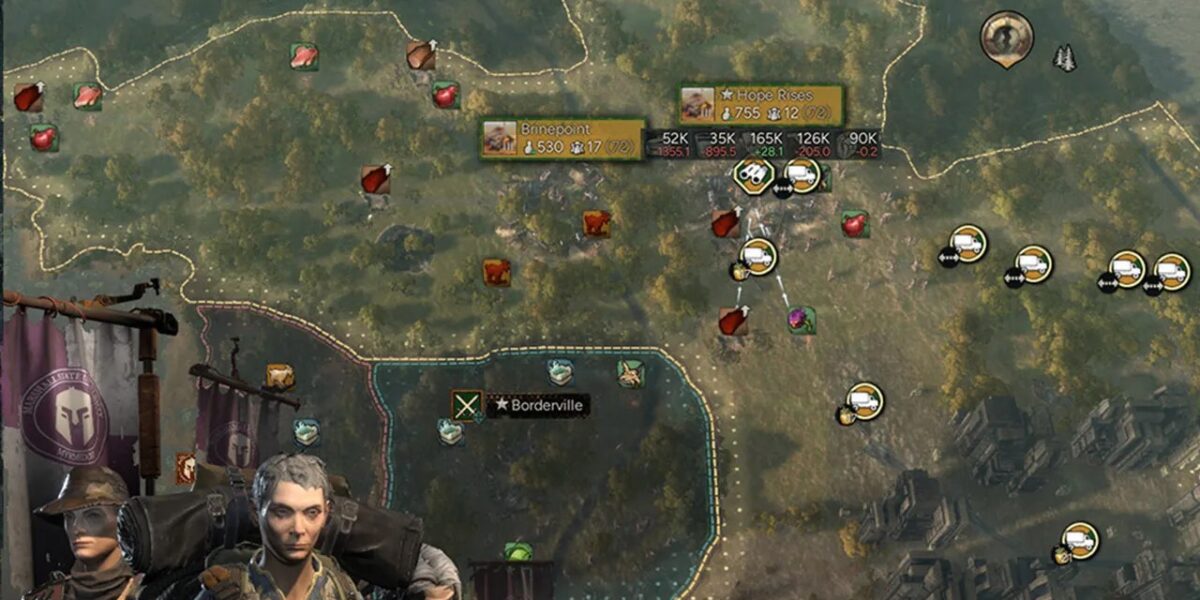
At its heart, Afterworld begins with selecting an origin for your band of survivors, similar to Stellaris. This immediately establishes a familiar Paradox feel. Like ships in Stellaris, your military units and explorers – known as rangers – can maneuver individually within the map’s provinces, allowing for tactical engagements.
In this preview, I played as the Shelterborn, essentially Vault Dwellers from Fallout who have emerged after 100 years. The game presented a brief “choose your own adventure” sequence that shaped my society, ranging from nostalgic reclaimers seeking to restore Old America to bloodthirsty cannibals. This sets the initial traditions, values, and customs.
Values represent the band’s feelings about ideologies: Reclamation is about rebuilding America, while Wanderlust promotes a nomadic lifestyle. A band can feel positively, negatively, or not care about these values. Customs are story-based explanations of where your traditions come from. For example, the Nostalgic custom provides a bonus to Hearthkeeping.
As you expand, you’re forced to recruit or conquer other bands with conflicting values, potentially leading to crises if you can’t maintain cohesion. Assimilating these bands is crucial for acquiring labor to collect resources, work in industries, wage war, and manage logistics.
Politics and Power: Governing the Wasteland
This quickly escalates into establishing a government with different bands divided between ruling elites, citizens, the oppressed underclass, and potentially even slaves. I opted for democracy, but also had the option to keep the shelter overseer in charge. My rangers were exploring the devastated US Southeast, encountering radiation threats, hostile slavers, rogue war drones, mutants, and rival tribes.
The story implies that the apocalypse occurred relatively recently, meaning you might rediscover technologies like nanotech and combat mechs. The most significant players are the Ancients, survivors who have unnaturally prolonged their lives and pursue unique goals called destinies.
A Looming Threat: Farouk and the Election
Early on, I received an ultimatum from Farouk, a powerful leader seeking to restore America in his image. While it’s difficult to defeat him directly at this stage, you can choose to relocate to New Hampshire to avoid conflict. Joining Farouk offers perks and access to resources, but requires tribute and potentially engaging in morally questionable actions. The ultimate goal is to contest his sham election and install your own leader.
A World of Systems: Complexity and Potential
Afterworld contains a vast array of interconnected systems, from sending ranger teams into ruined cities to recover technology to equipping armies with vehicles and managing supply lines. It’s a complex game that requires significant time and effort to master. While the alpha build felt rough around the edges, the core concept is undeniably compelling, and I’m eager to see how Paradox refines this ambitious title. The prospect of leading an anarcho-primitivist pagan warrior cult in the Rocky Mountains is certainly enticing.
While you’re here, check out these previews of other big upcoming games we’ve played recently!





Comments
Be the first to comment.