
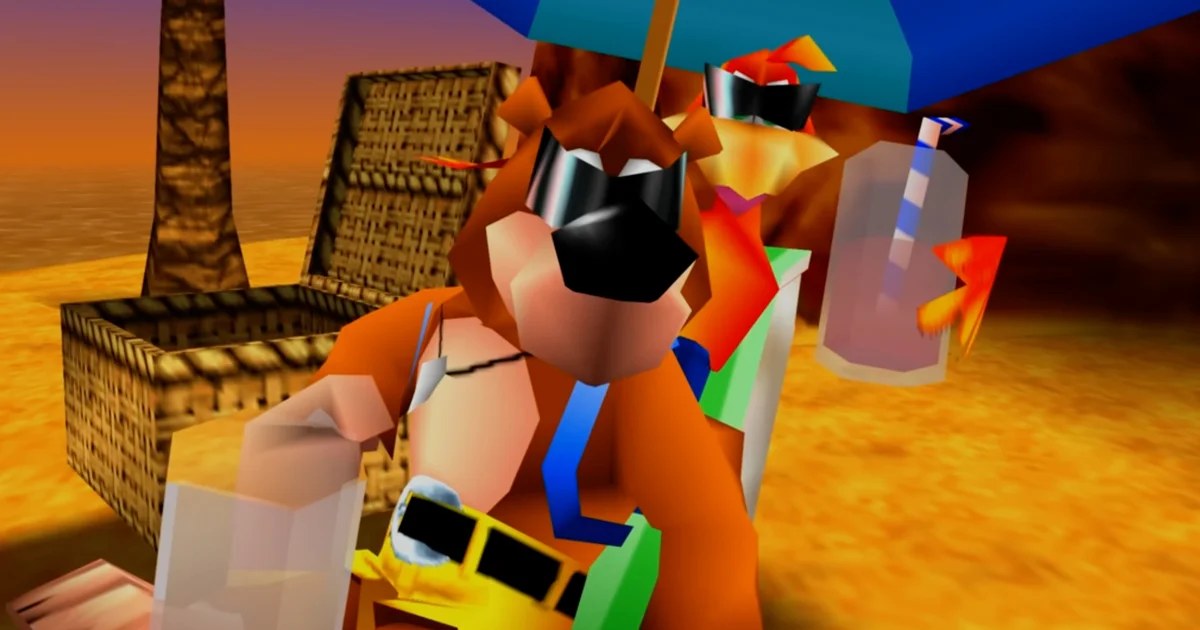
The developer behind the acclaimed unofficial PC port Banjo: Recompiled has launched a passionate defense of traditional game preservation against what he sees as the careless rush to use generative AI for classic game ports. DarioSamo, a member of the modding group responsible for releasing the Nintendo 64 platformer on modern systems earlier this year, argues that claims about AI dramatically speeding up recompilation work are either outright false or fundamentally misunderstand the craft involved in preserving video games.
The controversy stems from recent coverage by YouTube channel Video Game Esoterica, which featured a Banjo-Kazooie 2 “recompilation” project claiming to use generative AI. According to DarioSamo, as reported by VGC, this new effort was built on the same tooling framework developed for Banjo: Recompiled but was not produced by the original Recompiled team. He criticized the channel for failing to make this distinction clear in its video, calling it “irresponsible” and suggesting it merely incentivizes AI users to churn out projects in pursuit of brief online recognition.
Understanding the Art of Recompilation
In a detailed follow-up thread on Bluesky posted late last night, DarioSamo explained the technical realities behind game porting. He described recompilation as a process using “static recompilation” to automatically convert a game’s code into something that behaves identically on another platform. These efforts often rely on full or incomplete decompilation projects—turning machine code back into human-readable form—to provide essential information for making ports work correctly, including necessary enhancements like high refresh rates, widescreen support, and quality-of-life improvements.
DarioSamo insists that despite the proliferation of AI tools, no genuine speedup exists when proper recompilation is involved. He noted that developers were already capable of assembling a recompilation in under a day even before generative AI entered the picture. “The pattern we’ve been seeing for several months so far is that a new type of person has entered the scene that thinks that because AI gets them over the hurdle of getting the game running, the job is basically done,” he wrote.
“Getting the game running is basically the first step of the journey and not the end. This is why I argue that as far as recomps go, AI hasn’t provided any sort of speedup. Making a barebones recompilation was always easy and required very little time. It’s the polish and making a good and sustainable project for the wider public where the difference is. It’s the part that actually takes far more time.”
DarioSamo, Banjo: Recompiled developer
To illustrate his point, DarioSamo pointed to DK64 Rekongpiled, a Donkey Kong 64 port that deliberately avoided generative AI. He explained that the team was racing against another project using AI, yet their deep familiarity with the game allowed them to achieve a superior result. “Meanwhile, the AI effort failed to make further progress as it was lacking that knowledge,” he wrote, though he did not specify which AI-powered Donkey Kong 64 port he meant.

The Preservation Problem
DarioSamo conceded that generative AI can accelerate decompilation in one narrow sense: producing code that compiles into something matching the original ROM file. But he emphasized this misses the entire purpose of decompilation efforts, which have always centered on documenting and understanding how games actually work. “This is why decompilation and porting efforts are usually done by different groups of people,” he explained, noting one group works on understanding the code while another uses that documentation to build ports.
Large language models, by contrast, tend to brute-force this process, ending up with results that compile correctly but remain unreadable or incomprehensible even to the AI itself. This makes it far harder to create proper ports or develop patches after release. DarioSamo warned that using these tools also shortcuts collaboration with other port makers and players, leading newcomers to miss critical early decisions that result in “unsalvageable projects that needs to be restarted from scratch.”
In his closing remarks, the developer appealed for community support of traditional developers caught mid-project. “The rush of generative AI ports can demotivate a developer who was in the middle of creating a project that checks all the boxes of the quality standards that are expected by the public,” he said, urging fans to show support and avoid promoting AI-generated alternatives. “These are old and beloved games that have been available in numerous ways for decades, so there’s no rush to be the first to provide a solution using these tools.”
A Broader Movement Against Rushed AI
The debate over generative AI usage in recompilation echoes similar frustration rippling through modding communities more broadly. Recently, the creator of a Total War: Warhammer 3 mod deliberately corrupted their work to prevent others from using it for “AI-related purposes.” This reflects growing concern about preserving both technical documentation and creative intent as AI tools make it easier than ever to produce quick but shallow results.
The issue DarioSamo raises—the missed opportunity to grasp and preserve how beloved games were made—touches on a deeper problem in an industry already suffering from cyclical brain drains and loss of crucial historical documentation. His criticism represents what many see as the core flaw of the generative AI approach: deliberate, anti-social obliviousness pursued for the sake of speed, sacrificing understanding and longevity at the altar of instant results.























1 comment