
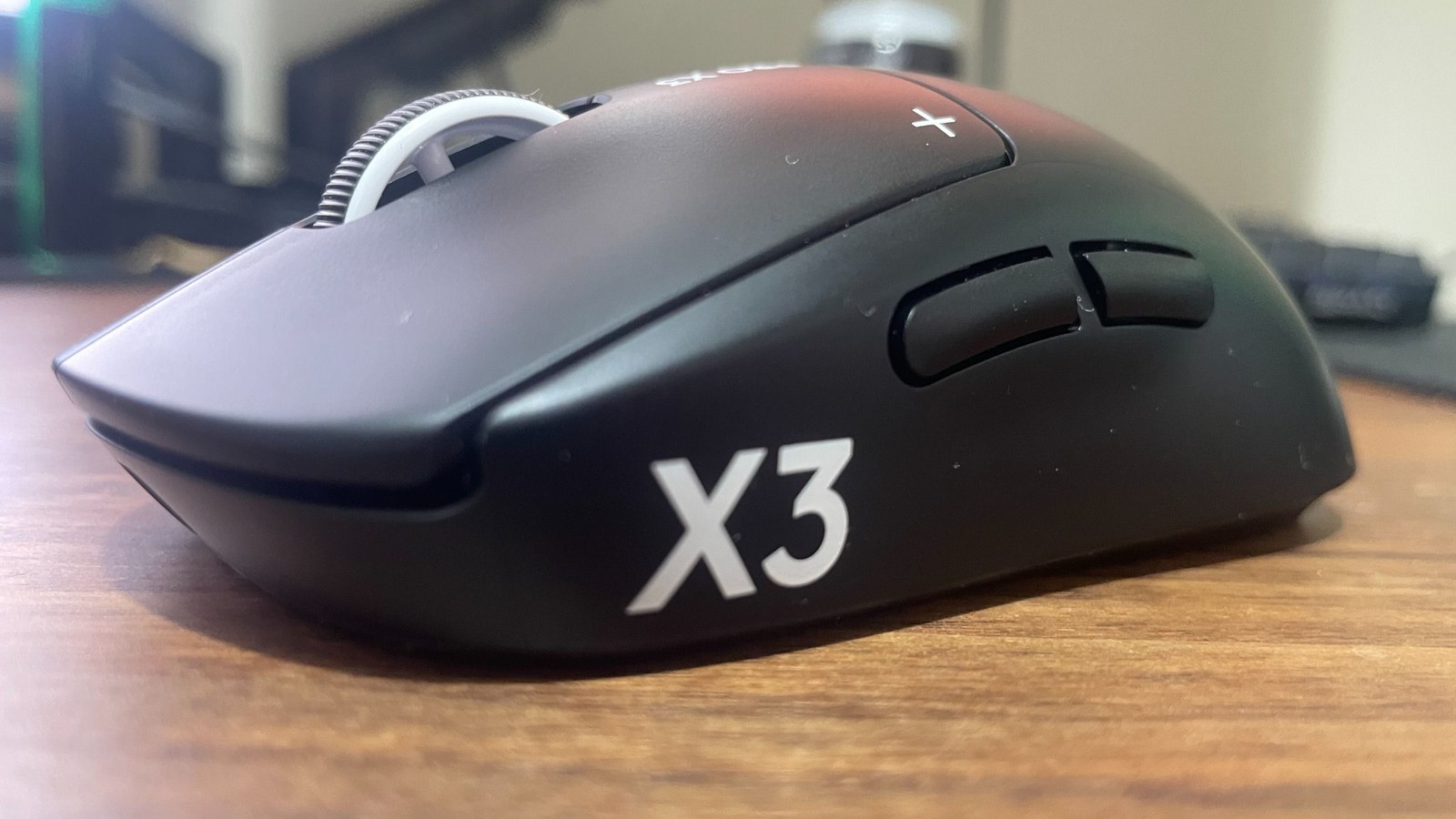
Do optical-mouse marketing promises hold up under scrutiny? That is the question a recent hands-on test set out to answer, comparing the Razer Viper V3 Pro, the Razer Viper V3 Superstrike, and the Finalmouse Sensei Pro across 150 reactive clicks on the Human Benchmark reaction-time test. The short answer, according to the tester, is that the difference between the mice is negligible in practice, landing within the margin of natural human variance rather than any measurable hardware advantage.
The premise behind analogue and inductive click technology is straightforward and appealing on paper. Razer’s Superstrike switches promise a reduction in latency between the moment you decide to click and the moment the click actually registers, largely because the button-press distance can be dramatically shortened. For competitive gamers chasing every fraction of a millisecond, that sounds like a genuine edge. But theory and practice often diverge, which is exactly why the tester decided to put the claim to the test now that the V3 Superstrike has shipped.
From gut feeling to actual data
The motivation for the experiment traces back to the tester’s experience with the previous X2 Superstrike. After using the mouse for a while, a difference was felt while playing Counter-Strike, but it remained impossible to determine how much of that sensation was real and how much was simply placebo. With the X3 now available, the tester saw an opportunity to settle the question with hard numbers rather than subjective impressions.
“I have done so much reactive clicking this morning that I now feel I never want to engage that part of my brain again. All worth it in the name of science.”
Tester
The methodology was deliberately structured to avoid skewing the results. The tester ran 150 reactive clicks in total, splitting them evenly: 50 with the Sensei Pro, 50 with the X3 Superstrike at its lowest actuation distance (level 1), and 50 at level 3. Crucially, the tester swapped between the mice frequently throughout the session to rule out the possibility that any improvement was simply the result of warming up and getting better over time.
The results: about the same
The numbers tell a story that contradicts the marketing. Averaged reaction times came in at 176.4 milliseconds for the Sensei Pro, 177 milliseconds for the Superstrike at level 3, and 175.1 milliseconds at level 1. Compared to the Sensei Pro, the Superstrike performed about the same, and the tester was quick to note that a 1-millisecond difference falls squarely within natural variance. In fact, the tester actually scored worse at level 3 than with the Sensei Pro, further undermining the idea that shorter actuation distance translates into faster reactions.

The distribution of click latency across testers on Human Benchmark reinforced the point. While spending eight hours straight testing and gathering thousands of results might eventually reveal a clearer difference, the tester argued that the absence of any visible gap over just 150 tests is itself significant. Results swung wildly, with scores landing close to both 200 milliseconds and 150 milliseconds across every mouse and every setting.
Looking ahead
The conclusion is nuanced rather than dismissive. While it remains possible that, over the long run, the tester could achieve slightly faster reactions with the Superstrike, each individual result is essentially unpredictable—likely influenced far more by sleep, hydration, and other biological factors than by the hardware in hand. The tester did concede that professional players, who already possess faster and more consistent reaction times, might find the marginal click-speed advantage more meaningful than an average gamer would.
For those curious to draw their own conclusions, the tester invited readers to run their own tests on Human Benchmark and share their scores. Whether inductive clicks are worth the premium remains an open question, but this experiment suggests that for most people, the real bottleneck is not the mouse—it is the human on the other end of it.























Join the conversation