

The price of Xbox’s next-generation console, codenamed Project Helix, may turn out to be higher than many anticipated. Helix is reportedly set to ship as two devices and is estimated to cost close to $2,000.

That is according to a wide-ranging new report and profile of Xbox CEO Asha Sharma by Fortune Magazine. In it, Xbox’s internal estimates are claimed to have arrived at a staggering price: between $1,200 (~£900) and $1,800 (~£1,345). This is not simply the cost of components and manufacturing, but the price Xbox reportedly expects the console to cost consumers, assuming it is not subsidised.
The report also revealed that Helix, which Sharma previously stressed is a family of devices, will indeed encompass two consoles: a traditional box and a handheld. Xbox is reportedly planning to release the handheld Helix first, with the current target being holiday 2027. The main, under-the-tv box Helix is instead planned for holiday 2028.
As shocking as these prices may be, they are not entirely out of line with what industry insiders have been saying we should expect. The global AI-driven memory and storage shortage has caused the prices of practically all consumer electronics to shoot up significantly. The shortages also resulted in Xbox, PlayStation and Nintendo all raising the prices of their years-old current-gen consoles on multiple occasions since their launches.
The flagship Xbox Series X, which launched at $500 / £450, now costs $800 / £670. The Series S, initially pitched as a budget-friendly, entry-level console, now costs $500 / £430, up from $300 / £250. A Helix console at $1,200 would mean a 50 percent increase on top of Series X’s current price.
The report also revealed an internal divide between the Xbox and Windows teams over which operating system the handheld Helix should run. Microsoft’s Windows team reportedly wanted a slimmed-down version of Windows 홈 to run on the handheld, whereas the Xbox team instead wanted specialised software to maximise gaming performance.
The disagreements reportedly got so bad that an Xbox executive threatened to end the handheld project entirely. It is not clear what the big-box Helix is going to run, however, seeing as it was envisioned as a bridge between PC and Xbox capable of playing games from both platforms.
Mentioned in this article
AMD, the company that designs the chips inside Xbox and PlayStation consoles, made a big announcement this week: it’s bringing the latest version of its advanced, AI-driven image upscaling technology, FSR 4.1, to Xbox Series X, Series S, and the ROG Ally and Ally X handhelds.
An older version of FSR is already supported on Xbox, but FSR 4.1 is its most advanced release. You may recall FSR 4.1 arrived on Steam Machine and Steam Deck shortly after the former’s launch in the summer, and it has proven to be a useful option for players looking for a sharper image.
FSR works by rendering the game at a lower resolution, which is then upscaled to a higher resolution by using machine learning algorithms. This allows supported hardware to deliver better quality visuals without putting extra strain on hardware, or by giving more consistent performance.
While all Xbox platforms stand to benefit from FSR 4.1’s arrival, Series S and the more hardware-constrained Ally and Ally X handhelds could see the biggest gains. In that way, Microsoft is extending the life of the Series consoles by allowing its aging hardware to do more.
The timing of this announcement is particularly notable, too, as just a couple of weeks ago, Sony introduced QSSR – a similar machine learning-based upscaling technology – for PlayStation 5. QSSR is the less capable sibling of PSSR, which is exclusive to the PS5 Pro.
FSR 4.1’s arrival also comes as new reports suggest Xbox’s next-generation Project Helix consoles could cost upwards of $1,800, which would significantly hinder its adoption rate, considering its price.
“We’ve worked very closely with AMD to optimise this technology, giving developers another powerful tool for great performance and visual quality for players,” said Xbox chief technology officer (CTO) Scott Van Vliet.
“And this is just the beginning. Our teams are continuing to work together across hardware and software, and there’s even more ahead with Project Helix, leveraging FSR Diamond to power what comes next.”
AMD did not provide a specific date for when FSR 4.1 will arrive on Xbox Series consoles, but it will be interesting to see how the image quality compares to PS5’s QSSR.
Mentioned in this article
Infinity Ward opened early access to Call of Duty: Modern Warfare 4’s DMZ extraction mode overnight, meaning anyone who pre-ordered a copy can now play the game’s campaign as well as DMZ. While early reactions to DMZ are fairly positive, there is one issue in particular, which a number of players have experienced, that has the capability of ending a round as soon as it begins.
The issue relates to where DMZ spawns players. As an extraction shooter, DMZ’s Hajin map offers multiple random spawn locations, and unlike traditional 멀티플레이 modes, DMZ spawns are often on the edges of the map – far enough away from any action to allow players a chance to strategise and pick a target destination.
But unfortunately, one of the spawn-points Infinity Ward picked happens to be placed in the middle of a road, meaning that if you’re unlucky, you might spawn as an enemy patrol is driving on it, flattening you and ending your round.
This nearly happened to Reddit user grillimperator, who was given a small window of time to jump out of the way. Reddit user Deep-Operation-3552, however, wasn’t so lucky, immediately falling to the ground as soon as they got control of their character after the infil cutscene. As others noted in the replies, the timing of the ‘Welcome to the DMZ’ voice alert playing just as they die makes it all the more absurd. Judging by those examples, at least, there doesn’t appear to be any form of spawn protection.
DMZ offers certain options to get back up after being downed, but if you don’t have the necessary equipment, there’s nothing you can do. Still, that wouldn’t have mattered in the above instances, because the players were run over twice.
Given the persistent nature of DMZ, dying also means losing everything you entered the match with, which could be infuriating if that was the round you decided to pack your good gear.
Thankfully, the bug is one of several issues Infinity Ward fixed in a new DMZ patch. The patch notes specifically called out the problem: “Fixed some instances where enemy AI could run over players while infilling.”
Modern Warfare 4’s final mode, traditional 멀티플레이, unlocks at the game’s full launch this Friday, 23rd October on PC, PS5, Xbox Series X/S and Switch 2. So far, players appear to be happy with the game’s campaign, making it one of the most well-received COD games on Steam. One player even managed to finish the campaign on its hardest, single-life mode YOLO.
Mentioned in this article
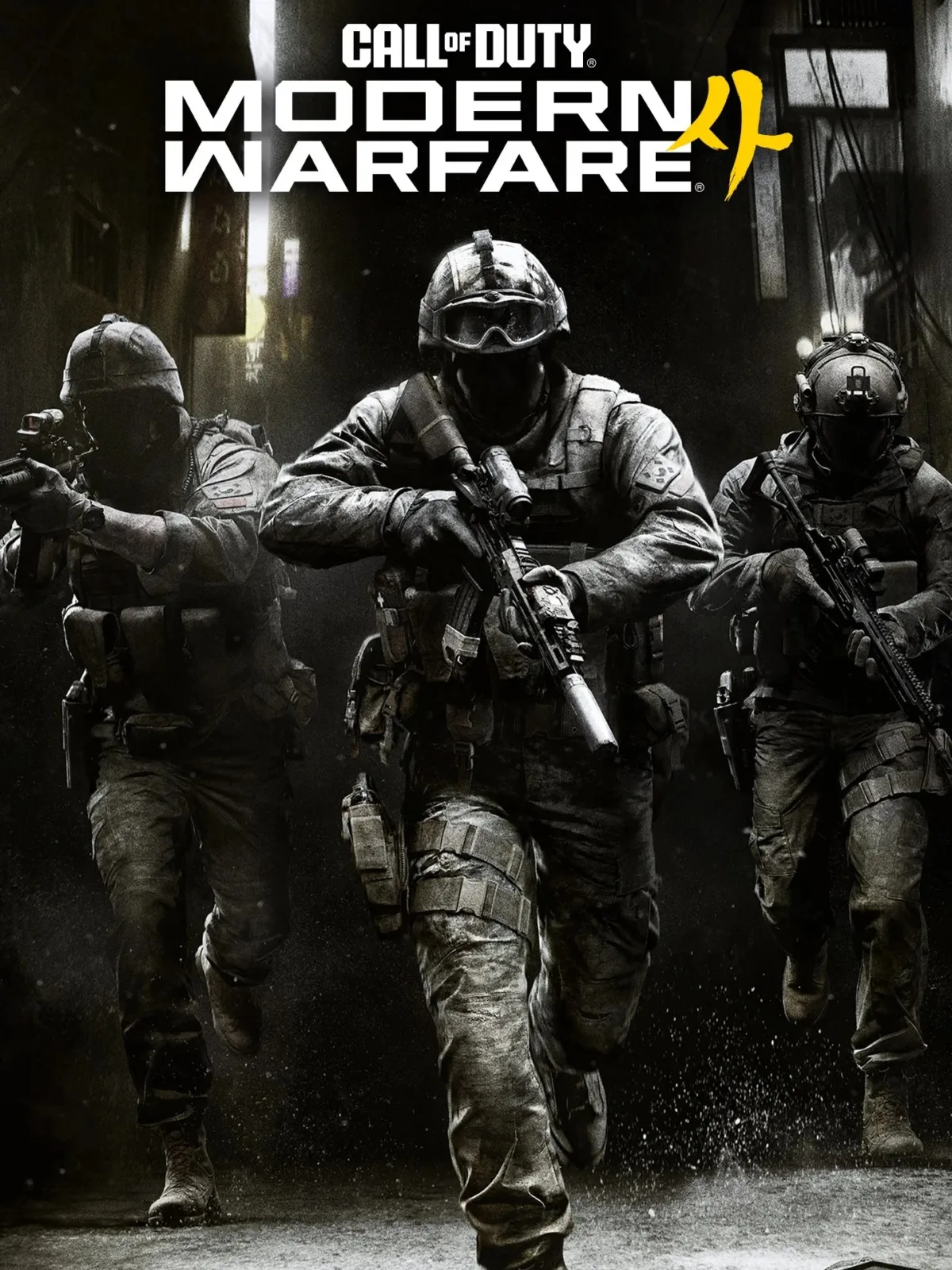

Call of Duty: Modern Warfare 4 (2026)
Up next
Have thoughts, questions, or benchmarks on this topic? Join the discussion on our forums.
Join Discussion ➔






















1 comment