

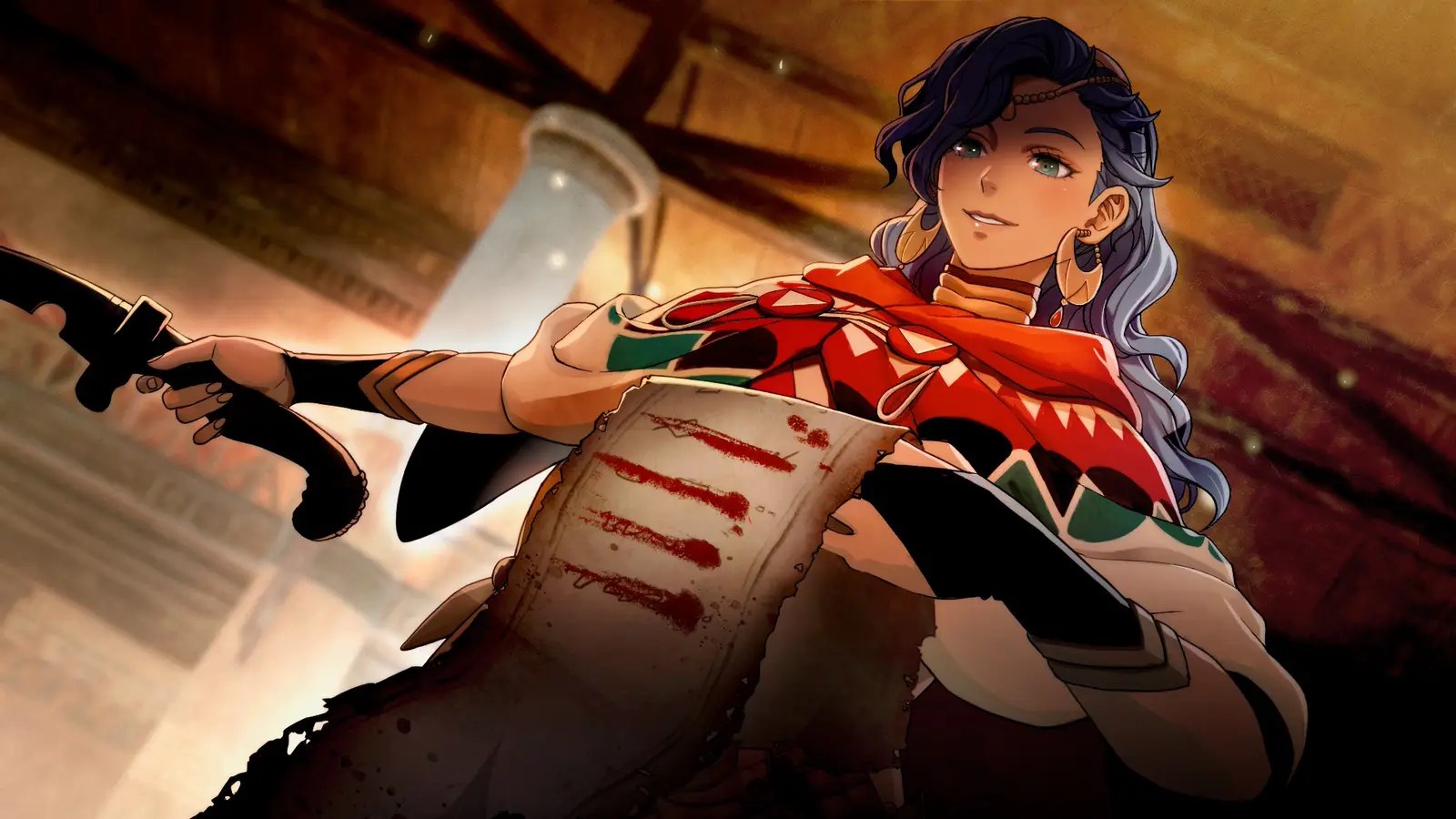
As players continue to navigate the branching narratives of Fire Emblem: Fortune’s Weave, one route has emerged as an unexpected companion piece to a 2017 cult classic. The character Leda, driven by vengeance after her father’s death, offers a story so thematically aligned with Bandai Namco’s Tales of Berseria that the two deserve to be experienced back-to-back.
The latest entry in Nintendo’s long-running tactical franchise has drawn many players back into its fold, and for good reason. With four distinct routes available, choosing where to begin matters considerably. Cai serves as the intended starting point, with opening chapters full of explanations that ease newcomers into the world. Hedonic Dietrich appeals to Fire Emblem: Fortune’s Weave fans seeking more lore about Fódlan, while Theodora offers insight into the cultures of Dagda and Saramis. Leda stands apart from all four.
A Vengeance-Driven Protagonist
Of the four routes, Leda stands out like a sore thumb. Her path has little to do with the overarching story of Fire Emblem: Fortune’s Weave and more to do with her personal vendetta. Yet for many players, she represents one of the most refreshing experiences in recent memory—a woman allowed to be angry and make mistakes while pursuing her goal.
The parallels between Leda and Velvet Crowe are immediate and striking. Both are witnesses to the deaths of the people they loved most, forever changed by that loss. Developed and published by Bandai Namco, Tales of Berseria follows Velvet Crowe, who witnesses her brother-in-law, Artorius Collbrande, killing her younger brother, Laphicet. She vows to keep fighting until she’s avenged Laphicet by slaying Artorius.
Unlike Leda, however, Velvet is utterly alone for the first few years afterward, forced into a stinking pit full of monsters in a basement cell. When both women finally see an opportunity to get close to the men who ruined their lives—Leda through the Heroic Games, Velvet during her prison break—they seize it with both hands.
The Cost of Rage
Because both the Tales and Fire Emblem series are character-focused and feature diverse, expansive casts, both women are accompanied by a group of companions. Leda’s group is relatively normal by RPG standards, whereas Velvet’s includes demons, angels, and an endearingly annoying witch. But the one thing their groups do have in common is their loyalty to Leda and Velvet.

Said loyalty doesn’t necessarily work out great for either party at first. After years of stewing in her prison cell, Velvet has plenty of rage and resentment, and anyone getting in her way is guaranteed to get hurt, whether friend or foe. The same goes for Leda, whose desire for vengeance leads her to threaten and blackmail other contestants out of the games and shrug off any concerns her friends might have.
The more they give in to their base desires, the more Leda and Velvet isolate themselves. This spiral of despair is exacerbated by their curses—Velvet with a malevolence-sucking demon arm that devours people, and Leda with her guitar-like vihuela, which urges her to kill and destroy those around her the more she plays. The further they inch toward fulfilling their quests for revenge, the more the two women deteriorate emotionally and mentally.
While some may argue that this single-minded vengeance makes both characters unlikeable, Leda’s path and Velvet’s story aren’t meant to glamorize their actions. Both Intelligent Systems and Bandai Namco depict their rage as putting them at odds with the people around them, without ultimately vilifying them.
Polygon
Leda and Velvet’s inevitable breakdowns stem from the same place: deep grief and mourning for the ones they’ve loved and lost. This doesn’t negate the harm they’ve caused, but it does provide context for why these characters are the way they are.
Looking Ahead
Without venturing into spoiler territory, Leda and Velvet’s paths eventually diverge in their goals of vengeance. Still, both Fire Emblem: Fortune’s Weave and Tales of Berseria are thrilling for anyone who giggles and kicks their feet at the thought of seeing women with blood on their faces and hatred in their hearts.
Yes, they may have murdered millions, but they made players very happy while playing. And really, isn’t that what’s most important? For those still exploring Fire Emblem: Fortune’s Weave and weighing which route to tackle next, Leda’s path offers a story that resonates deeply with one of the finest revenge sagas in modern RPG history.























1 comment