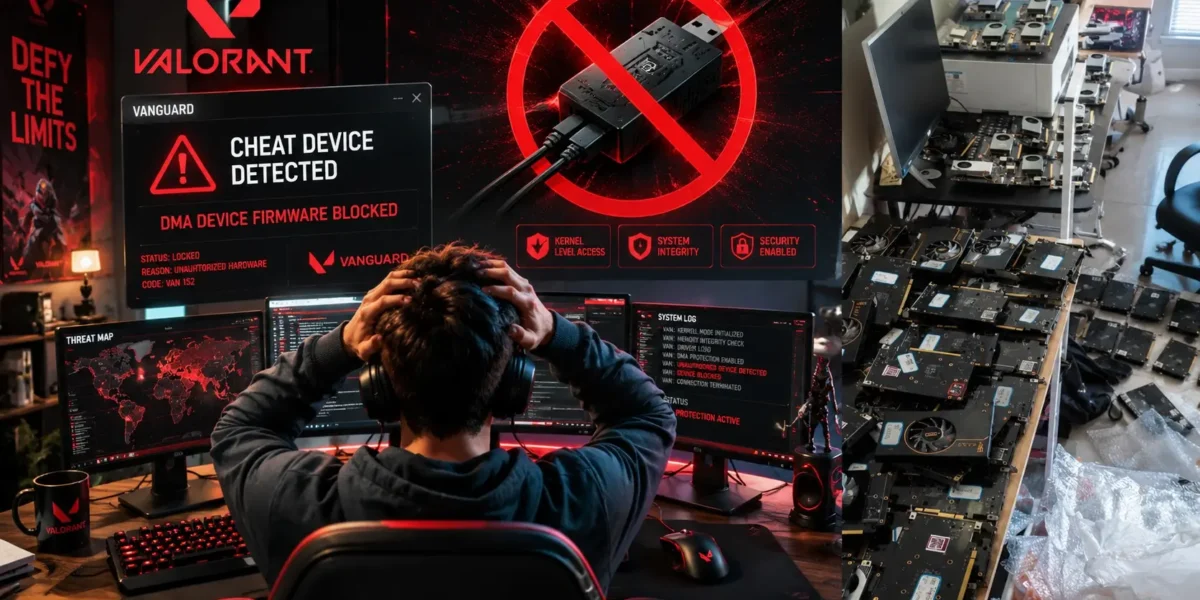
Riot Games’ latest patch to VALORANT’s anti‑cheat system has sparked a heated debate across PC‑gaming communities. The update now allows Vanguard to render unusable the firmware found on DMA (Direct Memory Access) devices that are commonly used to facilitate cheating. The announcement quickly spread across Reddit, X, and niche forums, igniting a flurry of discussion.
Riot celebrated the rollout with a tongue‑in‑cheek message that read, “Congratulations to the owners of a new $6,000 clipboard,” a remark many interpreted as a direct jab at vendors and users of high‑end cheating hardware. The company’s provocative tone only amplified the controversy, prompting a wave of speculation about the ethical implications of such aggressive tactics.
Vanguard has long been a polarizing presence in competitive gaming, largely due to its kernel‑level operation—a deep Windows access typically reserved for critical drivers or advanced security tools. While Riot insists the new firmware‑blocking feature targets only DMA devices used for cheating, players are now questioning how far an anti‑cheat system should go and what might happen if a false positive occurs.
One of the most heated concerns centers on the risk of false positives or unintended interference with legitimate hardware. Users have voiced alarm with comments like “this feels like malware,” “what if it flags something incorrectly?” and “an anti‑cheat shouldn’t have this level of control over a PC.” These worries echo past criticisms of Vanguard and similar systems, such as the performance impact reported by League of Legends players.
Riot’s own tweet announcing a $6,000 “paperweight” was quickly taken as a snide jab at premium DMA hardware sellers and users—devices that can cost several thousand dollars.
Beyond the isolated incident with VALORANT, the controversy reignited the debate over how much authority anti-cheat systems should wield over players’ hardware and software. In recent years, many multiplayer titles have adopted increasingly invasive measures to counter sophisticated cheats, especially in competitive games where the cheating market is worth millions.
Riot maintains that Vanguard does not harm standard GPUs or PCs; it targets firmware specifically linked to DMA devices used for cheating. Nevertheless, the aggressive tone of the message and the depth of access granted to the anti-cheat sparked a broader conversation about privacy, security, and the boundaries of competitive gaming. The discussion even echoed recent incidents involving intrusive PC gaming software, such as when Steam removed a title after discovering it installed malware on players’ machines.
News Source: Tarreo

Vanguard going full malware mode now? I get the anti-cheat hustle, but bricking DMA devices is wild. Riot’s flexing hard with that $6k clipboard burn tough lol.
Vanguard going full malware mode now? I get the anti-cheat hustle, but bricking DMA devices is wild. Riot’s…
thor’s hammer, yes! Yeah, bricking DMA devices is extreme, but the article mentios they’re specifically targeting cheat hardware—not random peripherals. Riot’s $6k jab is savage, but it’s clear they’re dnoe playing niice with cheat vendors.
Vangurad’s firmware-level anti-cheat is bold, but Riot’s smug tone doesn’t help. If it stops DMA cheatrs without false flags, I’m all for it—just hope they don’t overeach.
Riiot’s going nuclear with anti-cheat, but firmware-level control is sketchy. Hope they don’t brick legit hardware in the process.
Vanguard going full firmware-level is wild, but if it actually stops DMA cheaters without breaking legit setups, I’m all for it. Riot’s trolling with that $6k clipboard jab though lmao.
Vanguard going full malware mode now? Bolcking DMA devices is hardcore, but Riot’s smug clipboard joke feels unnecessary. Hope tis doesn’t brick legit hardware.
aigoo, finally. Firmware-level anti-cheat is a bold move by Riot, but the privacy vs. security debate is real. That $6k clipboard burn was savage though.
Riot pushing Vanguard tihs deep into hardware control is scary—effective against cheaters, sure, but where’s the line? Privacy concerns are valid here.
Riot pushing Vanguard tihs deep into hardware control is scary—effective against cheaters, sure, but where's the line? Privacy…
vanguard’s fimrware-level approach is definitely aggressive, but the article notes it specifically targets DMA devices used for cheating—not general user hardware. Still, Riot should clarify privacy safeguards to ease concerns. goomawo!
sugoi! Vanguard’s firmware-level anti-cheat is bold, but bricking DMA devices feels extreme. Love the aggression against cheaters, but Riot’s tone risks alienating legit players. Hope they balance security with fairness.
Vanguard going full scorched-earth on DMA cheats is bold, but messing with firmware fels risky. Riot’s smug tone doesn’t help—hope this doesn’t brick legit hardware.