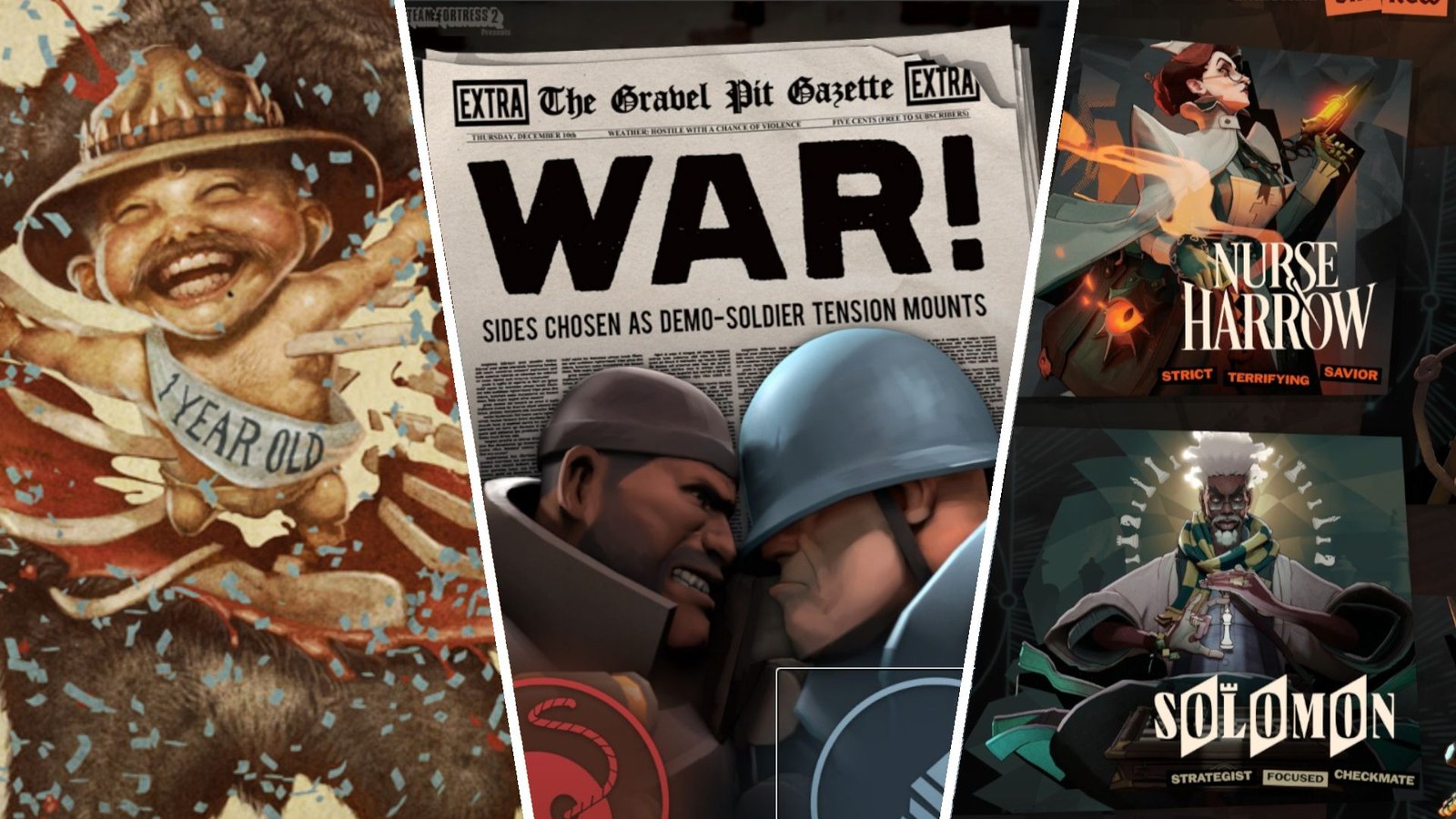
After years spent poring over white-text-on-black-background changelogs in the ordinary course of gaming journalism, a freshly designed patch notes page for Valve’s MOBA Deadlock has arrived that was clearly built to delight rather than merely inform. The studio, long celebrated for crafting bespoke webpages around meaningful game updates, has once again pushed its graphics department into overdrive with an elaborate, tourism-brochure-style changelog that walks readers through the refreshed New York City map across four major districts: Chinatown, the Theater district, the Haunted Lot, and Plaza. The result is being widely praised as a triumphant return to what many consider Valve’s signature strength.
The page styles itself like a promotional travel guide for Deadlock’s reimagined setting, routing visitors through scenic stops while weaving together in-world storytelling and genuine technical explanation wherever the two naturally intersect. Valve’s trademark humor threads throughout, with playful asides reminding readers not to take anything too seriously. Dotted lines lead the eye toward new points of interest as users scroll, reinforcing the map motif, while custom artwork for brand-new items and mechanics—many of which may exist nowhere else on the internet—fills every corner of the experience.
A Golden Age of Patch Notes
The significance of this moment cannot be overstated. Valve pioneered storytelling in multiplayer shooters with Team Fortress 2, arguably kicking things off back in 2009 with “Soldier vs. Demo,” a landmark update that arrived before the concept of seasonal content existed, before League of Legends had its television adaptation, and even before the term “live service” entered the industry’s vocabulary. At that time, Valve had assembled a cast of nine lovable misfits and delivered updates that were never about simply dropping new items into the game; instead, they told stories that placed characters in conflict with one another and added context to multiplayer maps players had already been fighting across for two years.
It was strange enough for an FPS to receive so many free post-launch additions. It was stranger still for a developer to treat new weapons, modes, and hats as worthy of dedicated splash pages accompanied by comic books. Team Fortress 2 became the gold standard for post-launch support, with its patch notes drawing massive interest—often landing late on a Thursday or Friday Pacific time, hinting that Valve may have been polishing until the very last minute.
No Single Template Ever Stuck
Valve’s blog posts were never consistent month to month. They frequently adopted new color schemes, layouts, and original elements for each occasion. The Engineer Update of July 8, 2010, introduced his advanced towers as blueprints complete with hand-written notes, while the Scout Update debuted its content within a department store catalog. One particularly memorable announcement—the Mac version of Team Fortress 2—arrived on a white, sanitized homepage featuring symmetrical boxes and tiny text styled after Apple circa 2002.

Poring over the “history” section of the TF2 website in 2026 is like uncovering one of those lost civilizations that invented a ton of sophisticated things before everyone else.
Gamer24h editorial
The studio’s confidence during this era was staggering. In a span measured in weeks, Valve could decide to wage a war between Soldier and Demoman—live-tracking the kills between both classes, with Soldier narrowly winning at 6.40 million kills against the collective Demomen’s 6.37 million—introduce a crafting system the following week, and then rebrand as Scream Fortress for October.
A Dormant Energy Returns
The era was not exclusively good vibes. Valve caught criticism for its now-quaint paid hats, paid loot boxes, and speculative marketplace that became a fixture of updates. In a move many studios would hesitate to attempt today, the studio even made fun of itself at the time with a subsequent update.
Deadlock’s blogs feel practically retro by comparison. The changelogs for Counter-Strike 2 and Dota 2 do not share the same sense of theater; their patch notes are comparatively regular, functional bullet lists that align with how often those games receive updates. Valve does occasionally produce unique web pages for major events or collaborations, but fans are far from the days when an incremental Mann VS Machine update was announced with a lavish movie poster styled after kaiju cinema.
The exceptional, ever-changing patch notes of Team Fortress 2 were always a reflection of the game they promoted. Valve leveraged the flexibility of an arena shooter and imagined a world where Red and Blu were real factions locked in absurd conflicts. Players never knew what elaborate scenarios the studio would devise next for its over-the-top action figures, filling fans with a sense of wonder that very few games have replicated since—perhaps no coincidence that Helldivers 2, another over-the-top war game finding comedy in the futility of endless violence, stands as one of the rare recent examples of innovative multiplayer storytelling.
Looking Ahead
Valve is tapping into that dormant Team Fortress 2 energy in small ways with Deadlock, and fans are embracing it. There remains some uncertainty about whether the game’s inherent competitive intensity will eventually lead to a regimented, low-nonsense future more focused on the minutiae of balance. Whatever Deadlock has planned for years from now, one thing is certain: its patch notes will be worth following.























Join the conversation