

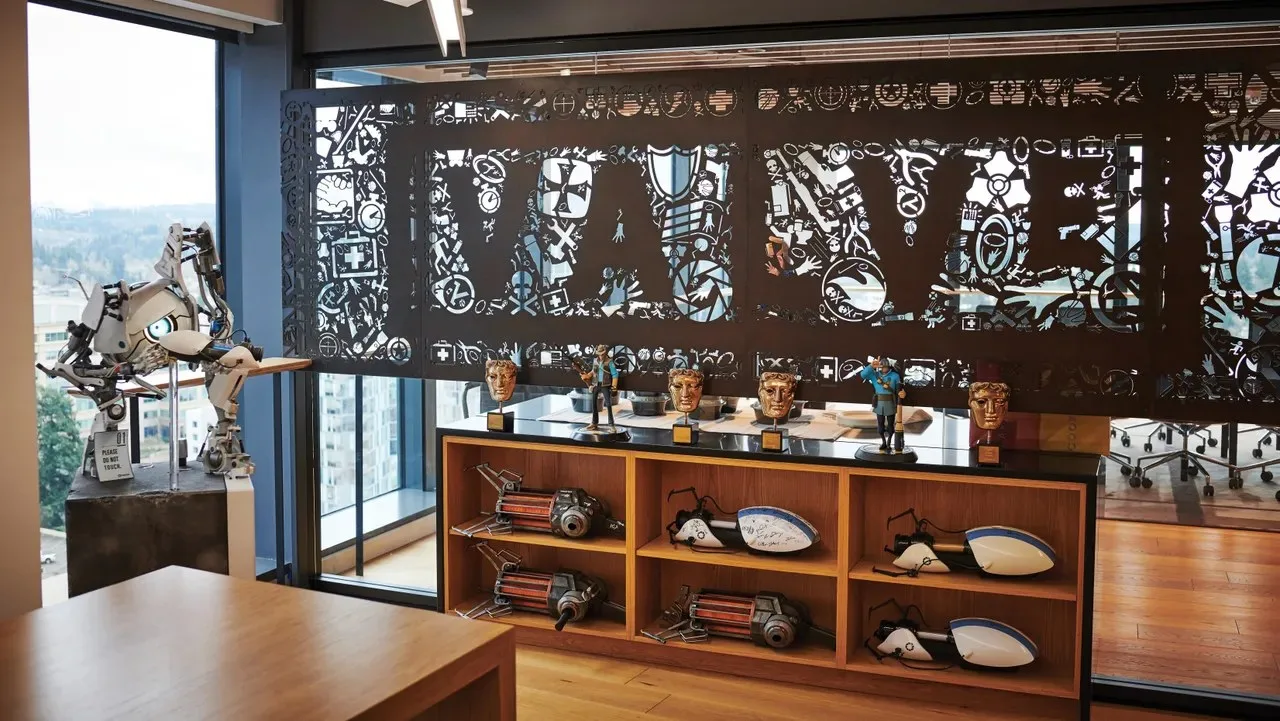
Valve’s Steam Business Team took to the stage at the Steam Indie Connect event in Korea and took questions from an audience of game developers. During the chat, the issue of Steam being flooded with generative AI slop games and knockoff AI clones came up, and Valve said it’s still trying to figure out how to navigate this new world.

Last year, roughly 17% of Steam Next Fest demos disclosed the use of generative AI, and this year was likely higher as the platform hosted over 8,000 demos during the event. It’s a huge discoverability problem for developers who’ve poured years of their lives into their games, only to get swept up in the slop deluge.
Then there are the AI clones, which are becoming a growing issue. Developers are becoming more and more concerned about showing off their games, as bad actors are using generative AI to clone them from early footage and demos, beating them to the market with a bad copy.
Steam Machine – Hands On Photos
During Steam Indie Connect, Valve’s Tom Giardino addressed concerns around clones, noting that they existed before AI and have only accelerated the process. “We don’t want to be gatekeepers telling developers which tools they should or shouldn’t use,” he said (thanks, InvaGlobal), ruling out Valve outright banning developers who do this.
“Rather than relying on a single mechanic that someone can easily copy, you need to keep growing your game by adding features, personality, and creativity that stem from your own perspective,” he added, shifting the onus onto the developer of the original game.
The issue of discoverability also came up, with developers in the audience noting that it’s harder than ever to stand out among all the throwaway AI games flooding digital storefronts like Steam, but particularly during Next Fest where developers are looking to find their audience ahead of release. According to Valve’s Marc Wilkinson, it’s not as bad as it seems.
During the first two days of Next Fest, recommendations are completely random, but personalized recommendations kick in later based on user activity. Once that kicks in, players are more likely to find the games they love. Wilkinson said that articles pointing out the flood of low-quality games were based on the first couple of days, before personalized recommendations kicked in.
According to Valve, the algorithm has to be completely random at first. This is to prevent system abuse from developers figuring out how to game the algorithm.
“We recognize that the trade-off is that some low-quality games get exposed,” Wilkinson said. “We are fully aware of the situation, and a significant number of people are thinking about how to solve this problem.”
Giardino added, “We don’t think we’re perfect and there’s plenty of room for improvement. Rather than limiting developer access, making Steam a smarter and more dynamic platform is the starting point of our philosophy.”
Photo by Olly Curtis/Future Publishing via Getty Images.
Kirk McKeand is a Contributor on IGN Nyheter. Find him on Twitter @MckKirk
Have thoughts, questions, or benchmarks on this topic? Join the discussion on our forums.
Join Discussion ➔






















1 comment