

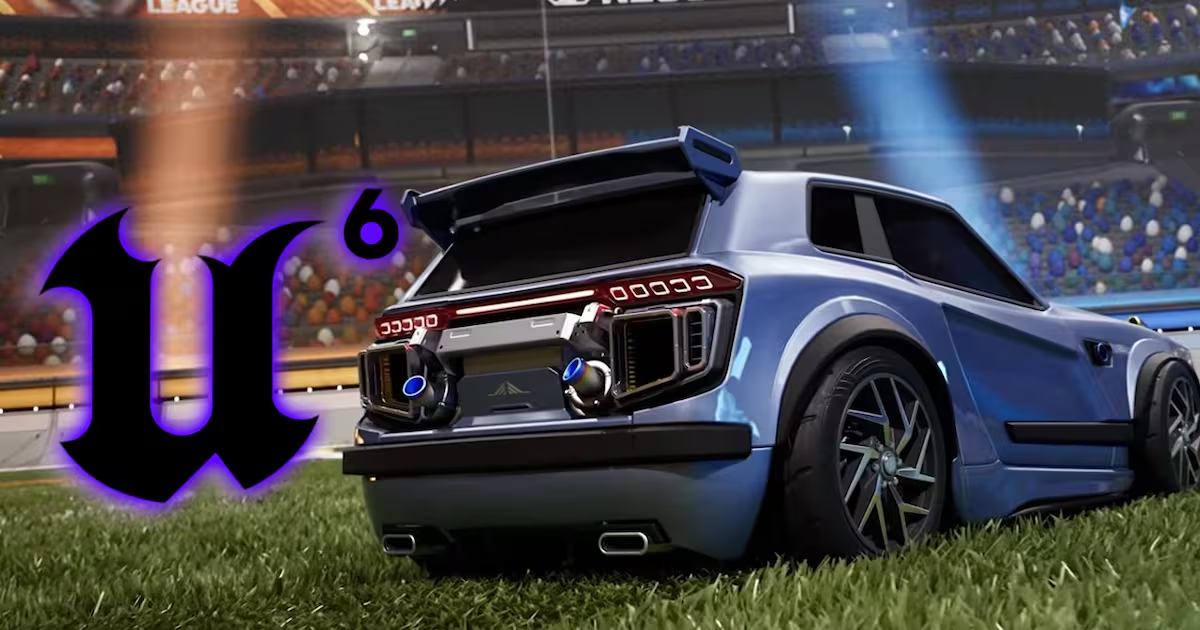
Months ago, whispers began circulating about the arrival of Unreal Engine 6, the next evolution of Epic Games’ renowned yet sometimes contentious graphics engine. Finally, the upgrade’s existence was confirmed, and the first title slated for a full visual overhaul was revealed.
During a competitive Rocket League event, developer Psyonix announced that the popular online soccer game would transition to the new engine. The official reveal was accompanied by a teaser that showcased how the multiplayer experience will look under the updated technology.
Rocket League debuted in July 2015, more than a decade ago, and was originally built on Unreal Engine 3—a version that first appeared in 2006 and dominated the Xbox 360 and PlayStation 3 era.

It’s easy to assume that relying on an older engine poses challenges for developers who continue to refresh the title with new content. Switching to a modern engine is a logical progression, but what few anticipated was the depth of collaboration between Epic Games and Psyonix.
Gamers erupted with palpable excitement when Epic Games unveiled its latest milestone: a title built on the brand‑new Unreal Engine 6. This marks a historic moment for the industry, as it is the first time Epic has showcased a full game running on the next‑generation engine.
By contrast, the predecessor was only demonstrated in 2020 through a technical demo crafted solely to highlight the engine’s capabilities. Importantly, no official release date has yet been announced for when Rocket League will transition to the new engine.
Notably, the football game will bypass Unreal Engine 5 entirely—a version that has proven to be one of the most troublesome in the engine’s history. Recent years have seen a flurry of reports detailing the myriad technical snags that plagued titles built on that platform.
In response to persistent player complaints, Tim Sweeney, Epic’s CEO, placed the blame squarely on developers and studios, asserting that the technical glitches stem from optimization processes that arrive too late in the production cycle.
Looking for deeper insight into Unreal Engine 6? Visit this page for comprehensive details, while the latest updates on Rocket League are just a click away.
Related video: Why are video games no longer evolving? Millennials vs Gen Z
News Source: Levelup
Have thoughts, questions, or benchmarks on this topic? Join the discussion on our forums.
Join Discussion ➔






















Join the conversation