

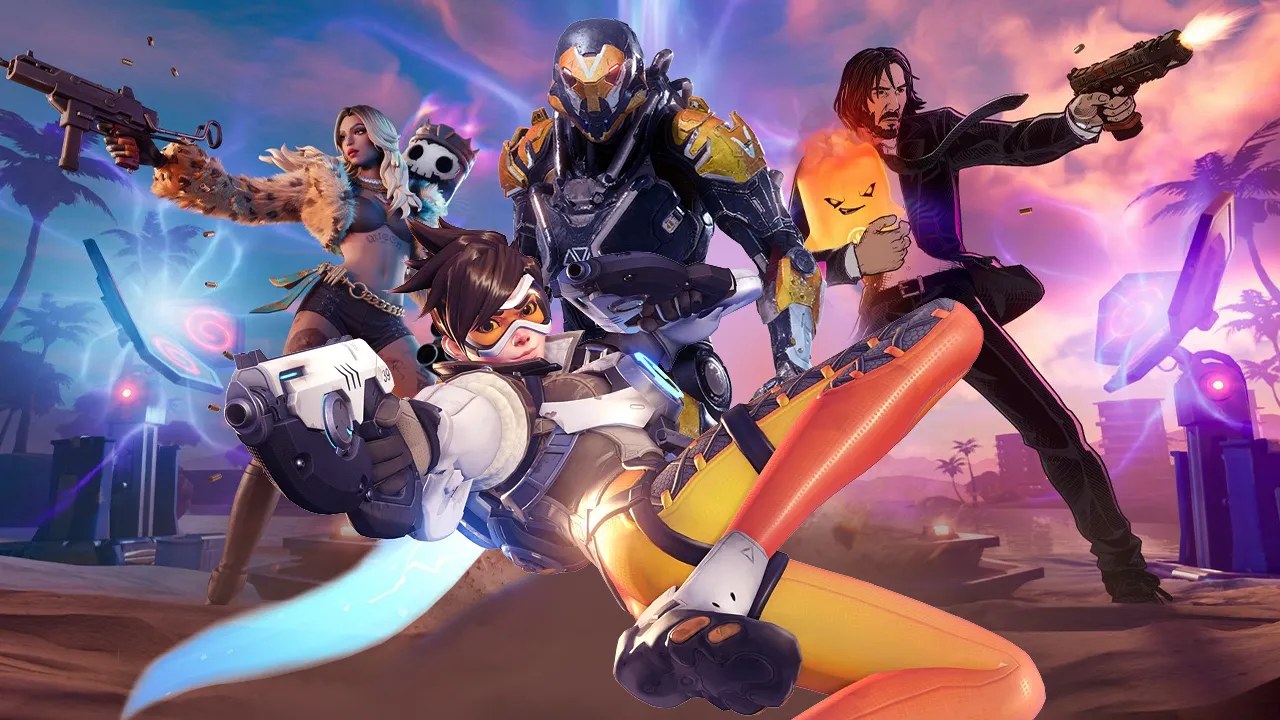
The live-service gaming market, once heralded as the industry’s financial holy grail, has hardened into a cutthroat battle royale of its own, where only the top contenders survive and latecomers risk total ruin. According to fresh analysis drawing on interviews with veteran developers including ex-BioWare producer Mark Darrah and Overwatch lead director Jeff Kaplan, the genre that was valued at $11.2 billion last year is now so oversaturated that chasing a second-place finish can be catastrophic for studios.
The findings arrive against a backdrop of mounting industry failures, from Halo Studios’ struggles to Amazon Games’ repeated missteps, and coincide with market research company NewZoo’s latest report showing a 27% decline in the battle royale sub-genre. Even titans such as Fortnite and Apex Legends have each suffered nearly a quarter drop in playtime growth. The analysis traces this brutal competitive landscape all the way back to the genre’s humble origins, arguing that publishers chasing a money-printing formula are increasingly ignoring the very lessons that made pioneering titles succeed.
From a Minecraft Mod to an $11 Billion Empire
The battle royale phenomenon can be traced to April 2012, when Norwegian YouTuber Dennis Vaeride launched what is credited as the first Survival Games server for Minecraft, riding the cultural wave of The Hunger Games film adaptation. Dozens of players sprinted into a starting circle, gathered supplies, and hunted until one stood last. That single experiment fired off an industry-wide movement that few studios could replicate and even fewer survived.

The true spark, however, came a year later from Brendan Greene, then living in Brazil. Inspired by the 2000 thriller Battle Royale rather than The Hunger Games, Greene developed a last-player-standing mode featuring shrinking safe zones, eventually birthing PlayerUnknown’s Battlegrounds through South Korean studio Bluehole. Launched on Steam Early Access in March 2017, it drew over three million concurrent players by December and forced Epic Games to pivot Fortnite from a struggling tower-defence title into the battle royale phenomenon that has since become more of a cultural platform than a game.
The dual success of PUBG and Fortnite ignited an arms race. Nearly 2,000 games now carry the “battle royale” tag on Steam alone, with hundreds more flooding the mobile market — a cycle Darrah compares to the MOBA boom half a decade earlier that saw dozens of titles rise and die in quick succession.

The Crushing Weight of Second Place
A central thesis of the analysis is that modern live-service launches demand far greater innovation than ever before, because developers are no longer competing with a game’s original form but with years of refinement. Kaplan illustrates this pressure by recalling how Overwatch itself was never planned; his team faced an ultimatum to produce something within a month after an MMORPG collapsed, and the resulting improvisation produced a title that drew seven million players in its first week before ballooning to 30 million.
“Number one controls so much of the attention in a space that it’s almost not worth being number two, let alone five or six.”
Mark Darrah, ex-BioWare producer
Darrah argues that many would-be competitors failed simply for lacking innovation, while publishers often substituted genuine creativity with marketing spend that can dwarf development costs. He points to the high-profile collapse of Sony and Firewalk Studios’ Concord in 2024 — a title built on a $400 million budget that nonetheless lacked novelty and arrived eight years too late to challenge Overwatch’s evolved form.
The Inverted Pyramid
Kaplan frames the industry’s core problem through what he calls a “pyramid” of games: art at the base, then entertainment, with business crowning them. He warns that publishers increasingly invert this order by prioritizing monetization first.

“They’re art, then entertainment, then business. If something’s not entertaining, there’s no business there. It fails. You can’t invert the pyramid.”
Jeff Kaplan, Overwatch lead director
The analysis notes that Anthem suffered a similar fate after EA pushed BioWare toward live-service design in pursuit of billion-dollar margins, and that this corporate pressure later bled into Dragon Age: The Veilguard. Even as publishers such as Ubisoft claim the single-player model is outdated and EA’s Andrew Wilson proclaims the future of single-player is live-service, Darrah fears an industry converging on a handful of dominant titles.
Looking Ahead
Despite the battle royale sub-genre’s waning popularity, analysts stress that live-service itself shows no sign of disappearing. PlayStation CEO Hideaki Nishino has recently reaffirmed his platform’s commitment to the model, while revenue streams from microtransaction-funded games persist well beyond any single trend.
The enduring question remains whether publishers can realign their priorities before the market contracts further. As Darrah observes, live-service is not inherently harmful, but a growing friction between developers and executives profit-driven by endless timelines threatens to stifle the very innovation that made pioneering titles like Destiny, Overwatch, and Fortnite worth playing in the first place.























Join the conversation