

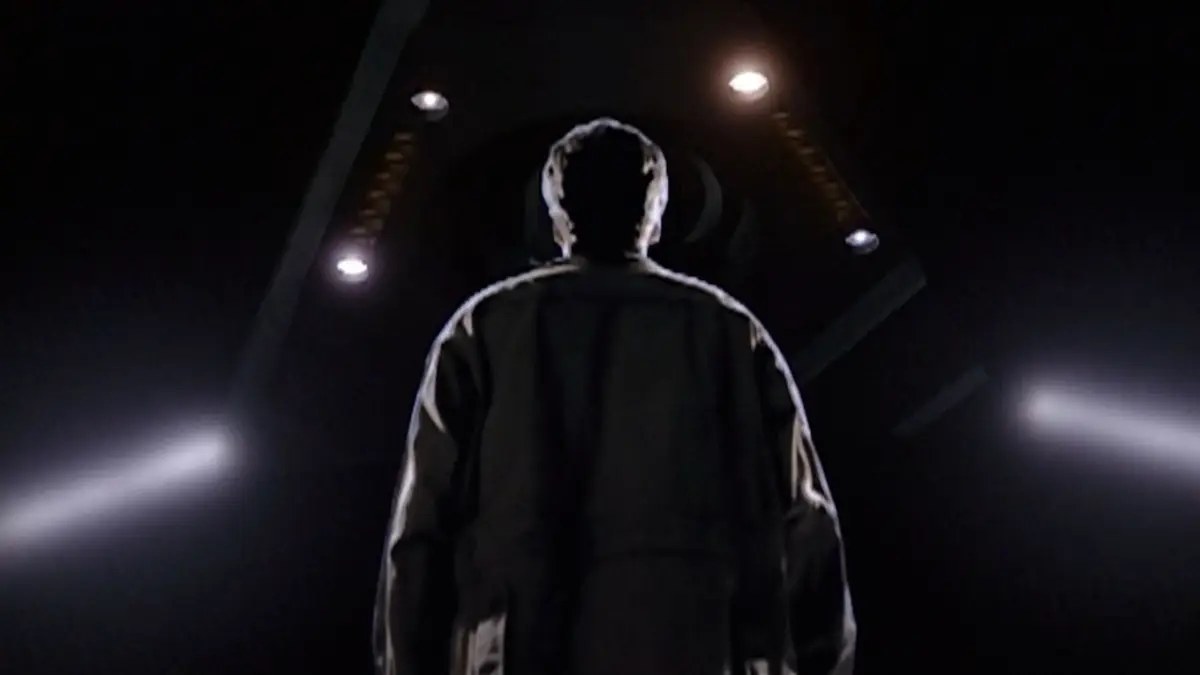
Thirty-three years after its 1993 premiere, The X-Files remains defined by the enigmatic figure who first whispered “the truth” into Agent Fox Mulder’s ear. Introduced in the show’s second episode, Deep Throat—portrayed with haunting gravitas by Jerry Hardin—quickly became one of television’s most enduring characters, even though his time on screen lasted just a single season.
The character debuted during an era when The X-Files was still finding its footing as a cultural phenomenon. FBI Agents Dana Scully and Fox Mulder had been assigned to investigate paranormal cases in the show’s pilot, but it was in “Deep Throat,” the second episode, that the series established its central mythology: a government cover-up of extraterrestrial life. The mysterious informant who guided Mulder through this conspiracy would leave an indelible mark on fans and the genre alike.
An Unexpected Origin
The show’s introduction to mystery informants actually began with another character entirely. In the pilot episode, FBI Agent Dana Scully is reassigned to the paranormal cases unit—nicknamed “the X-Files”—to assist Agent Fox Mulder, who has become obsessed with these investigations. The pivotal scene takes place in the office of FBI Division Chief Scott Blevins, where a silent man stands only in the corner, puffing on a cigarette.
That figure would become the Cigarette Smoking Man, played by William B. Davis. As Davis has explained, he was cast merely for a non-speaking part in the pilot without any hint of what his character would become. Yet something about his steely look convinced the writers to bring him back repeatedly, and over time he evolved into one of the most intriguing long-running characters in the entire series.
“I can provide you with information, but only so long as it’s in my best interest to do so.”
Cigarette Smoking Man, The X-Files
By contrast, the second episode introduced a different kind of mysterious figure—one intended to be a major recurring presence. Though Deep Throat did not last as long as the Cigarette Smoking Man, his impact remains something fans still remember decades later.
The Bathroom Warning That Started It All
In “Deep Throat,” Agents Mulder and Scully investigate the disappearance of an Air Force pilot in Utah, following a string of similar vanishings among servicemen stationed at the same base. At the episode’s opening, Mulder briefs Scully in a crowded Washington bar, fearing that someone at FBI headquarters might be listening in.
When Mulder steps into the bathroom, he encounters a mysterious man in a suit who warns him to abandon the investigation. “The military will not tolerate an FBI investigation,” he cautions before explaining that he can prove useful to Mulder in the future. Mulder ignores the advice and presses on with his inquiry.
Once in Utah, the agents discover that Air Force pilots are being used to test aircraft built from alien technology. Mulder witnesses an experimental triangular craft before being apprehended by servicemen who wipe his memory. After abandoning the case, the same man approaches Mulder again while he runs on a track in a Washington park.

A Line Fans Will Never Forget
The character’s most memorable moment arrives during that final exchange with Mulder. When Mulder explains that he saw something but cannot remember it, the man reiterates his offer to aid him. “What is your interest?” Mulder asks. The reply—”The truth”—has become one of television’s most quotable lines.
As the man walks away, Mulder presses further: “They’re here, aren’t they?” He stops, turns around, and knowingly replies, “Mr. Mulder, they’ve been here for a long, long time.” That exchange perfectly captured why audiences became so captivated by the show’s central mystery.
The character was named after the real-life informant who provided journalists Bob Woodward and Carl Bernstein with information about the Watergate scandal, which ultimately led to President Richard Nixon’s resignation in 1974. While never explicitly identified as the same figure, the name lent The X-Files a striking sense of reality, establishing Deep Throat as a man deep within the government working to reveal truth to the American people.
A Performance Built on Cinematic Legacy
Jerry Hardin’s performance drew inspiration from the two actors who had most prominently portrayed Deep Throat on film: Hal Holbrook in All the President’s Men and Donald Sutherland in Oliver Stone’s JFK. In his early 60s at the time, Hardin brought an intriguing blend of guilt, world-weariness, mystery, and wisdom to the role.
In subsequent episodes, Deep Throat’s intentions often remained unclear. Sometimes he appeared to conspire against Mulder, yet viewers still trusted him and hoped he was genuine—even when they could not be certain. He was sprinkled throughout the first season, sometimes cautioning Mulder or offering insight when asked, even providing leads for new cases.
The character’s finest hour came in “E.B.E.” (standing for extraterrestrial biological entity), where Deep Throat reveals that since the 1947 Roswell UFO crash, world governments agreed to exterminate any living alien on Earth. He explains he is merely one of three people tasked with carrying out this grim duty.
A Legacy That Outlived His Screen Time
By the end of the season, Deep Throat had revealed too much and was killed off by other members of the government conspiracy—a move that felt fitting yet arrived far too soon. The writers seemed to acknowledge this indirectly, introducing a series of Deep Throat-like substitutes in later seasons who fulfilled similar roles for Mulder, though none captured the same presence Hardin brought to the character.
In X-Files fandom, Deep Throat remains beloved despite his agonizingly brief role. Over time, many fans conclude that the show’s standalone episodes are its strongest, while those centered on the central conspiracy often felt unfulfilling as writers layered more questions and lore without answering enough. This frustration grew as the series progressed.























Join the conversation