

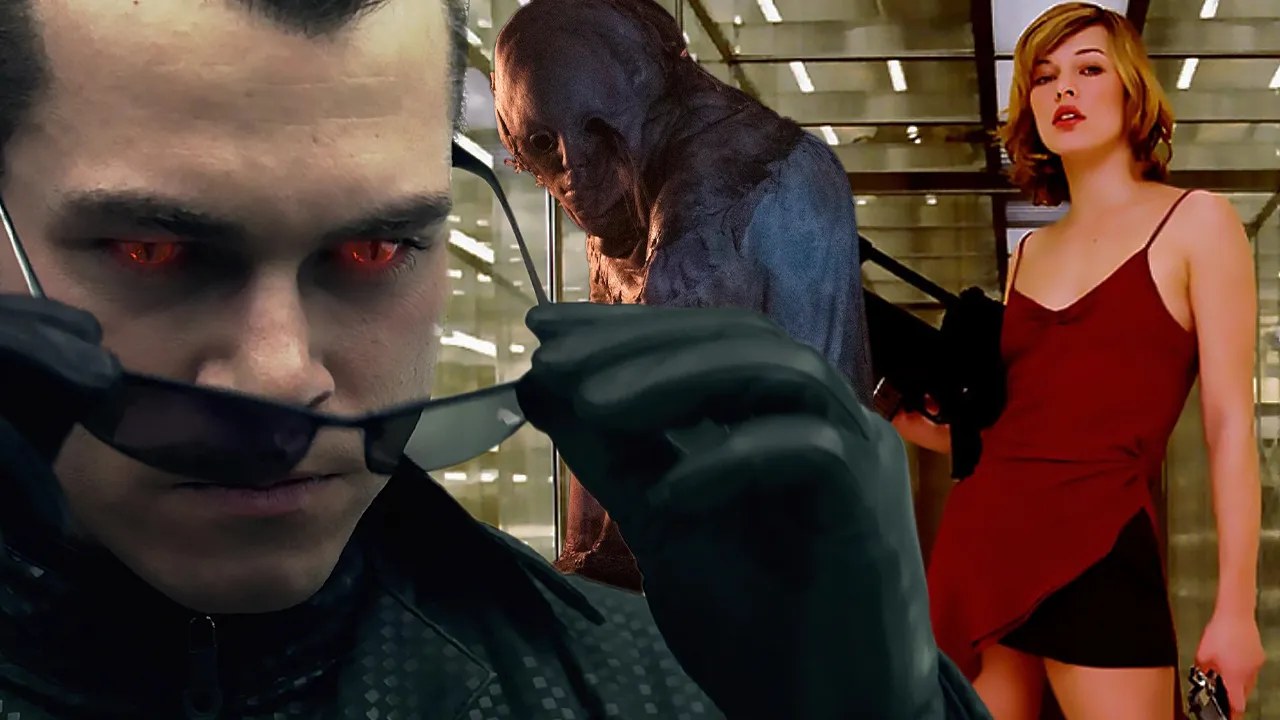
Resident Evil began its life as one of the best zombie games before Paul W.S. Anderson and Milla Jovovich brought the franchise to the big screen in a film series that spanned seven live-action movies. With a new Resident Evil movie now playing in theaters worldwide, fans may want to revisit where these video game adaptations started off. All six films sharing a single timeline serve as sequels to their predecessors, meaning there is no difference between watching them in release order versus chronological order.
This guide offers a mostly spoiler-free look at how you can watch the Resident Evil movies in chronological order, tracing the evolution of a franchise that has become one of the best zombie movie franchises out there. The films feature characters and villains drawn from the games, yet they tell their own separate stories while starring Jovovich as Alice, a newcomer to Resident Evil lore.
How Many Resident Evil Movies Are There?
There are eight live-action Resident Evil movies in total. Six of these films belong to a single timeline with returning characters, while two more recent entries act as standalone reboots. The franchise also produced four feature-length animated films—Resident Evil: Degeneration, Damnation, Vendetta, and Death Island—though those have not been included here.
The television landscape has seen Netflix attempt Resident Evil as both a live-action and animated series over the last two years. The live-action Resident Evil show was canceled after one season, while the animated series Infinite Darkness failed to make much of a splash.
The Six-Film Collection in Chronological Order
The original 2002 film introduced the world to Alice (Jovovich), an original character created for the films who awakens with amnesia before remembering she is a private security operative for the Umbrella Corporation. This first movie shows how the genetically engineered T-virus, which causes dead people to return as zombies, was released in a lab called The Hive. It also reveals how the lab’s AI security system, the Red Queen, killed every living thing inside the lab in an attempt to contain the virus.
The plan failed and the zombies escaped. Alice and her team must try to contain the outbreak by finding an anti-virus thought to still be hidden within the Hive. The film included several references to the first two Resident Evil games, including a tease of the iconic Nemesis villain from Resident Evil 3.
Alice vs. the Undead Horde
Resident Evil: Apocalypse (2004) is a direct sequel that brings back Jovovich’s Alice to once again fight the undead. Director Paul W.S. Anderson did not return due to other commitments, though he stayed on as producer while Alexander Witt took the helm. The film follows Alice attempting to escape Raccoon City before it is struck by a nuclear missile intended to halt the spreading T-virus plague.
Nemesis terrorizes survivors throughout, but the film pulls in many influences from the games, including characters Jill Valentine (Sienna Guillory) and Carlos Olivera (Oded Fehr). Certain shots were recreated for live-action, such as a shootout at the police department reminiscent of Resident Evil 3: Nemesis and a cemetery scene echoing Resident Evil CODE: Veronica.
Resident Evil: Extinction (2007) reveals that the T-virus has spread across the world. Alongside Alice’s return, the storyline follows several attempts by Umbrella to clone her in hopes of replicating her powers. As the story progresses, Alice and other survivors journey toward Alaska in an attempt to outrun the ever-expanding zombie apocalypse, with Claire Redfield (Ali Larter) and Albert Wesker (Jason O’Mara) joining the cast.

The Anderson-Jovovich Era Concludes
Resident Evil: Afterlife (2010) marked the first film since the original to see Anderson back in the director’s chair, where he would remain for the rest of the series. Set one year after Extinction, Alice and her clones work together to assault Umbrella Headquarters and Albert Wesker. Unfortunately, plans go awry, leaving Alice without the powers that have assisted her throughout the zombie apocalypse. Chris Redfield (Wentworth Miller) joins this installment.
Resident Evil: Retribution (2012) picks up after Afterlife, introducing game characters such as Leon S. Kennedy (Johann Urb), Ada Wong (Bingbing Li), and Barry Burton (Kevin Durand). Alice teams up with Wesker to stop the reactivated Red Queen AI from the first film, who now controls Umbrella and wants to eliminate all life on Earth.
The aptly named Resident Evil: The Final Chapter (2017) was the last feature film in the series to involve husband-and-wife team Anderson and Jovovich. It follows Alice as she returns to Raccoon City and the Hive to stop the Red Queen and Albert Wesker, while revealing more of the T-virus’s origin and who is really behind all the chaos that has been building since the first film.

New Reboots Take Over
After Anderson’s time with the franchise ended, several directors picked up adapting the Capcom hit. These are standalone movies with their own stories and characters, though they differ in their level of direct connection to the source material.
Directed by Johannes Roberts, Resident Evil: Welcome to Raccoon City (2021) is a reboot requiring no prior knowledge of the earlier films. Alongside a new director comes a new cast and a story that more closely follows the events of the first two Resident Evil games. Several familiar characters return, including Claire Redfield (Kaya Scodelario), Chris Redfield (Robbie Amell), Jill Valentine (Hannah John-Kamen), Albert Wesker (Tom Hopper), Leon Kennedy (Avan Jogia), and Ada Wong (Lily Gao). The story is set in Raccoon City and tells the early days of a zombie outbreak.
The 2026 Resident Evil movie marks Zach Cregger’s latest attempt at adapting the franchise. Director Zach Cregger, known for Barbarian and Weapons, takes a particularly fresh approach by focusing on capturing the feeling of being in a Resident Evil game as opposed to specific storylines—a choice that has drawn varying reactions from audiences.
The new film stars Austin Abrams as Bryan, a medical courier who heads to Raccoon City to make a suspicious delivery and finds himself trapped in a classic outbreak. While it features its own story and characters, there are connections to overarching Resident Evil lore, including some of the events in Resident Evil 2. Cregger has also cited Resident Evil 4 as one of his major influences.
The Future of Resident Evil Movies
An entirely new Resident Evil movie just hit theaters and is already off to a promising start at the box office. Still, director Zach Cregger, who had previously expressed interest in future sequels, has since declared that this will be his only Resident Evil project.
Right now, there is no certainty that any other Resident Evil movies are in the works. Given the continued success of new game installments like Requiem, however, it remains likely that someone else will take a stab at the zombie franchise sooner or later.























1 comment