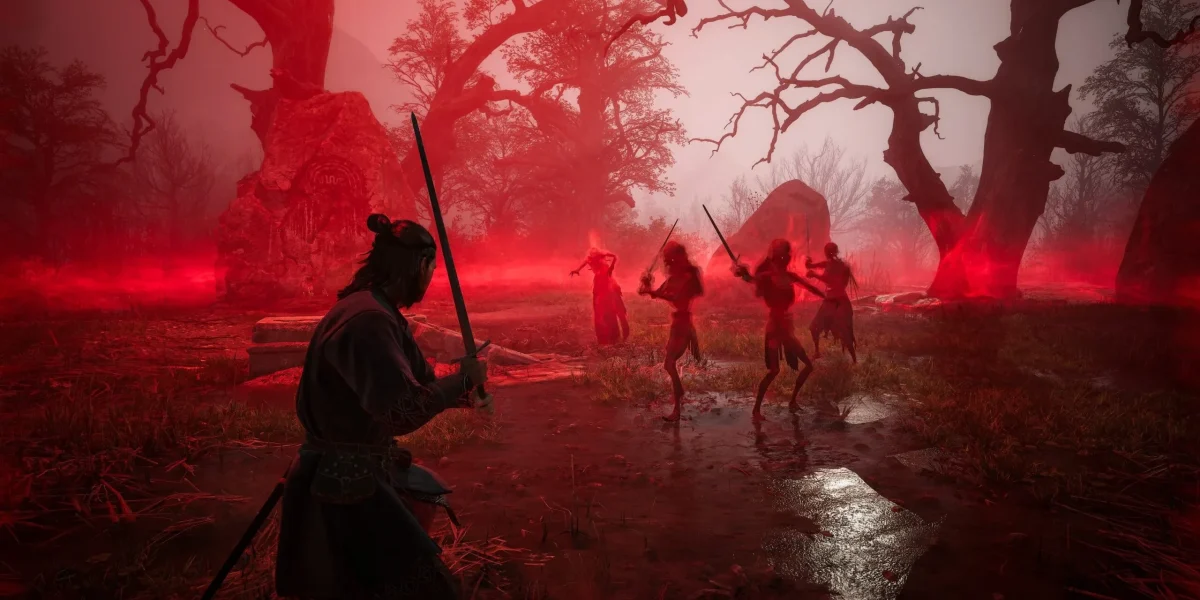
Coen, the world around you feels increasingly confined. Once a modest domain anchored to your family’s modest farm in the secluded hamlet of Laslea, the landscape has contracted further with the spread of a plague, your sister’s sickness, and the emergence of vampires.
You awaken to the grim reality that today marks Laslea’s Blood Mass. The night will bring the vrakhiri vampires, who arrive to harvest the village’s livestock as tribute. Every adult is compelled to participate, offering blood to feed the tyrants Brencis and his entourage. Such rituals are accepted as routine, and the acceptance of this macabre custom is growing, as the villagers’ hope for redemption fades.
Not everyone can endure this harsh reality. Your mother trembles, barely maintaining composure amid dread. Your father, torn between familial duty and his own history, has hardened into a stoic shell. Your siblings wrestle with the bewildering events unfolding. And you, Coen, a young man at the height of vigor, face a bleak future of periodic bloodshed, with scant optimism beyond the life of livestock.
Nevertheless, the routines of survival persist. Your mother is too weak to attend tonight’s Blood Mass, and her absence could bring ruin to your household—and perhaps the whole village. The gates are manned by Brencis’s guards, who will bar exit until the tribute is taken. The day is split into eight segments between sunrise and sunset, and you must navigate this schedule to devise a plan.
In the sun‑lit dirt lanes of Laslea, you drift through the village, the vrakhiri’s iron collar still clamped around your neck, yet the world feels boundless. You could head straight to Anca, the local herbalist, and beg for a cure for your mother, only to spend the day poring over Latin texts and soaking in her company.
Alternatively, you might confront one of the Uriash—massive, ram‑like warriors under Brencis’ command—in a bid to quell the rage boiling inside you. You could chase a runaway pig, rescue a neighbor, recover a tapestry stolen by the vrakhiri, settle a quarrel with a brash youth, or even ignite the first sparks of a rebellion against the vampires. Yet, you cannot do it all at once.
As long as you remain idle—wandering, observing, listening without acting—the sun stays high, the Blood Mass never arrives, and night never falls.
To advance the day, you must act. You speak to a weeping elder beside an unearthed grave, confront a river‑dwelling menace, probe your sister’s unsettling dreams, and hone your swordsmanship against woodland beasts. In the end, you dictate the rhythm of your own adventure.
From the very first moment, the game forces you to accept that some decisions lie beyond your control. No combination of dialogue or action can halt the Blood Mass once the sun sets; certain events follow their own inevitable tide, and you cannot bend the forces of grief, fear, or vengeance.
When the Blood Mass fails, the choices you and your family make become irrevocable. In the dead of night, you awaken deep within Laslea’s silver mine, driven by a strange, insatiable hunger that signals you are no longer entirely human.
The wrath of the vrakhiri, enraged by Laslea’s defiance, has declared you its chosen heir.
Brencis has selected you to become one of his own, a familiar figure who will turn against your friends and neighbors, adding another cruel layer to the unfolding tragedy.
Within thirty days, the surviving villagers—including your parents and siblings—are slated to be sacrificed at Brencis’ coronation, intensifying the urgency of your plight.
Your family is now confined to a dim cell, their fate literally held in the palm of Brencis’ hand, underscoring the grim reality of your newfound role.
Despite the village ablaze and dawn breaking, a fresh decision presents itself. Nothing is beyond hope. The sunrise no longer scorches you, nor does the vrakhiri exert dominion. At that instant, the world expands, chains dissolve. You now wield the strength and ferocity of a vampire, yet retain the emotions and bonds of a human. For the first time, you possess the long‑sought freedom to choose.
Emerging from the ashes of your ruined home, the entire Vale Sangora stretches ahead. A sword rests at your hip, while the magic runes Anca etched into your flesh still sting. A metallic tang of copper clings to the back of your throat.
You recognize that, with sufficient bloodshed and fury, you could liberate the valley from the vrakhiri’s grip and claim its bounty for yourself. You could align with the rebellion, rescue your kin, and vanquish the vrakhiri. Or you might sever ties entirely and chase whatever fleeting delights the present moment promises.
You, Dawnwalker, stand as an unparalleled force; no other path will mirror your destiny. A fresh dawn unfolds—how will you shape it?
❓ Frequently Asked Questions (FAQ)
What is the Blood Mass ritual in *The Blood of Dawnwalker*, and how does it impact the game's narrative?
The Blood Mass is a nightly ritual where the villagers of Laslea offer blood to the vrakhiri vampires in order to appease the tyrants Brencis and his entourage. It drives the story by forcing the protagonist Coen to confront moral dilemmas, sacrifice, and the oppressive regime that has become normalized in the village.
How does the spread of the plague and the emergence of vampires influence gameplay mechanics?
The plague limits resources and forces players to manage scarcity, while the vampires introduce new enemies, quests, and patrols. Players must balance protecting livestock, gathering supplies, and navigating vampire threats, adding layers of strategy and tension to survival.
What opportunities does the game provide for player agency in dealing with the oppressive Blood Mass?
Players can choose to participate, resist, or find alternative ways to protect their family. These choices affect relationships, the village’s fate, and unlock different endings, giving the player meaningful influence over the story’s outcome.
News Source: PlayStation Blog





Comments
Be the first to comment.