


Amidst the bustling halls of Gamescom in Cologne, Germany, Sword Panda Games and publisher 4Divinity offered press an early hands-on look at Sword Sage: Awakening, a China-developed Soulslike drawing deeply on Chinese folklore. In my hour or so with the demo, the game established itself as something quietly distinct within its crowded genre—a buoyant, faster-paced action-RPG that trades much of the traditional grimdark atmosphere for verdant mountain passes and an effervescent protagonist named Pei Sanniang.
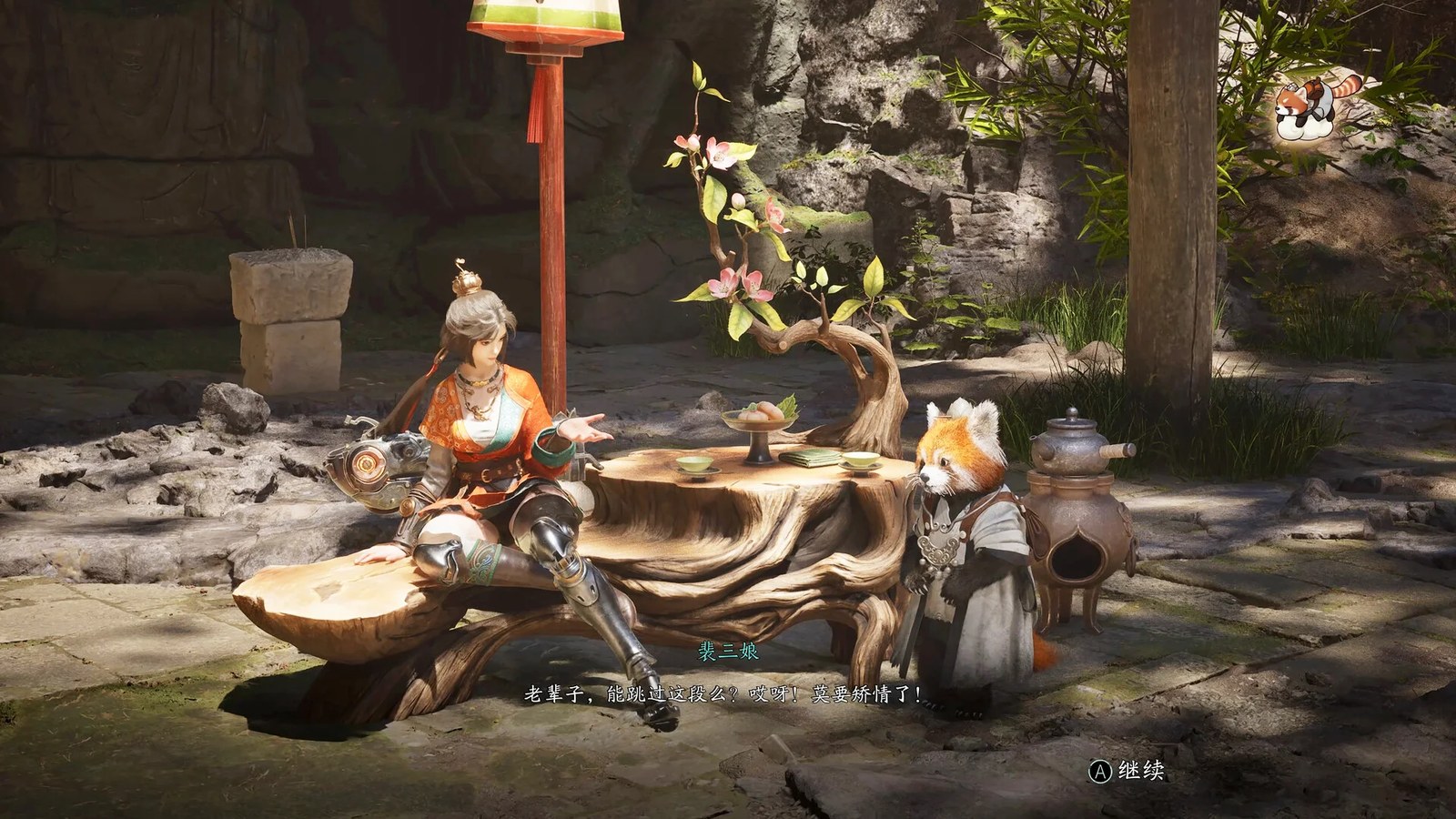
The most immediately memorable feature is arguably the smallest: a red panda deity who poofs into existence to serve restorative tea whenever players rest at the game’s bonfire-equivalent. But beyond this charming interlude, Sword Sage is pursuing ideas that run deeper than its cheerful tone, particularly in how it approaches combat and difficulty.
A brighter world with lighter stakes
The first thing that strikes you about Sword Sage: Awakening is its buoyancy. Where the average Soulslike leans into sombre stylings and perpetual gloom, this one opens on the Cypress Path—a misty mountain pass of verdant greenery, rickety wooden walkways, and cloud-swaddled pagodas piercing bright blue skies. The soundtrack favors gentle birdsong over discordant moans as swirling limbs and dancing blades fill the screen.
You play Pei Sanniang, a novice disciple of the Yuangong Sect returning from a year of wandering. She is an endearing presence, enthusiastically animated as she bounds up ladders, launches into elegantly rapid attacks, and turns ordinary jumps into playful mid-air twirls. Her sect specialises in disposing of yaoguai—malevolent entities from Chinese folklore—and the Cypress Path is crawling with them.
The level design follows familiar Soulslike conventions while offering occasional freedom. Players are funnelled along pathways dotted with enemies, though branching routes afford brief exploratory detours. There is a touch of FromSoftware-style cheekiness to enemy placement—dogs tucked inside shadowy cavemouths that tempt passersby with glistening treasures, or yaoguai hiding under ledges for surprise attacks. Shortcuts loop back to earlier areas, and glowing kettle lanterns mark the summoning points for Rosy Roundhound’s impromptu tea shop.
A pacier design philosophy
Beyond its lighter mood, Sword Sage positions itself as a faster action-RPG with fewer punitive mechanics. There are no runbacks; XP is earned by completing quests and defeating yaoguai, then automatically converted into merits spent on upgrades across a busy skill tree. Developer Sword Panda Games has reportedly indicated that players who struggle to adapt to the combat rhythms or find themselves stuck at bosses will be granted various reprieves.
The most interesting ideas go deeper than mood, with a combat system built entirely around flow—an evasion and counter mechanic that gives encounters their own balletic rhythm.
A combat system built on flow
It is in combat that Sword Sage truly distinguishes itself. Pei’s basic attacks consist of a rapid succession of slashes that gradually drain an enemy’s Vital Energy until their defenses crumble, opening them to a powerful Vital Strike. Players can break shields and cancel defensive stances with a swirling kick, or block incoming attacks—though blocking trades damage prevention for weapon durability.

Weapons break quickly in Sword Sage, losing the ability to block and dealing only minimal damage when shattered. Yet this is framed as a minor inconvenience rather than a punishment: weapons can be reforged back to full strength near-instantaneously at the press of a button, adding an unusual secondary rhythm to encounters.
The game’s true differentiator lies in its evasion system. Familiar rolls are replaced by Evade Cyan dodges and Strike Red counters. Holding the block button while tapping the right stick at precisely the right moment allows players to escape harm entirely. Matching the evade to the direction of an enemy’s attack—pressing up for high strikes, left or right for mid-level attacks, or down for low ones—triggers a dodge followed by a powerful follow-up counter.
This core system is supplemented by boon-granting talismans, craftable consumables including throwing knives and supernaturally enhanced firecrackers, and the ability to switch between two equipped weapons at any time. These weapons draw from a pool of standard types that drop with randomised skill bonuses and stats.
A formidable test
The demo’s first major boss—the towering Fangxiang Exorcist—demonstrates how these elements coalesce into something genuinely challenging. A wonderfully characterful design, he jigs from toe-to-toe while waving a spooky rock, swinging from the sides, grasping with claws, and delivering powerful overhead pounds that send shockwaves across the floor. With a sizable Vital Energy pool and a fondness for unblockable critical attacks, directional evades become essential for survival while follow-up counters prevent battles from dragging on until restoratives deplete.
The result is an enjoyable dance that forces players to observe and respond at speed, adopting a more instinctual approach to evasion and reforge timing. It stands as a strong conclusion to the demo, leaving genuine curiosity about the adventure ahead.
Looking Ahead
Sword Panda Games says Sword Sage: Awakening should take between 12-18 hours to complete depending on thoroughness, unfolding across three chapters. Each chapter promises four bosses spread across branching routes forward, while the third chapter reportedly shifts toward a more open, go-anywhere sandbox style of play.
No release date has been set for Sword Sage: Awakening yet, but when it launches it will arrive on PC via Steam and PS5. Developer Sword Panda Games hopes to eventually add Xbox and Switch 2 to the roster as well.























1 comment