

A survival game developer has unveiled the first installment of a design showcase featuring real-world structures that serve as inspiration for the building system players will encounter in the game. In this initial entry, the studio highlighted a decommissioned restroom in a local park, breaking the modest structure down into eight wall pieces, four standard roof pieces, two triangular roof pieces, and a single door — a configuration the developer noted could comfortably accommodate a bed. The reveal arrives as part of an ongoing series aimed at demonstrating how the game’s construction mechanics translate everyday architecture into playable, resource-driven builds.
The concept behind the showcase is straightforward: the developer wanted to prove that ordinary, overlooked structures from daily life can be reimagined as functional in-game constructions. By mapping a mundane public restroom onto the game’s modular building kit, the studio is illustrating the flexibility of its system, where players must source materials and assemble components to create shelter, storage, and living space. The inclusion of a bed within the restroom’s footprint underscores the game’s emphasis on practicality — every structure must serve a purpose, whether it is protection from the elements or a place to rest after a long night of survival.
From Park Restroom to Playable Shelter
The featured restroom serves as a perfect case study for the game’s approach to building. Rather than relying on fantastical or stylized architecture, the developer drew directly from the built environment around them, treating a defunct facility as a legitimate template for player-created structures. The breakdown of the build — eight walls, four standard roof pieces, two triangular roof pieces, and one door — reveals a component-based system that rewards creativity while remaining grounded in recognizable, real-world design.
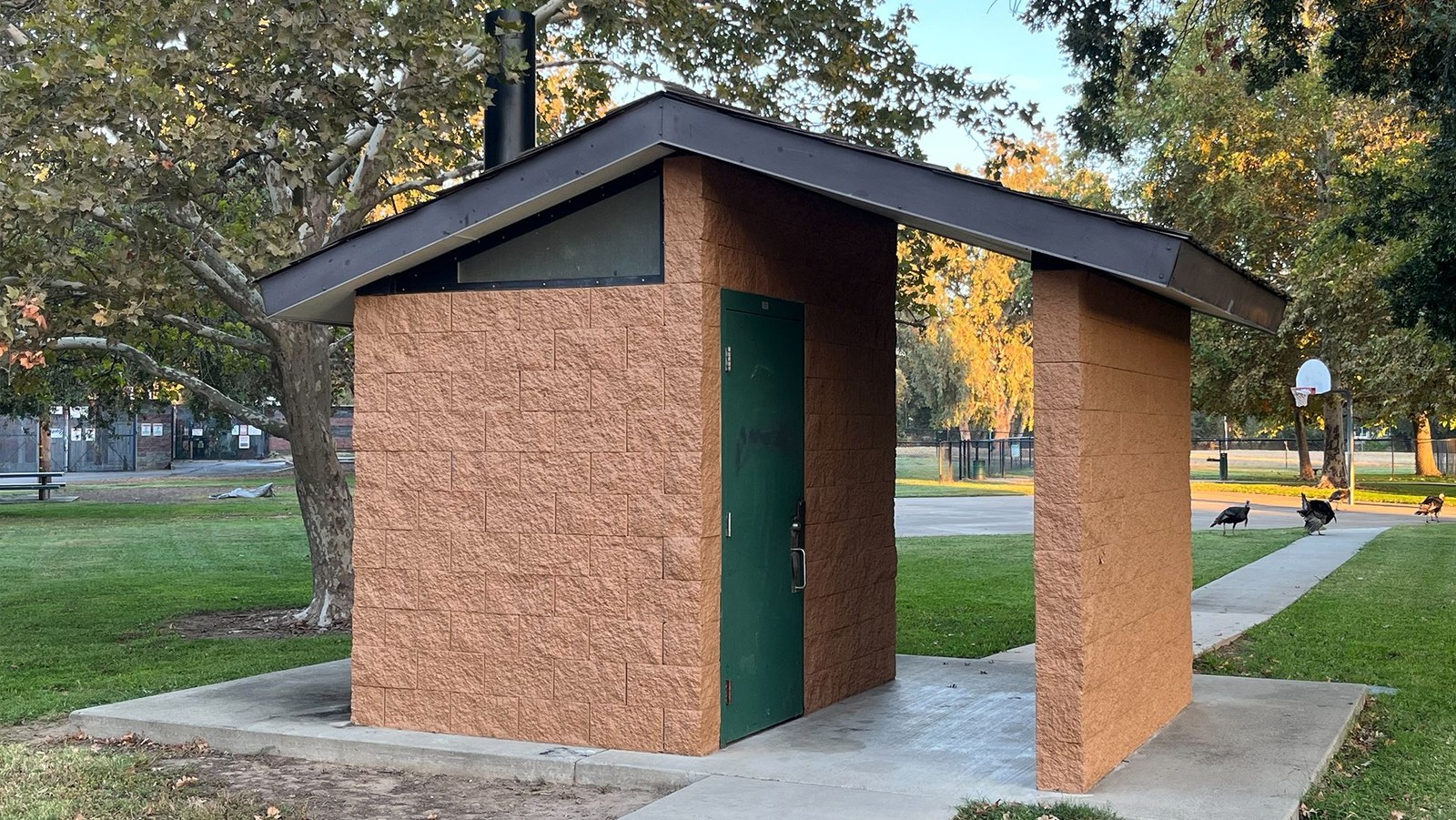
The developer’s commentary suggests a deliberate design philosophy: buildings should feel authentic and achievable, so players can envision constructing them within the game’s constraints. The ability to fit a bed into the restroom’s layout further signals that the game prioritizes livable, functional spaces over purely aesthetic ones, reinforcing the survival genre’s core tension between resource scarcity and the need for comfort and safety.
Real buildings that look like something I’d build on my first night in a survival game.
[Developer] 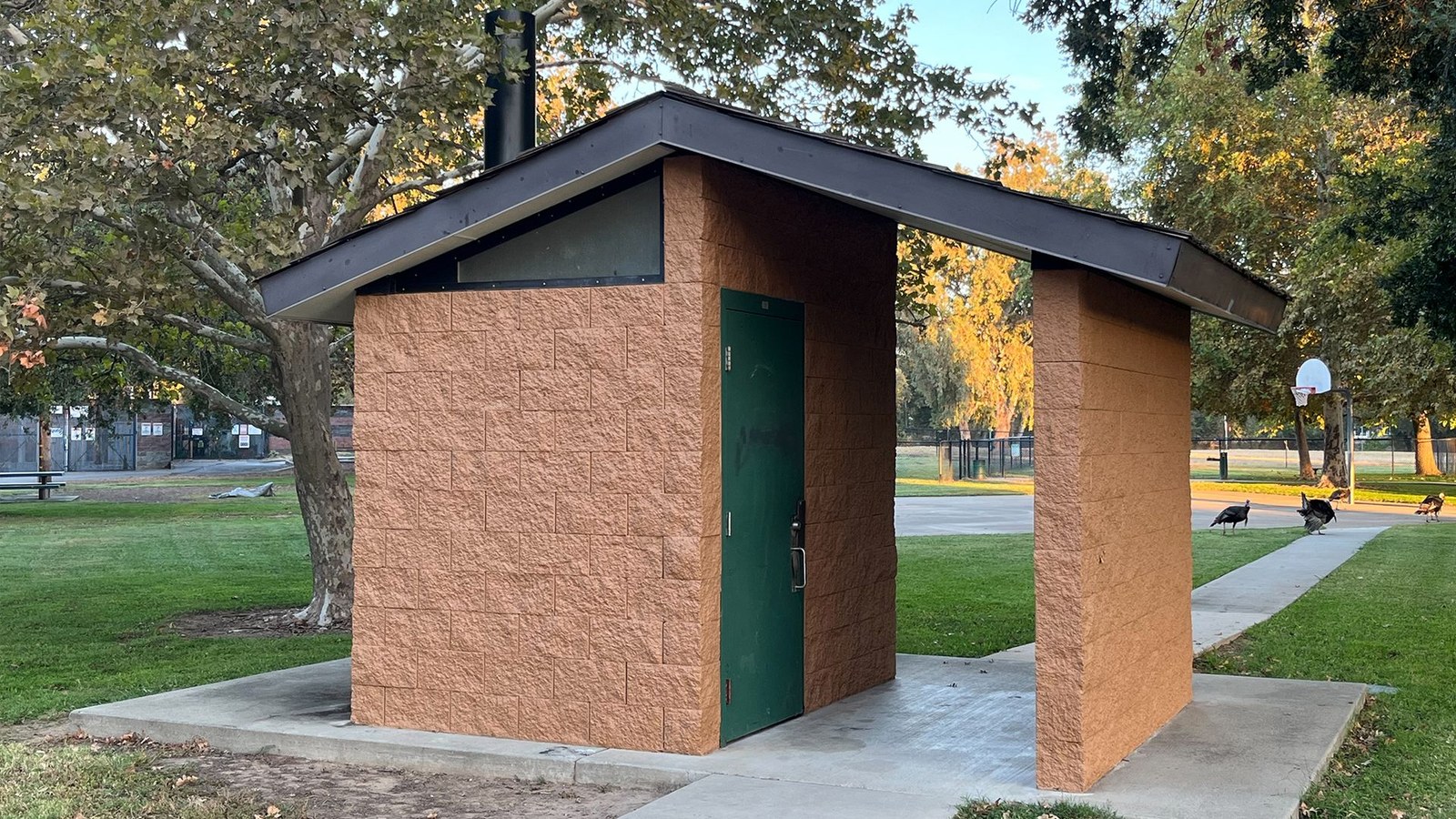
By anchoring the building system in familiar structures, the studio is signaling to players that the learning curve for construction will be intuitive. Players need not memorize abstract blueprints; instead, they can draw on their own understanding of how real buildings are composed and adapted. This approach lowers the barrier to entry while preserving the depth that makes survival crafting compelling.
Looking Ahead
This is only the first entry in what the developer has framed as an ongoing series, promising further examples of real-world structures reimagined for the game. As the showcase continues, players can expect to see additional everyday locations — homes, storefronts, and other familiar spaces — translated into the game’s modular building framework, each demonstrating new ways to combine walls, roofs, and doors into purposeful constructions.
The reveal also offers a glimpse into the broader design direction of the title, where building is not merely a cosmetic exercise but a central pillar of survival strategy. With the foundation of the construction system now on display, the developer is building anticipation for the full experience, including how these structures integrate with resource management, progression, and the ongoing challenges players will face. Fans of the survival genre will be watching closely as the series unfolds, eager to see how ordinary buildings become extraordinary tools for endurance.



No comments