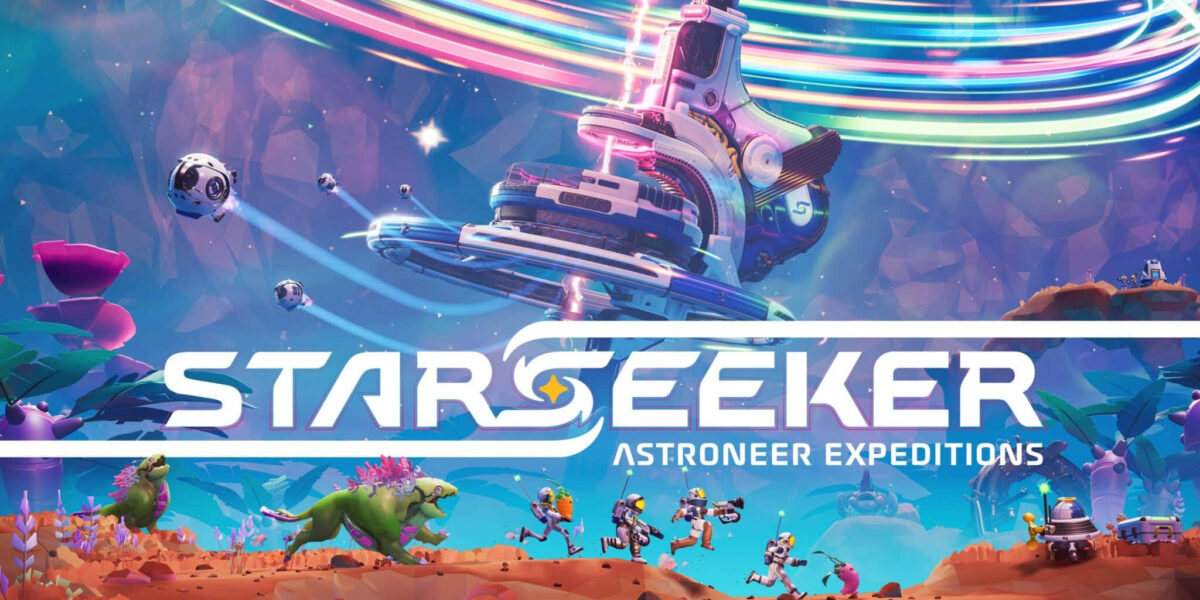
A long, sleepless night in Astroneer left me mesmerized by its blend of silent cosmos, vibrant planets, and the relentless dread of running out of oxygen just ten meters from the base. When Starseeker emerged, it didn’t promise the same experience; it promised something entirely different.
From the outset, the title was shrouded in confusion. Many players failed to grasp its intent, and System Era’s marketing efforts did little to clarify the vision. The result was an Early Access launch that struggled to establish a distinct identity, eroding the very uniqueness the game sought to deliver.
Despite the rocky start, Starseeker is not a mere sequel to Astroneer. System Era and Devolver Digital both acknowledged this, and early footage confirmed the divergence. Yet the combination of a familiar name, identical aesthetics, and a fanbase loyal to the original fostered a false expectation of “more Astroneer.” The reality, however, is a cooperative expedition game that supports up to four players and centers operations around the orbital station ESS Starseeker, where dozens of players can collaborate simultaneously.
From that hub, we launch missions with oxygen timers ranging from twenty to thirty minutes, depending on the objective. There’s no personal base, no long‑term survival mode, and no planet to slowly build over time. Instead, the focus is on clear goals, modular equipment, and teamwork. For what it is, the core gameplay functions smoothly.
The centerpiece of the experience is the exo‑tool, a modular device equipped with interchangeable nozzles that dictate how we interact with the environment. The standard nozzle can suck and eject terrain to terraform on the fly—crafting a ramp up a plateau, for instance. Other nozzles produce water to clean surfaces or repel hostile wildlife, while some emit an electric net to stun enemies. Each player configures their loadout before descending to the planet, and the game rewards improvisation rather than punishing poor choices. If no one brings a hose and the lab is clogged with sludge, the planet’s plants will splash water to clear the blockage. This flexibility is intentional, not a design flaw.
In the early‑access title Tephra, every planet is handcrafted rather than procedurally generated. The game features distinct biomes—swamps, jungles, and oceans—alongside missions that unlock collectively. Progress is shared across the community: what one squad accomplishes adds to the global progress pool of the entire player base. The catch is that if the player base shrinks or becomes inactive, the pace of unlocks stalls for everyone.
Just six days before launch, the developers announced that the game would have no microtransactions, battle passes, or premium currency. Yet on release day, a $10 Engineering Pack appeared in the store. The DLC was not the end of the world, but the team had explicitly denied its existence and then retracted that statement within days.
The backlash was swift. Steam reviews in the first hours highlighted the false promise as a major grievance. Compounding the issue, the game initially carried a “Single‑Player” tag on Steam, which was removed two hours post‑launch. Starseeker is an always‑online title with no offline or true single‑player mode. The mislabeling suggested that players could embark on solo expeditions offline, leading many to feel misled.
Adding to the disappointment were server outages on launch day and a tutorial that left half the necessary information unexplained. The result was a cocktail of negative first impressions that proved hard to shake. The good news is that the team responded quickly, offering in‑game credits to affected players. The bad news is that the reputational damage had already taken root.
Behind the launch controversy lies a title that deserves another shot once it has had more time to mature. Cooperative exploration works, the exo‑toolset offers genuine flexibility, and the Astroneer‑inspired aesthetic brings a unique charm to its expeditions.
Yet System Era’s foray into live‑service gaming is shadowed by a sparse post‑launch content history, a broken promise on day one, and a model that hinges on keeping the community engaged. If the developers can deliver the promised monthly content cadence and rebuild the trust that was eroded, STARSEEKER could become the cooperative space‑exploration game many have been waiting for. For now, if you have three friends who appreciate the Astroneer universe, it’s worth the trip; otherwise, hold off for a couple of updates.
Developed by: System Era Softworks
Published by: Devolver Digital
Genre: Cooperative Exploration / PvE Expeditions
Available on: PC — Early Access
Highlights: Astroneer returned from its stellar academy training with friends, missions, and promised additions. The exo‑toolset’s flexibility stands out. Timed cooperative exploration builds tension without feeling overwhelming. Hand‑crafted planets feature distinct biomes. The inherited Astroneer aesthetic remains impeccable. Shared progress as a community mechanic is an intriguing concept.
Criticisms: The team promised no microtransactions, yet introduced them on launch day. The “single‑player” label on Steam was misleading. Offline mode is absent in a game that needs it. Tutorials are insufficient. Launch servers were unstable. System Era’s track record of post‑launch content raises questions about its live‑service model.
We evaluated the early‑access version of STARSEEKER: Astroneer Expeditions using a PC code supplied directly by the developers.
❓ Frequently Asked Questions (FAQ)
Where can I find more details about STARSEEKER: Astroneer – Promising Early Access, Muddy Reality?
Further details and updates can be followed through official game channels and the source link provided in the article.
News Source: Irrompibles





Comments
Be the first to comment.