

“It’s like ‘setting fire to millions of dollars of property and equipment'”

Breaking up established game development teams in favour of “AAA veteran” start-ups and “magic bean” technologies is like “setting fire to millions of dollars of property and equipment”, according to Star Trek Online executive producer Thomas Marrone. He describes the practice as “wildly irresponsible and self-sabotaging” and says videogame company shareholders should be “absolutely furious” about it.
Marrone’s comments came in response to EA closing BioWare on Tuesday, but he cast his net more widely, targeting closures and layoffs across the industry. He noted that many of the most successful teams owe their accomplishments to lessons learned from past mistakes, and suggested that if big publishers merely want “numbers to go up” they should abandon game-making altogether and pour their cash into investment funds.
“One of the most insightful comments about game development came from a former boss,” Marrone wrote on Bluesky this morning. “He said ‘Making a game is like starting a band. You can’t throw money at a new studio with random AAA veterans and expect it to crank out a hit.’ A good game needs a vision. A good game needs a good team to build it. A good team needs chemistry to work well together. Team chemistry needs years of collaboration to gel. There are certainly ‘rockstars’ and leaders who are anchors for their team, but they need to have that chemistry and trust with everyone around them to be truly effective.
“The AAA philosophy seems to be to hire four random musicians and expect them to become the Beatles overnight,” Marrone continued. “When it does happen: well, we have the songs now, we can just hire different musicians to record new songs when we want another album. It’s truly insane and shows a fundamental misunderstanding of the collaborative creative process at the heart of making games.
“Most studios that generate an overnight hit are actually on the 3rd or 4th title,” he said. “Blizzard, Larian, Arrowhead, these places had several games under their belts before their first true blockbuster. Like George RR Martin they had been grinding XP for years before becoming a household name. The current AAA Видавець practice of disbanding studios, even if they ship a game successfully, is so counterintuitive to their own financial future it boggles my mind.
“Like if I were a major shareholder I would be livid,” Marrone observed. “This is wanton destruction of these publishers’ most precious assets. It’s like literally setting fire to millions of dollars of property and equipment. It’s wildly irresponsible and self-sabotaging. If big game publishers just want numbers to go up, fire everyone and just invest it all in mutual funds or something. If you don’t want to actually make a product, and you don’t want to build a business around making a product, just liquidate your assets and stop pretending you want to make anything.”
Marrone has been at Cryptic Studios for 16 years, starting out as an associate graphics designer. “I’ve worked on one game through that whole career, which means I’ve seen lots of leaders come and go, and lots of versions of the company and the game as it grew, shrunk, and changed,” he noted.
Cryptic itself was founded in 2000 and is also known for Champions Online, City of Heroes and Neverwinter. It has been through a great deal of upheaval recently. Cryptic was acquired by (dread bell tolls) publishing conglomerate Embracer in 2021, during the latter’s early-Covid-era campaign to absorb half the industry. When Embracer belatedly acknowledged that all of its acquisitions had left it up shit creek without a paddle, Cryptic Studios was among the many subsidiaries that had to lay off staff. Embracer then sold it to Project Golden Arc, a new company formed by former Star Trek Online publishers Arc and XD Inc, publishers of Torchlight: Infinite and Heartopia.
Marrone was unsure how many of Cryptic’s founding staff remain, but made it sound as though they have done a fair job of keeping their teams together. “I have very personal experience working on a team that has gone through all the corpo speak stages ‘forming, storming, norming, and performing,'” he wrote. “It can take Y E A R S to get to that final stage. When you do, it’s awesome. People are 2, 3, 4x as effective as when they start. But it just. takes. Time.”
“It takes time to build a team,” Marrone continued. “It takes shared experiences. It takes shared wins AND shared losses. What if Larian had shut down after Divine Divinity? What if Arrowhead had shut down after Magicka? What if Hello Ігри had shuttered after the initial launch of No Man’s Sky? These studios have all had ups and downs but they were given time to grow and learn and their teams got better and better. Not to say those teams were static, but certainly there was a continuity and culture that informed their biggest successes.
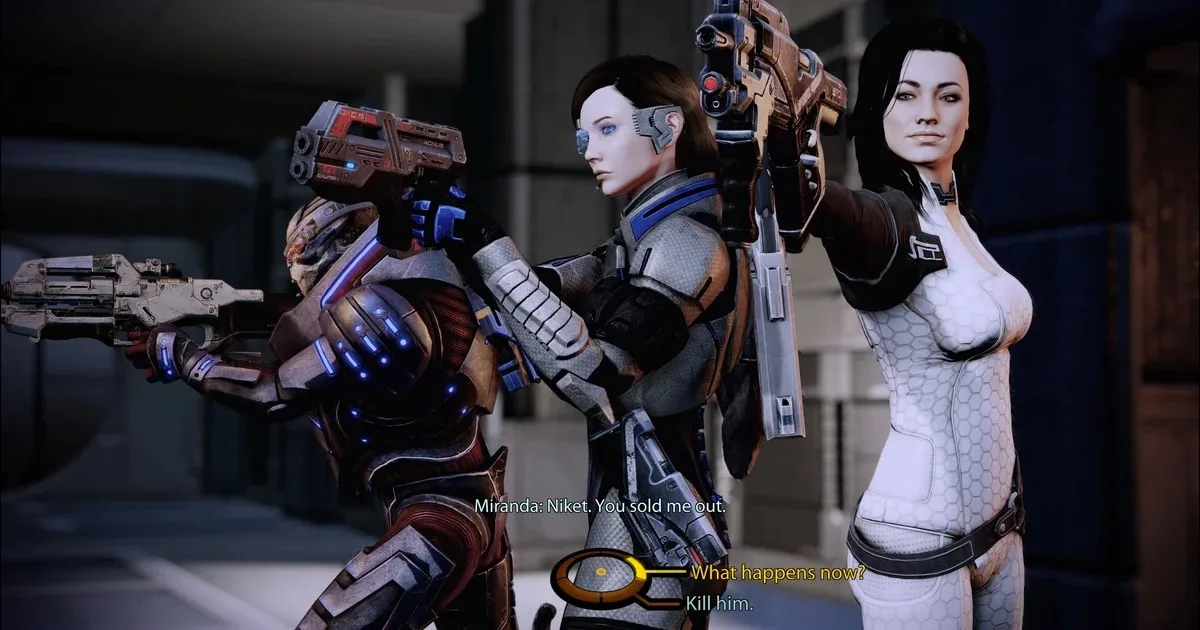
“And when you look at the arc of a studio like Bioware, you can begin to see how important it is to keep the teams healthy, how important it is to keep those rockstars and leaders together with the teams that know them. Mass Effect is a great game. Mass Effect 2 is one of the best games of all time.
“In my current position I understand the pressure of leadership when millions of dollars and hundreds of salaries are at stake,” Marrone concluded. “I understand the drive to find a magic bean like NFTs or GenAI or whatever is trending on LinkedIn this week. There’s got to be a ‘trick.’ We’ve got to find a ‘trick.’ But.” Marrone ends the thread by reiterating the need to “nurture and empower your team”.
We’ve heard plenty of common-sensical commentary like this from other senior devs of late. In April, Bit Reactor boss and former XCOM developer Greg Foertsch spoke to Julian about how he and other Firaxis managers “kept the team together” across development of Sid Meier’s Railroads, XCOM: Enemy Unknown, and XCOM 2.
We’ve also recently seen a number of new “AAA veteran” startups come and go, as investors take fright after an initial buzz of interest during the Covid lockdown period. Former BioWare manager Casey Hudson launched a new studio in 2021 only to shutter the company in 2024. Former Mass Effect and Dragon Age scribe Mac Walters similarly launched a company in 2023, only for publishers NetEase to pull funding a year later. There are going to be a lot more BioWare veterans in the wilds this year, joining many thousands laid off by the likes of Microsoft and Ubisoft.
Have thoughts, questions, or benchmarks on this topic? Join the discussion on our forums.
Join Discussion ➔






















1 comment