

Screen Burn, the small Scottish studio behind the acclaimed horror titles Stories Untold and Observation, has released Silent Hill: Townfall, a survival horror game that transplants the series’ trademark dread to a fictional Scottish fishing village. Set in the winter of 1996 in the seaside town of St. Amelia, the game follows an American named Simon who washes ashore with no memory of how he arrived, only to uncover a tragedy tied to a foreign energy corporation. Released on September 24, 2026 for PlayStation 5 and PC, the title marks another attempt by a non-Konami developer to expand the franchise beyond its long-standing American roots. In its review, Kotaku praised the game’s atmosphere and tactile design but flagged underdeveloped characters and frustrating later-game mechanics, ultimately awarding it 7 out of 10.
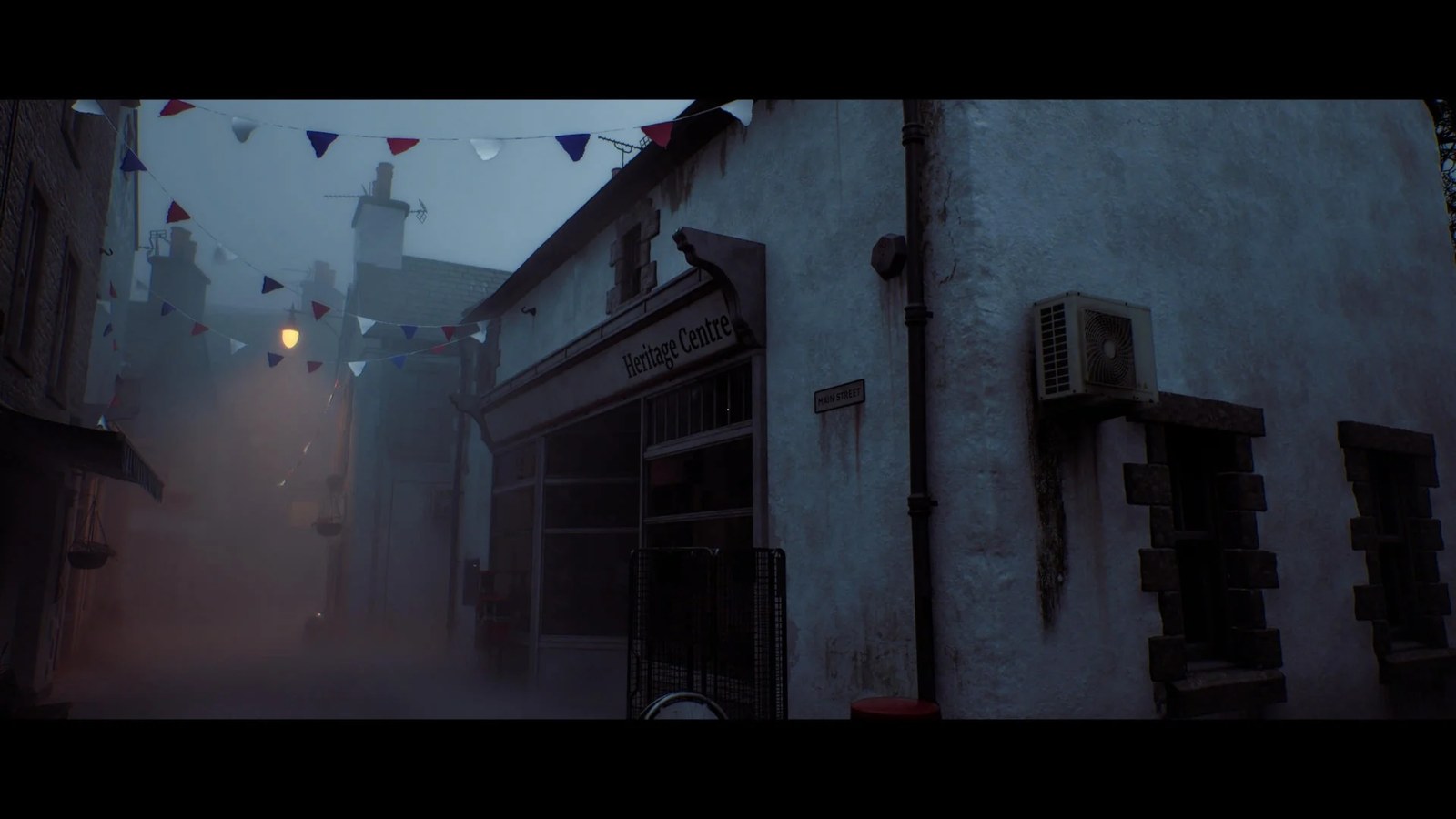
The game opens on a town already emptied of its people. Its narrow streets hold nothing but the detritus of a bygone time — discarded protest placards, triangles of red, white and blue bunting hanging listlessly in a thick white fog, and the unwashed dishes and rumpled clothes left behind as if their owners had simply vanished in the middle of the day. The sole inhabitants are a single woman and two men who linger more as ghosts than humans, alongside a host of shambling grotesques stalking the streets like pitiful monsters. Simon, the player’s initial guide, arrives with an IV line running along his forearm and no idea what has happened in St. Amelia or how he ended up there. The answers come in good time, but they are delivered in a way that is far less compelling than the manner in which they are raised during the game’s first several hours.
A Town Built to Haunt
Like last year’s Silent Hill f, Townfall looks beyond the original games’ fictional American setting for a horror story drawn from the aesthetics, culture and history of a different country. The player’s initial lens is American, though the perspective shifts across its runtime to that of an English nurse called Zoe and a shadowy American named Richard. What emerges is a grim picture: a terrible accident has filled the town’s hospitals with dying patients and choked its parking lots with triage tents and corpses shrouded in black body bags, while the town’s dismal economy has been revived by investment from Chapman Energy Group (CEG), a foreign energy company that employs much of the population and is directly linked to all the death that surrounds the three protagonists.
The tone established in those opening hours is largely the result of the fidelity with which St. Amelia is modelled. The concrete and brickwork of its twisting network of houses and storefronts glistens faintly in the damp, and home interiors are lavish with fine minutiae — breadboxes and tea towels on countertops, computer terminals with chunky plastic casings, and command-line text rendered in thick lo-res fonts. The first-person perspective lends a sense of presence to what could otherwise be rote exploration, reinforcing a key thematic point: that this empty town was once home to believably ordinary people.
“Townfall is a game that asks how economic systems shape those who live within them on levels deeper than they might imagine. Simply asking these questions gives it a vibrancy uncommon to big-budget productions — but the thin answers it offers are a letdown in proportion to the promise given.”
Kotaku
Tactile Design and Looming Danger
Screen Burn’s preoccupation with object tactility grounds the game immensely. Simon carries a portable TV that can be tuned to locate enemies and display their flickering silhouettes amidst static snow, while Zoe holds a pager with black bars around its display that track the position of nearby monsters. The puzzles that punctuate the characters’ exploration are largely centered on manipulating analog devices — floppy disks to load into external drives, toggles to flip on medical terminals, and dials to twist and numbers to punch into keypads and combination locks. They are fairly simple for most of the game, requiring environmental observation and key-hunting to solve, but they are satisfying in the way that fitting a key into a lock is satisfying, and they serve as solid storytelling devices in their own right.
Enemy encounters stress hiding and sneaking over outright confrontation. The creatures are suitably gross manifestations of the cast’s obsession with mass death — corpselike figures in underwear, faces obscured into anonymous blurs of distorted flesh, and scuttling, waterlogged bodies that strike out with leech-like maws — but it is their deadliness that establishes the game’s mood. A pervasive sense of being hunted is made tangible by how quickly enemies tear through the health bar and how helpless the player feels fighting back with a plank of breakable wood or a brittle length of pipe. Tracking movements through the TV or pager instills a certain paranoia to crouching behind barriers and scanning offices, living rooms and alleyways for a path forward.
The Later Game Deflates
Everything that works so well for the first third of the game, though, deflates as it goes on. The sense of danger that animates earlier encounters curdles into frustration when the player is swamped by too many monsters, and when larger environmental puzzles become an exercise in hide-and-seek that tests patience more than anything else. One particular creature — a tumorous hulk that cannot be killed and can snatch the player up for an instant death — appears to ruin lengthy sections of the game. The puzzles, too, escalate into unnecessarily opaque obstacles that, like the enemies, seem to exist only to offer an arbitrarily heightened level of difficulty as the game progresses.
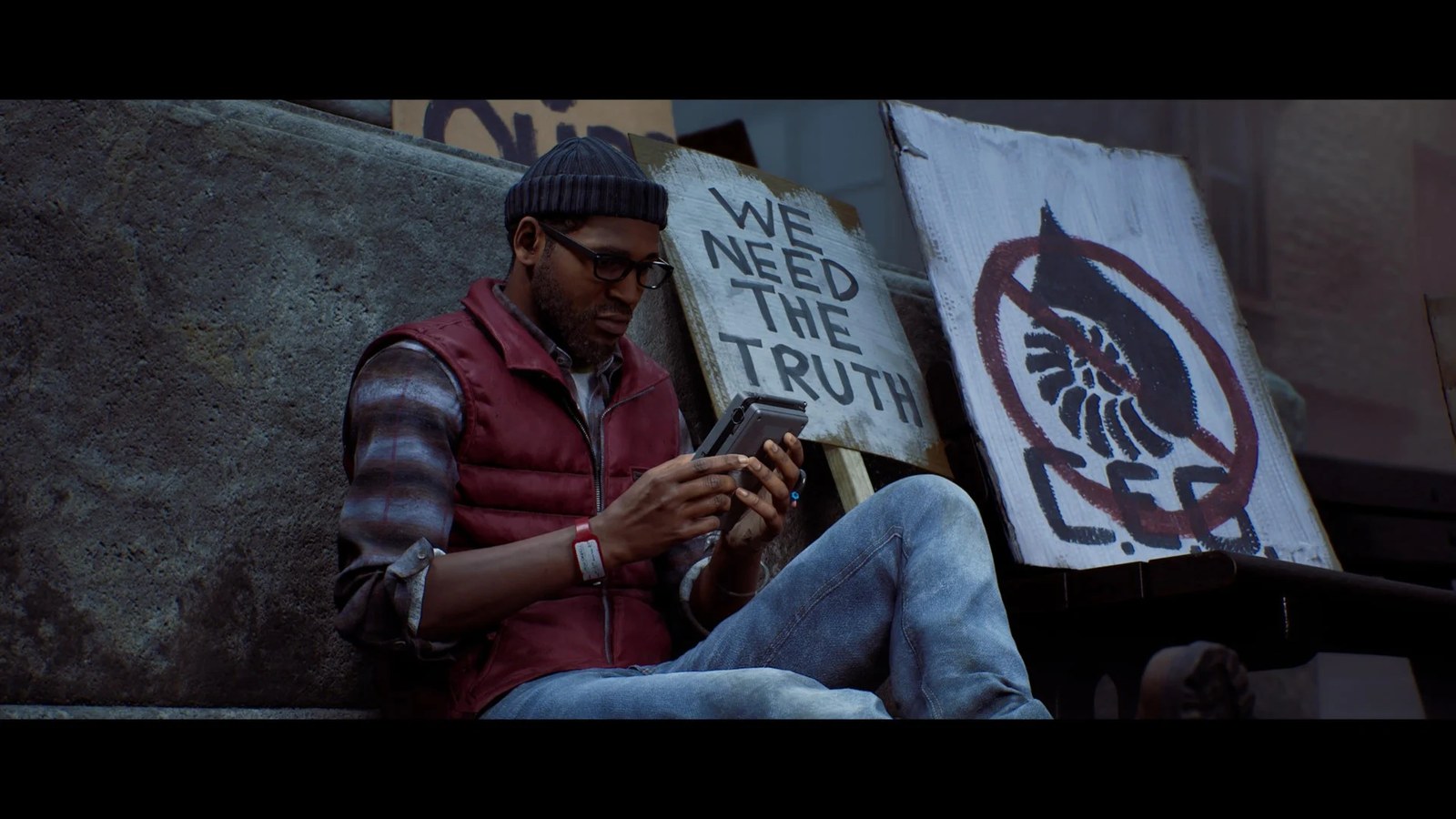
The fault lies mostly in the characters. Simon is a blank slate whose character is only given dimension late in the game, and with not enough complexity to resound. Zoe remains one-note throughout, while Richard contains the most compelling dramatic fodder but ends up serving more as an archetypal plot device than a complicated individual. The lack of a Scottish perspective among these central characters is understandable given the plot’s focus, but it also forecloses seeing more of the story’s events from the close-up terror that informs its real victims’ perspectives.
Too much of Townfall is devoted to the externalities of St. Amelia and the machinations of the tragedy that shaped it, not enough to the emotional and intellectual centers of its characters. As an outline, its plot is a welcome attempt to marry real Scottish history and political concerns with Silent Hill’s brand of psychological horror. In execution, it lacks dramatic heft and engagement with the richest aspects of its setting.
Looking Ahead
Played for just over 15 hours to complete the main story, Townfall is a game that asks how our sense of self is directed by our jobs and how we might decouple personal and professional responsibility. Simply posing these questions gives it a vibrancy uncommon to big-budget productions, but the thin answers offered are a letdown in proportion to the promise given. The characters function too often as props, with not enough emphasis lent to the anguish that has trapped them in refracted visions of their torment. In the end, as in the beginning, there are no people in St. Amelia — none but a trio of ghostly humans and faceless monsters. In a larger sense, there are no people in Silent Hill: Townfall either.



1 comment
[…] Article: Silent Hill: Townfall Brings a Chilling Scottish Town to Life, But Its Characters Fall Short → Kaynak: GameSpot […]