

 •
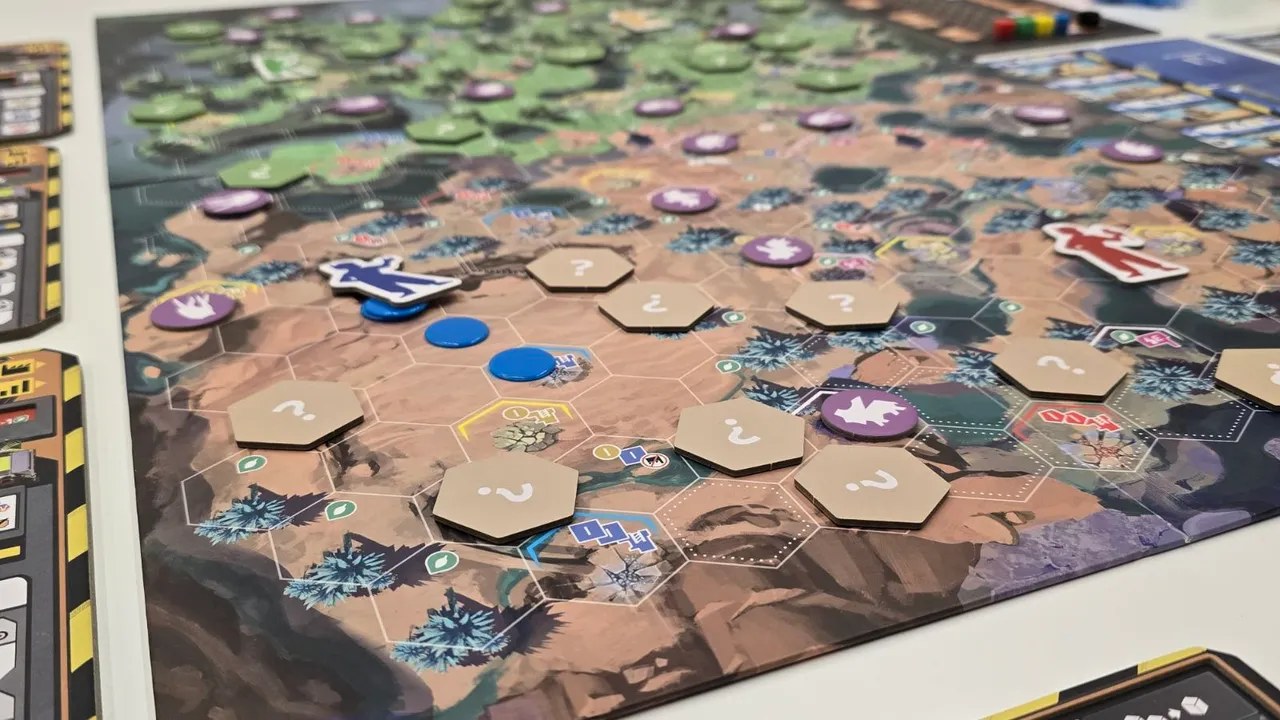
•Automation and factory-building games have become increasingly popular in recent years, with Coffee Stain Studios’ Satisfactory standing as one of the genre’s stars. Now Mood Publishing—the publisher behind Hitman: The Board Game—is seeking to bring the beloved factory sim to your tabletop via Satisfactory: The Board Game and a new crowdfunding campaign on Gamefound.
The company sent an early prototype copy for review, alongside playing a demo with designer David Thor Fjalarsson, to see whether a tabletop game can capture the Satisfactory experience at kitchen-table scale.

A straightforward core loop
In Satisfactory: The Board Game (referred to simply as “Satisfactory” going forward), designed by David Thor Fjalarsson, up to four players mine, refine, and upgrade their factories in an effort to earn the most FICSIT points before the space elevator is finished.
Turns are surprisingly straightforward: on your turn you perform two actions—either build something, move around the map, or have your factory do its work. Once each player has taken their turn, a production phase occurs where everyone’s mines activate, drilling for one of three basic materials—limestone, iron, or copper—with existing materials moving down their conveyors toward refinement before the cycle repeats.
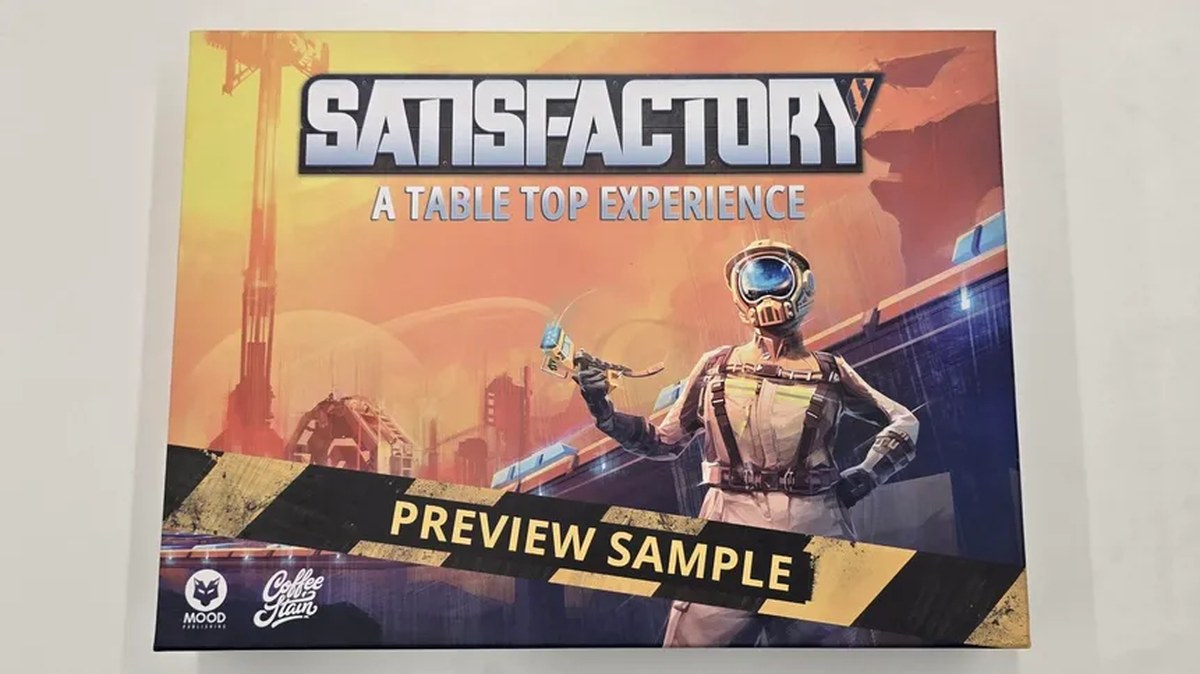
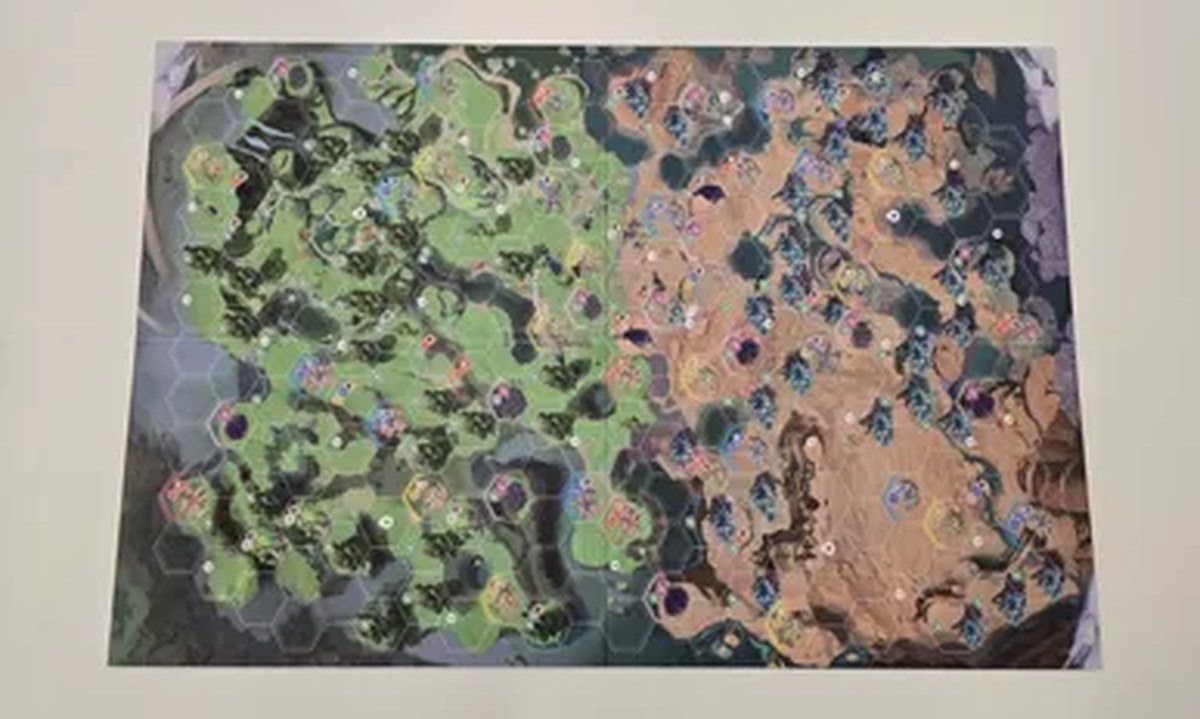
The game takes place on a large hex-grid representation of the video game’s world, with random creatures and biomes placed during setup along with material-rich points where mines can be placed. The “Move” action lets you move your piece up to a number of spaces equal to your movement value, though some spaces require certain technologies or vehicles to cross.
The alternative “Workshop” action allows you to either move a beltline of resources down a spot or refine a single block of material into a higher-tier version—a crucial component for building.
Building is the centerpiece
The “Build” action was described as the favorite and core activity. Players can construct staple devices—extractors, refineries, et cetera—in addition to a random pool of cards of varying tiers unlocked over the course of the game. These cards include things like the Jet Pack for quicker travel or weapons to tackle wildlife.
The main structures you build carry an added bonus: depending on what you construct, you gain a bonus action determined by your building. Building a miner allows you to immediately build a Belt, which then triggers its own bonus—giving either a free movement action or the Constructor for an extra turn action. Stringing these bonuses together was cited as some of the most fun.
A competitive race with room for co-op
The tabletop adaptation has opted for a competitive “race for points” experience in its main game, rather than the cooperative focus of the PC title—though promised final versions will include co-op and solo modes. Players are not expected to destroy each other’s extractors or belts; instead, once a player claims a tile by building on it, no one else can develop there (though they may still cross over).
This headbutting emerges more at three- or four-player counts. At two players, with far more space available, the game shifts toward optimizing and planning turns to maximize points rather than blocking opponents.
In a cited two-player example, one player focused on maxing basic resource production—getting extractors online quickly and expanding to farther-out “rich” tiles—which allowed them to complete early-game Milestones rapidly. At one point, four Milestones were completed back-to-back thanks to rewards from goals and Biomes visited that turn.
A faithful but imposing experience
The writer approached Satisfactory as someone who hadn’t sunk many hours into the original game, yet felt this condensed package still captures its essence—conveyor pathways expanding across the map, discovering recipes, building machine networks, and even featuring memorable critters like Bean.
However, it is not a small game. It requires significant table space and “assaults you with icons.” When multiple boards, piles of cards, a large play board, and resource tokens are all laid out, the experience is described as surprisingly imposing. Keeping material types down to just three helps avoid overwhelming resource management.
Different icons appear across cards, the map, player boards, and even the victory point track—and at least in the prototype reviewed, it did not include a player reference card. The writer was assured one will come with the release copy. Игры typically lasted between 2 and 3.5 hours.
Satisfactory: The Board Game remains being tweaked by Mood, who appear to have succeeded in shrinking down the complex factory-building game into something approachable if not intimidating-looking. Before backing the game, a draft version of the rules has been posted along with the full list of add-ons and pledge tier contents on the Gamefound page. Alternatively, players can try it in Tabletop Simulator on Steam using an official preview build mod made by MOOD.























Присоединяйтесь к обсуждению