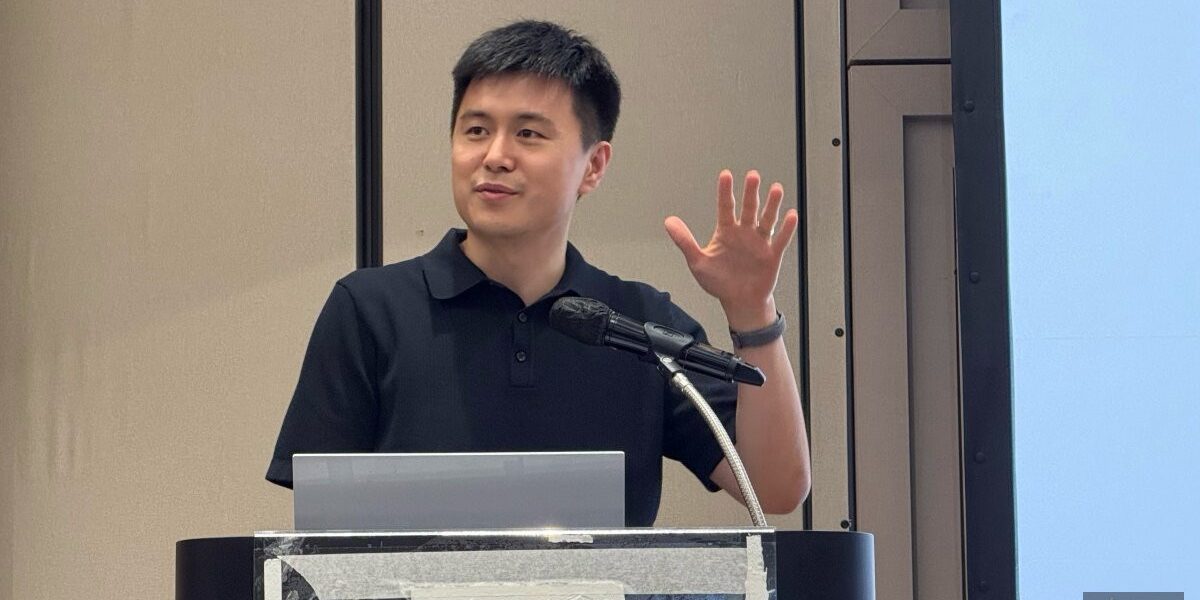
In the realm of game development, AI has proven far more efficient than humans at hunting down extreme edge cases—those quirky glitches that cause a character to teleport to the opposite side of the map after a single misstep. By carefully crafting incentive structures, the same AI can also pinpoint cheats and shortcuts that developers must eliminate. The speaker clarified that QA agents should be introduced during the game’s construction phase, while play agents for opponents and teammates should only be deployed once the title is near completion; inserting a play agent too early would inadvertently turn it into a QA bot that merely exposes flaws.
When asked whether NC AI had ventured into QA automation, CTO Kim Min-jae shared a concrete example: the company has built and operates its own “monkey testing” agent that tirelessly scans the game’s interface overnight, flagging missing text, broken icons, and non‑functional buttons. Moreover, they have delivered a fine‑tuned large language model that automatically generates QA checklists tailored to the game’s specific domain.
Researcher Shaper highlighted that their small‑scale demonstration studies began with QA as the foundation. While human testers possess irreplaceable insight into fragile game elements, AI excels at the repetitive, tedious task of reproducing the same bug dozens of times across patches.
Drawing on his experience with Battlegrounds, the CAIO underscored the structural demands of multiplayer QA: a game designed for 100 players cannot realistically be tested mid‑development without assembling a full roster, making bots indispensable for initiating the testing process. He praised the human‑driven demonstration approach of Shaper’s team as a catalyst for transformative impact at this juncture.
The discussion also bridged game AI with physical AI. Professor Stone traced a lineage of “AI versus human champion” contests—from board games to video titles like GT Sophia and Dota, and onward to drone racing and table tennis. He noted Sony’s table‑tennis robot, which toppled a world‑ranked, double Olympic silver‑medalist, illustrating how lessons from GT Sophia directly informed this project.
In response to a question referencing AlphaGo’s 37‑move masterpiece, the speaker recounted how a professional driver adopted a new driving technique after observing GT Sophia’s breaking timing, while a table‑tennis coach, inspired by the robot’s spin shots, declared that humans could now attempt moves previously deemed impossible.
When asked about research into NPCs endowed with enduring values and internal states, the CAIO unveiled Elai’s design. Elai is a compact language‑model agent featuring a three‑tier memory architecture: an 8,000‑token in‑context memory, a session‑level search layer that summarizes and retrieves dialogue, and a cross‑session layer that spans multiple game sessions.
Elai can reference not only in‑game conversations but also discussions from prior sessions. The speaker also disclosed their data‑collection strategy: renting PC bangs to recruit thousands of players, recording their gameplay and voice interactions with teammates, and feeding this rich dataset into the model—an approach he noted remains unprecedented in the industry.
Throughout the forum, participants acknowledged that the era of defeating human champions—embodied by GT Sophia—has effectively ended. The new focus is on “fun” and “player psychology” as ultimate metrics, signaling that technology has matured beyond benchmark performance. This marks a pivotal moment as the gaming sector, now in its second or third year of generative AI adoption, moves past hype into a phase of empirical validation.
❓ Frequently Asked Questions (FAQ)
What role does AI play in game QA according to the speaker?
AI is used to hunt down extreme edge cases—quirky glitches that can cause characters to teleport or behave unexpectedly—and to identify cheats and shortcuts that developers must eliminate. The speaker emphasized that QA agents should be introduced during the construction phase of the game, while play agents for opponents and teammates are deployed only when the title is near completion to avoid turning them into QA bots.
How does the "monkey testing" agent operate and what does it detect?
The company’s own monkey testing agent tirelessly scans the game’s interface overnight, flagging missing text, broken icons, and non‑functional buttons. It acts like a random tester that systematically interacts with the UI to uncover interface defects that might otherwise slip through manual testing.
What advantages does the AI‑driven QA agent bring to game development?
By automating both defect detection and the creation of QA checklists tailored to the game’s domain, the AI‑driven QA agent speeds up release cycles, improves product quality, and reduces the manual effort required from human testers, while still allowing human insight to address fragile game elements.
News Source: Co





Comments
Be the first to comment.