Microsoft has issued a formal response to the allegations discussed in this report, providing clarification and context for the concerns raised.
The company’s ambitious plan to deliver a commercial quantum supercomputer by 2029 has encountered a setback—not from the complex cryogenic systems it once anticipated, but from seemingly innocuous lines of Python code.
A recent article in the scientific journal Nature contends that these minor software oversights effectively fabricated the breakthrough Microsoft claimed in 2025 regarding Majorana-based topological qubits.
Microsoft’s chosen path, topological quantum computing, hinges on the creation and manipulation of “Majorana zero modes”—exotic quasiparticles that promise far greater error resilience than the superconducting qubits favored by rivals such as Google and IBM.
Proving the existence of these particles demands sifting through vast quantities of intricate electrical conductance data to pinpoint a distinct “topological gap.” Given the data’s sheer volume, researchers depend heavily on bespoke software pipelines—particularly Python scripts—to process and interpret the results.
Recent scrutiny has revealed that Microsoft’s data‑processing software may have contained critical programming errors, leading to skewed results in a high‑profile physics study. The software allegedly mishandled data arrays and applied flawed logic within its Python scripts, effectively discarding “noisy” or contradictory measurements. Consequently, only the electrical readings that supported the claimed topological‑gap phenomenon were highlighted.
Critics argue that this selective data handling invalidates the study’s conclusions, suggesting that the celebrated “quantum leap” was merely a false positive born of faulty code rather than a genuine breakthrough in physics.
Microsoft, however, has strongly contested these accusations. The company issued a formal rebuttal, labeling the issue as a minor anomaly rather than a catastrophic flaw. According to Microsoft, while there may have been a slight oversight in the data‑parsing scripts, it does not compromise the core findings of the physical experiment.
In a statement to Neowin following the publication of the article, Dr. Chetan Nayak, Microsoft Technical Fellow and Corporate Vice President of Quantum Hardware, emphasized that the alleged oversight does not alter the fundamental reality of their experimental results.
Microsoft reaffirms its commitment to its quantum roadmap, asserting that the ultimate measure of success lies in delivering a scalable quantum computer. The company expresses confidence in its execution capabilities and takes pride in its ongoing collaboration with DARPA, which has recently advanced Microsoft into the final stage of its Quantum Benchmarking Initiative following an independent assessment of both public and proprietary results by a panel of distinguished experts. Embracing the rigor and skepticism inherent to scientific inquiry, Microsoft has engaged with academia, and its comprehensive rebuttal has been accepted and published in Nature. Crucially, the firm is already performing computations with its qubits.
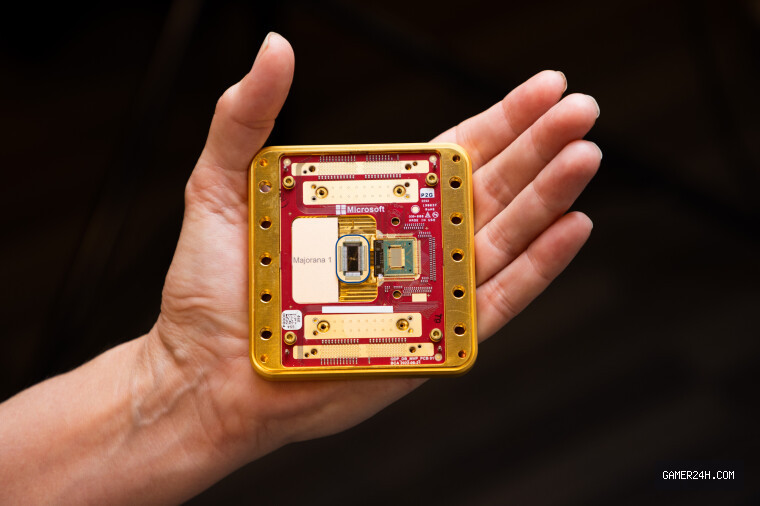
Just weeks ago, Microsoft announced the Majorana 2 quantum processor, a breakthrough that has propelled the firm to slash its projected launch of a commercial quantum supercomputer from 2035 to an ambitious 2029.
However, the recent software allegations have reopened a long‑standing controversy. In 2018, Microsoft’s quantum division published a landmark paper on Majorana particles that was later retracted in 2021 after independent physicists uncovered improperly cropped data.
The legacy of that incident amplifies the sensitivity surrounding the current Python‑related accusations. Should the foundational mathematics and data processing underpinning the 2025 breakthrough prove defective, the highly anticipated 2029 commercial rollout could face significant delays—or even be abandoned entirely.
❓ Frequently Asked Questions (FAQ)
What was the nature of the alleged Python errors in Microsoft's quantum computing research?
The allegations claim that Microsoft’s data‑processing pipelines, written in Python, contained critical programming mistakes that incorrectly identified a topological gap in conductance measurements. These errors, according to the Nature article, effectively fabricated evidence for the existence of Majorana zero modes, which were central to the company’s 2025 breakthrough claim.
How has Microsoft responded to the allegations and what impact might this have on its 2029 quantum supercomputer goal?
Microsoft issued a formal response clarifying the context of the concerns, stating that the errors were isolated and did not undermine the overall research direction. The company reaffirmed its commitment to building a commercial quantum supercomputer by 2029 but acknowledged that the setback could delay certain milestones and requires additional verification steps.
What are the implications of these findings for the broader quantum computing industry and investor confidence?
The revelation undermines a key pillar of Microsoft’s strategy, potentially eroding investor confidence in its topological approach. It also accelerates the competitive race, as rivals like Google and IBM may gain a relative advantage while other companies intensify efforts to validate their own topological qubit designs.
News Source: Neowin






Comments
Be the first to comment.