

Path Tracing in Real-Time Gaming: From Photorealistic Rendering to Competitive Play
Conceptual Framework

Path tracing is a stochastic rendering technique that simulates the flow of light by tracking long, branching sequences—called light paths—as photons bounce through a virtual scene. Introduced as a generalization of ray casting and early ray tracing in 1986, path tracing treats illumination not as a set of deterministic reflections but as a probabilistic sampling problem rooted in Monte Carlo integration.

Unlike conventional rasterization or even classic real-time ray tracing, which casts only the handful of rays needed for primary visibility plus simple reflection and refraction bounces, path tracing follows every possible interaction between light and surface material until photons are either absorbed by an opaque boundary or escape through a virtual camera aperture. This fundamental difference allows it to capture what graphics researchers call global illumination: the full network of indirect lighting effects that make real-world imagery feel physically coherent.
The technique’s defining hallmark is its ability to reproduce subtle phenomena without hand-tuned tricks:
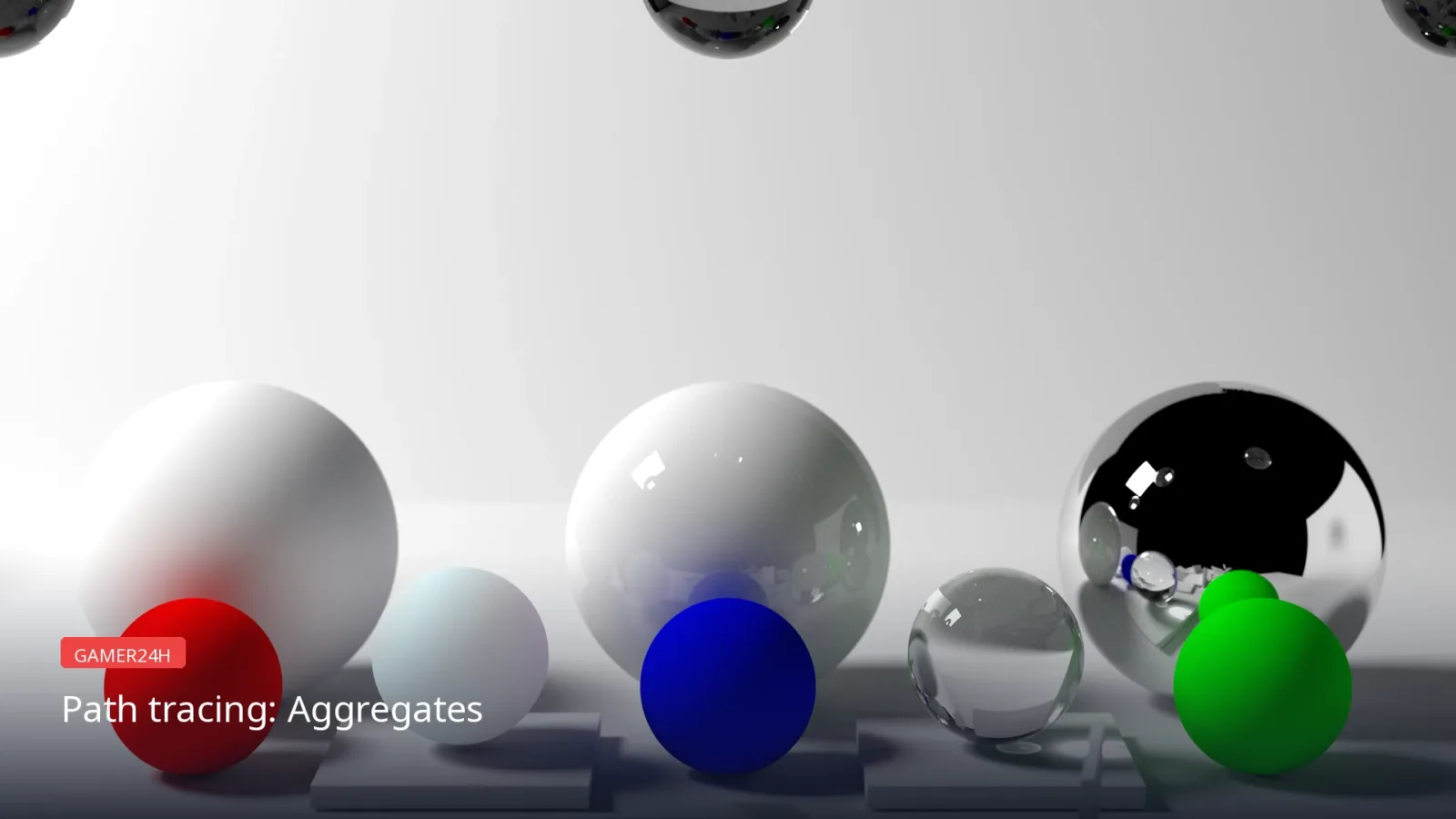
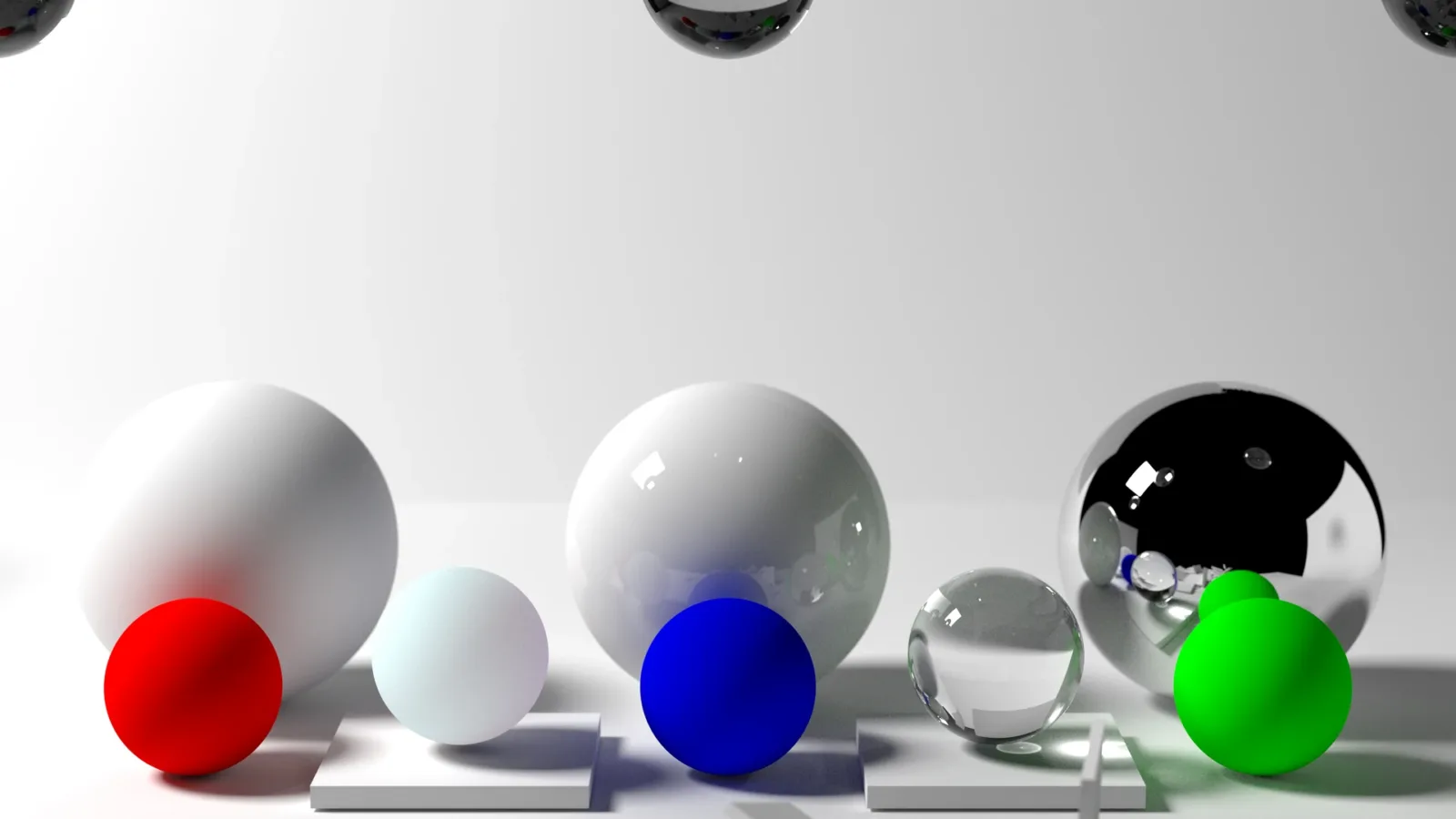
– Soft shadows produced by extended light sources, where penumbral gradients emerge naturally from sampling multiple points on a luminous surface rather than treating it as a single directional source
– Color bleeding, in which tinted surfaces transfer their hue onto neighboring geometry through bounced illumination
– Caustics, the concentrated patterns of light formed when rays refract or reflect across glossy and transparent materials such as glass, water, or polished metal
In essence, path tracing shifts rendering from an approximation model toward a physically grounded simulation. The goal is to converge on what graphics engineers term photorealism—a solution where synthetic imagery becomes indistinguishable from captured reality under the same lighting conditions. This makes it one of the most consequential developments in modern real-time computer graphics and directly relevant to competitive gaming, as explained below.
Underlying Technical Mechanics
The Rendering Equation and Monte Carlo Sampling
At its theoretical core lies a single mathematical relationship describing how light energy arrives at any given surface point from every direction across an enclosing hemisphere. This is the rendering equation, which accounts for both direct emission from lights and indirect contributions arriving after multiple bounces through the scene. Rather than solving this relation analytically—which remains intractable for complex geometry—path tracing estimates its solution by drawing random samples of possible light paths.
Each sampled path begins at the camera, travels into the world, and continues bouncing according to surface properties until it terminates on a luminous object whose emitted brightness is recorded. By averaging thousands or millions of these independent stochastic trials, the renderer converges toward an accurate estimate of true scene illumination while simultaneously capturing every indirect effect for free.
Sampling Strategies That Reduce Noise
The primary weakness of naive path tracing is variance, which manifests as visible grain called noise in rendered output. Because photons are sampled randomly, early passes produce speckled images that require enormous sample counts to smooth out. Several algorithmic refinements address this:
Importance sampling directs more samples toward directions likely to contribute meaningful light—such as the general orientation of nearby lights or mirror-like reflection vectors—rather than distributing them uniformly across all angles. This dramatically improves efficiency by concentrating computational effort where it matters most.
Next event estimation, sometimes called direct lighting approximation, supplements random bouncing with deliberate probes aimed at known luminous sources. Instead of waiting for a photon to randomly land on a light after several bounces—a rare and slow-converging event—the algorithm directly samples the visible lights in each direction, dramatically accelerating convergence toward correct illumination while preserving physical accuracy through statistical weighting.
Bidirectional path tracing extends this idea by constructing paths from both ends simultaneously: one set originates at the camera (eye), another begins at light sources. These two families are then connected wherever they meet within acceptable angular tolerance. This approach excels in scenes dominated by caustics and indirect lighting, where single-sided forward sampling struggles to find viable routes between lights and visible surfaces.
Denoising for Real-Time Performance
Because full convergence demands impractical sample counts on consumer hardware, real-time implementations rely heavily on denoising. Modern engines separate the noisy path-traced signal into spatially coherent components—such as albedo (surface color), normal maps, depth buffers, and accumulated light samples—and then apply learned filters to reconstruct clean images from far fewer raw photons.
Contemporary GPUs leverage specialized hardware units known as ray tracing accelerators or RT cores that compute geometric intersection tests between rays and scene geometry orders of magnitude faster than general-purpose processors. Combined with temporal accumulation—reusing information across successive frames through motion-compensated history buffers—and AI-powered upscaling, engines can deliver convincing path-traced lighting at playable frame rates even on desktop and mobile platforms alike.
Competitive Impact in الرياضات الإلكترونية and Gaming Systems
The Rendering Fidelity versus Latency Trade-Off
For competitive gamers, rendering technique carries direct gameplay consequences that transcend visual appeal. Path tracing’s computational intensity introduces a fundamental tension between visual fidelity and the ultra-low latency demanded by esports titles such as first-person shooters, racing simulators, and fast-paced battle arenas where reaction times measured in milliseconds determine outcomes.
The performance cost of path tracing stems from its sample-heavy nature: each frame may require millions of ray evaluations compared to hundreds for standard rasterization or a few thousand for basic ray-traced reflections. This places enormous strain on the rendering pipeline, potentially reducing achievable frame rates and increasing input lag—the delay between a player’s physical action and the corresponding visual response on screen.
العتاد Acceleration as an Equalizer
The introduction of dedicated hardware accelerators has reshaped this landscape, effectively democratizing access to advanced lighting techniques that once required server-class GPUs. Competitive systems now balance two competing priorities:
– Frame rate stability, which provides smoother motion and more consistent timing cues critical for tracking fast-moving targets
– Visual information clarity, where accurate shadows improve depth perception and help players detect opponents concealed in shaded regions
Notably, physically correct shadow casting can yield a genuine competitive advantage. When illumination is simulated rather than approximated through baked lighting textures or screen-space tricks that fail outside the visible frame window, developers gain reliable occlusion data across entire scenes—including geometry currently off-screen—enabling more accurate visibility determination for opponent detection systems and anti-cheat heuristics alike.
Temporal Consistency as a Competitive Variable
Because path tracing depends on accumulating samples over multiple frames to reduce noise, its quality fluctuates with temporal stability. During rapid camera movements or sudden scene changes typical of competitive play, denoising history buffers may lag behind actual geometry, producing transient artifacts such as ghosting, smearing, or flickering. These momentary degradations can obscure critical visual information at decisive instants—such as the exact frame an enemy emerges from cover—which is why many professional players prioritize raw performance and deterministic rendering over photorealistic effects that introduce variability into their reaction windows.
Academic Conclusions
Path tracing represents a paradigm shift in real-time graphics, transitioning the field from heuristic approximations toward physically principled simulation of light transport. Its capacity to capture global illumination—including soft shadows, color bleeding, and caustics—within a unified stochastic framework distinguishes it fundamentally from earlier deterministic techniques while offering unmatched visual authenticity for single-player experiences, architectural visualization, film production, scientific rendering, and training environments for machine learning models operating in photorealistic settings.
However, its adoption within competitive esports remains constrained by inherent computational demands that conflict with the low-latency requirements of high-level play. The ongoing research frontier centers on accelerating convergence through improved sampling strategies such as bidirectional path tracing and next event estimation, developing more robust denoising architectures informed by deep learning, and advancing hardware acceleration to narrow the gap between offline-quality rendering and real-time interactivity.
Future work will likely focus on adaptive algorithms that dynamically allocate computational resources based on scene complexity—investing heavily in visually significant regions while economizing elsewhere—as well as hybrid approaches combining path tracing’s accuracy with rasterization’s speed across different spatial scales. As these techniques mature, the distinction between simulated and captured reality continues to dissolve, raising both exciting possibilities for immersive experiences and important questions regarding fairness standards that competitive gaming frameworks must address as rendering fidelity becomes increasingly accessible to all participants regardless of hardware tier.
المراجع
- Kajiya, J. T. (1986). “The Rendering Equation.” Proceedings of the 13th Annual Conference on Computer Graphics and Interactive Techniques (SIGGRAPH ’86), ACM Press.
- Veach, E., & Guibas, L. J. (1995). “Optimally Combining Sampling Techniques for Ray Tracing.” ACM Transactions on Graphics, 14(3), 234–261.
- Pharr, M., Jakob, W., Humphreys, G. (Eds.). (2016). Physically Based Rendering: From Theory to Implementation (3rd ed.), Wiley.
- Laine, S., Kautz, J., Benthin, C., Wald, I., & Uusitalo, H. (2018). “Real-Time Denoising with Deep Learning.” ACM Transactions on Graphics, 37(6), Article 259.
- Jensen, H. W., Majoring, P. (Eds.). (2004). Ray Tracing Dynamic Scenes. AK Peters / CRC Press.
- Veach, E. (1997). “Robust Monte Carlo Methods for فاتح Transport Simulation.” Columbia University PhD Dissertation.
- Drettakis, G., Benthin, C., Wald, I. (2018). “Real-Time Ray Tracing on Consumer GPU العتاد.” ACM SIGGRAPH 2018 Courses.
Have thoughts, questions, or benchmarks on this topic? Join the discussion on our forums.
Join Discussion ➔






















انضم إلى المحادثة