

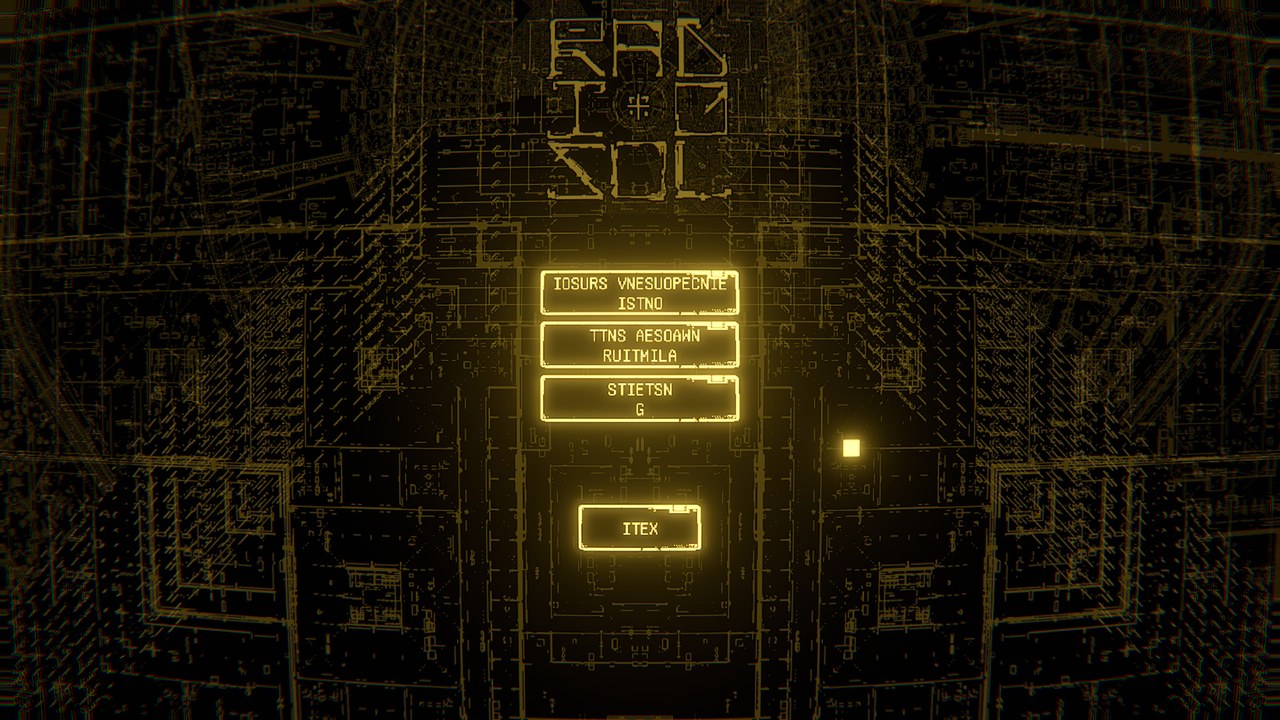
Earlier this week, the post-apocalyptic robot adventure Radiosol launched on Steam, and its strange allure proved so compelling that a single journalist’s first impressions sent several colleagues racing to their own purchase buttons. The Moscow-based studio TripletConcept delivered what it describes as “a journey through a desolate world burned by a planetary cataclysm,” offering players control of a small wall-climbing spider-robot navigating the crumbling ruins of colossal megastructures, and the result has quickly captured attention in an era when few indie releases manage to generate genuine buzz.
The game’s distinctive visual identity appears to be at least partly responsible for its magnetism. Radiosol features jaggy, oversized structures that look exceptionally cool from a distance, wrapping an uncanny aesthetic around what is otherwise a quiet, atmospheric traversal experience. For many players encountering it for the first time, the art direction alone was enough to prompt immediate interest—and purchase.
A Visual Style That Demands Attention
Players take on the role of a spider-like robot making its way through deserted ruins toward some kind of final confrontation at a distant pyramid. The objective remains deliberately murky: multiple subjects broadcast information as players progress, but exactly what is at stake for “the fate of…” something stays frustratingly unclear. What replaces narrative clarity is environmental freedom, with movement centered on leaping between shadows to avoid direct sunlight.
The low-gravity traversal forms the core appeal in these early hours. Rather than leaning on combat—there is currently nothing in that department—the game rewards simply being a spider-robot, executing big hops across unshaded stretches of desert under an unfamiliar sky. Players have reported feeling as though they are operating in “not quite earth” conditions, with the reduced gravity lending a dreamlike quality to every jump.

“A journey through a desolate world burned by a planetary cataclysm.”
TripletConcept on Radiosol
The AI Question, Answered
In an era when uncanny imagery often triggers suspicion about generative artificial intelligence, transparency matters. Radiosol includes a Steam disclosure clarifying that AI was used for translations only, and not to generate any audio or art according to the Moscow-based developer. On X, TripletConcept expanded on this, noting that AI assisted with “some coding and utility stuff like handling Git merges,” leaving the visual work firmly in human hands.
The studio’s artist has been working in this distinctive style since before the 2020s, a fact corroborated by earlier portfolio evidence. This continuity helps reassure players worried about AI-generated content that Radiosol’s striking imagery is authentic handcrafted art rather than machine-produced filler.
What to Expect Before You Dive In
For those tempted by the hype, early experience suggests two things worth preparing for. The world floods players with proper nouns offered without much context, so readers should brace themselves for a steady stream of unfamiliar names tied to factions like the “Locus Group of Companies” and locations such as the “Megapol station.” Additionally, because menus can be difficult to navigate on the fly, committing key layouts to memory is advisable—particularly if players risk triggering an interface option that effectively pauses their engagement.
Radiosol remains in its early-access phase, meaning these first impressions represent a work in progress rather than a finished product. The developer continues to refine the experience as it builds toward the promised pyramid confrontation. Whether that climactic battle will ever clarify the game’s central mysteries remains to be seen, but for now the desolate world burned by planetary destruction has already earned its audience—one shadowed hop at a time.























Join the conversation