

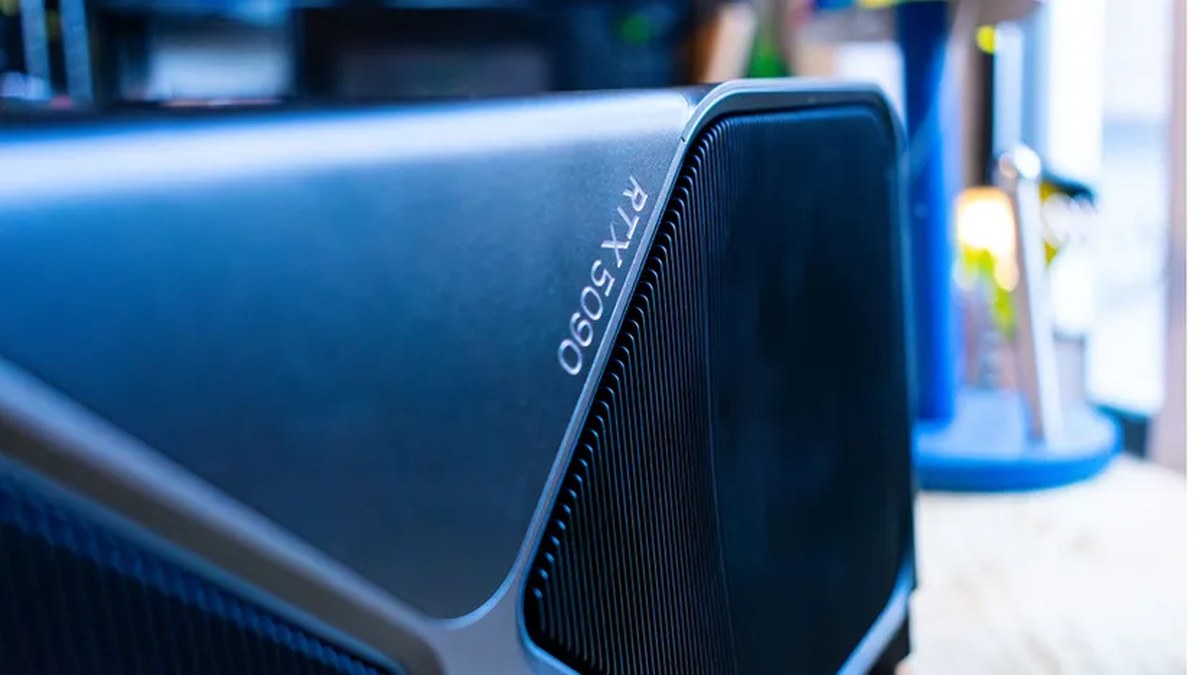
Consumers hoping for a fresh wave of Nvidia graphics cards in 2027 may need to recalibrate their expectations, as reports suggest the company’s next-generation lineup has been pushed back to 2028. The delay reportedly concerns the upcoming Rubin-based GeForce RTX 6000 series, including the highly anticipated RTX 6080, according to well-known Nvidia leaker Kopite7Kimi on Twitter. The news arrives just as the flagship GeForce RTX 5090 has ballooned to roughly $9,000 on the secondary market — a staggering departure from its $1,999 launch price — underscoring the supply and demand pressures that appear to be reshaping Nvidia’s roadmap.
While the timing of the delay is significant, it is also worth noting that leaks surrounding Nvidia’s next-generation hardware have been anything but consistent. Just last week, YouTuber Moore’s Law is Dead pointed to sources inside the company indicating that the Rubin-based RTX 6000 cards could instead launch sometime in the first half of 2027. The two reports are far from aligned, and both should be treated with caution until anything official surfaces. Still, the convergence of a delayed flagship, a canceled mid-cycle refresh, and a company that has quietly dropped gaming from its financial disclosures paints a picture that is difficult to ignore.
A Pattern of Delays Driven by AI Demand
This is not the first time Nvidia has reportedly shelved or scrapped a consumer GPU in the past year. Back in February, Kopite7Kimi suggested that the company’s typical mid-generation “Super” refresh had also been canceled, citing surging demand for GPUs and memory from AI data centers as the primary driver. The reasoning is straightforward: the same silicon and memory that would have powered enthusiast gaming cards are being consumed in enormous volumes by the AI infrastructure boom, making it economically sensible for Nvidia to prioritize those customers.
The financial side of the story reinforces this narrative. Nvidia has reportedly removed the gaming category from its earnings reports entirely, folding GeForce into the broader “Edge Computing” segment alongside robotics. In its recent Q2 2027 earnings report, the company did not even mention gaming, instead spotlighting the substantial revenue flowing from AI workloads. When a company’s public financial storytelling no longer acknowledges consumer graphics cards, it signals that those products are no longer the priority — and that Team Green is evidently in no rush to deliver new hardware to gamers.
Only time will tell whether or not Nvidia has anything up its sleeves for gamers next year, but if it’s anything like 2026 so far, we’re likely just going to get more software tricks – not that that’s necessarily a bad thing.
Jackie Thomas, Senior Tech Editor at IGN
The Economics Behind the Shortage
The RTX 5090 is not the only GPU seeing dramatic price increases. We are now roughly 10 months into what has become known as “RAMageddon,” a severe shortage of memory that shows no signs of abating. Thanks to this ongoing scarcity, virtually every graphics card on the market is considerably more expensive now than it was a year ago. Even in a normal market, Nvidia would likely have raised the price of its next-generation cards, but with memory and GPU costs now through the roof, the RTX 6080 could end up being far more expensive than its predecessor.
The combination of these factors means that the RTX 6080, if it ever materializes, may arrive not just later than hoped but at a price point that could dampen enthusiasm among the very audience Nvidia has seemingly deprioritized. For now, the practical takeaway for gamers is clear: patience will be required, and the window for a traditional hardware refresh may have closed for the foreseeable future.
Looking Ahead
Until Nvidia issues an official statement, all of these figures remain speculative, and the conflicting timelines from Kopite7Kimi and Moore’s Law is Dead leave plenty of room for doubt. What is certain, however, is that the forces reshaping the GPU market are powerful and unlikely to reverse soon. If the delay holds, 2027 could prove to be a lean year for PC enthusiasts, with the focus shifting toward driver updates, performance tweaks, and the software innovations that keep the platform competitive while Nvidia concentrates its resources on the AI frontier.
For those waiting on the RTX 6080, the message is simple: keep an eye on the horizon, but do not expect it to appear on store shelves anytime soon.



No comments