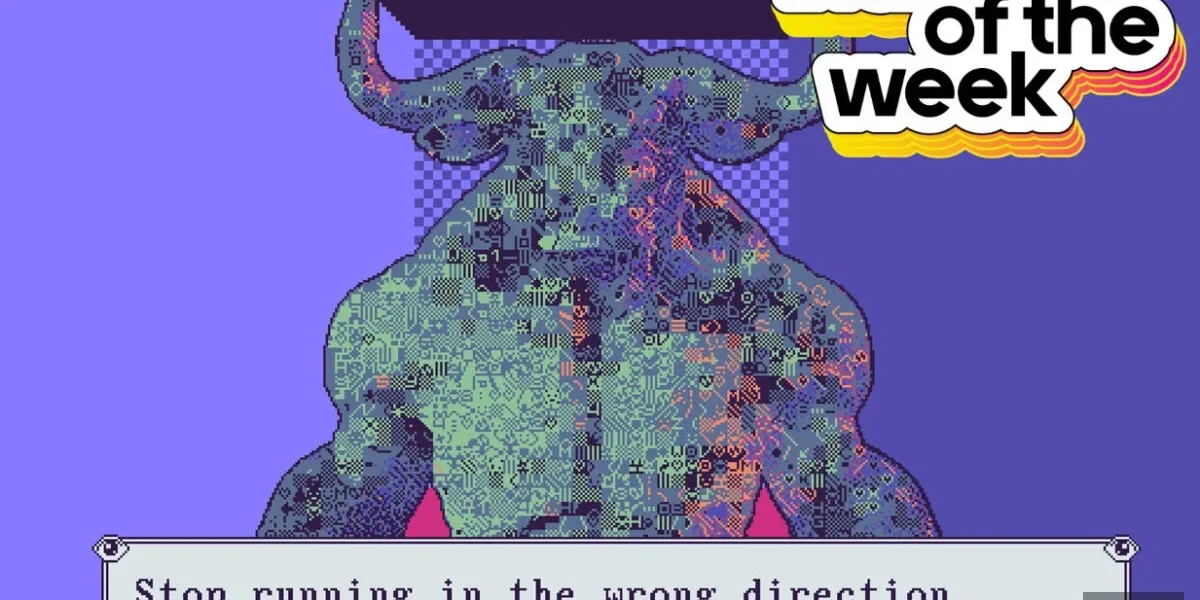
Summer’s relentless heat turns the days into humid, languid stretches of midday rest, each ending with a feeling of mental refresh. A lucid dream can be dissected: you can record its sequence and imagery, and parse its symbolism. The fragmented, scattered fragments are harder to assemble; they slip away, drifting in a shadowy void like flickering eyes hidden beneath a star‑filled sky.
Within The Dreams in the Peacock House, your character may still be in slumber, or you might possess an array of eyes that pierce the surrounding gloom. Perhaps you embody Argus, Hera’s legendary sentinel, whose countless eyes thwarted any attempt to bypass him. Or you could be retracing his path, or simply a butterfly. This brief, opulent text adventure conceals many secrets—including the very nature of the game you’re playing.
You wake in a cramped chamber, where a mirror, a door, and a hammer await. Breaking them all down reveals a sprawling, shadowy manor perched on a tranquil marsh, reminiscent of a centuries‑old hunting lodge. Scattered through the halls are abandoned journals, apparently written by Argus in a fit of disdain.
Your true objective is to recover Argus’s eyes, which grant entry to the enigmatic Sanctum Sanctorum, a short descent below the manor. You’ll need to solve puzzles to locate each eye, but doing so may plunge you into a fiercely lucid nightmare.
Peacock House invites players into a vibrant, EGA‑style maze populated by glitch‑infused, misty creatures. When you hit a dead end, a minotaur appears, forcing you to sit and watch a sitcom‑styled retelling of Argus’s memories. From that point, the house branches into a kaleidoscope of experiences: a tarot reading, a Kid Pix‑inspired painting simulator, and even a turn‑based RPG showdown against your own most toxic traits.
The challenges are intentionally light, mirroring classic text adventures that require you to rephrase commands to progress. Yet the game’s surreal logic and aesthetic deliver a midsummer‑like wonder, a twilight realm where reality and fantasy blur.
Even the developers praised player creations, noting that a portrait of Gumby submitted by a user was deemed gallery‑worthy.
❓ Frequently Asked Questions (FAQ)
What is the core premise of the new indie text adventure "The Dreams in the Peacock House"?
The game places players in a surreal, vaporwave-inspired labyrinth where they must navigate a sprawling manor, solve puzzles, and recover the legendary eyes of Argus to access the Sanctum Sanctorum. The narrative unfolds through text, allowing players to explore mythic themes and hidden secrets in a dreamlike setting.
How does the game incorporate mythological elements into its gameplay?
Players can embody Argus, the mythic sentinel with countless eyes, or other symbolic figures like Hera’s sentinel or a butterfly. The story references Argus’s journals, the Sanctum Sanctorum, and uses mythic motifs such as guardianship and eye symbolism to deepen the puzzle-solving experience.
What makes the atmosphere of this text adventure stand out compared to other indie titles?
Its blend of vaporwave aesthetics, humid summer vibes, and a shadowy labyrinth creates a unique, immersive mood. The game’s text-based storytelling, combined with environmental puzzles and mythological intrigue, offers a niche yet compelling experience for players seeking atmospheric, narrative-driven indie games.
News Source: Kotaku




Comments
Be the first to comment.