

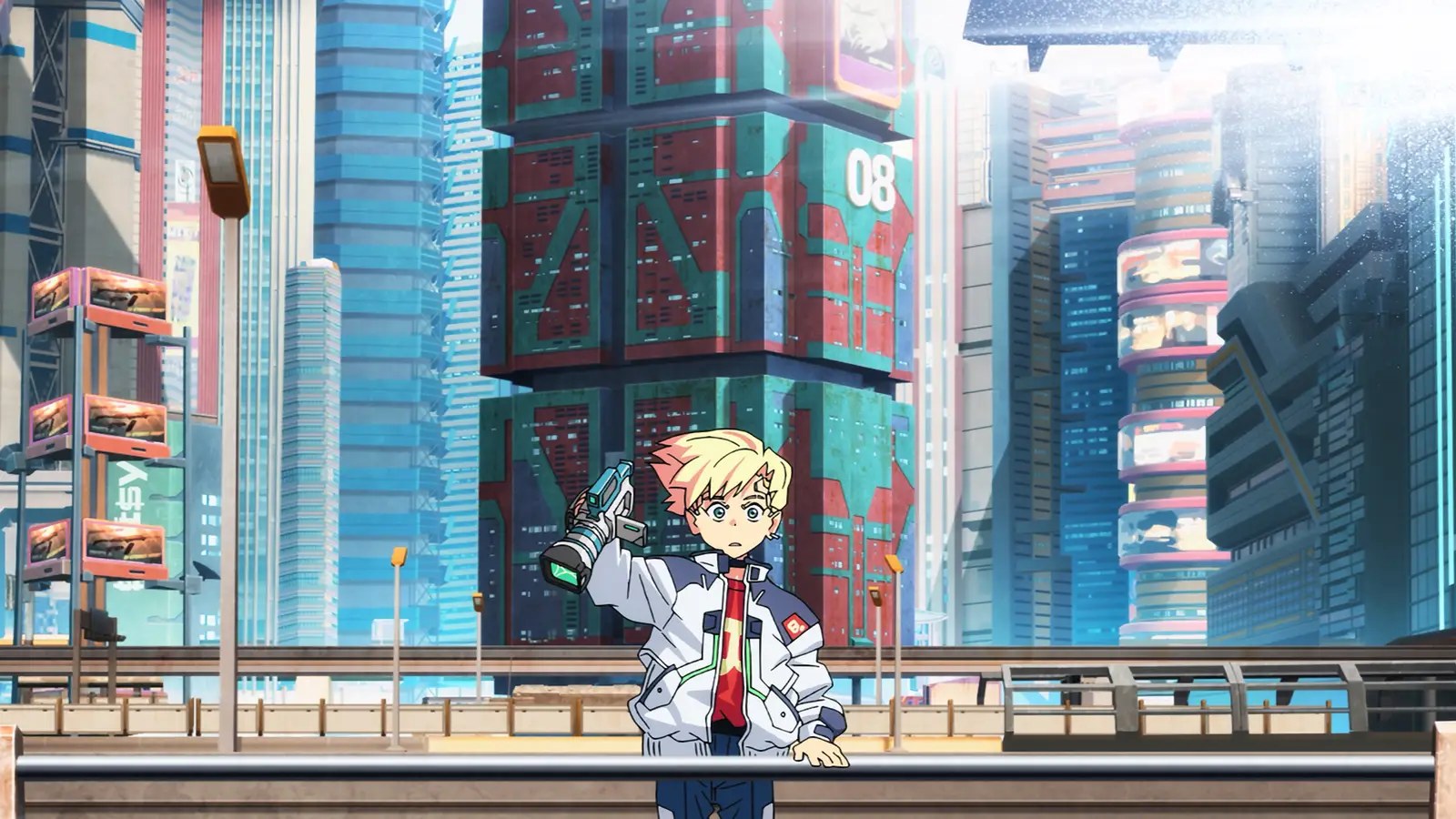
As Netflix prepares to launch the second season of its acclaimed anime anthology series Cyberpunk: Edgerunners on October 20, 2026, new series director Kai Ikarashi is redefining how light functions in the dystopian world of Night City. Where the original 2022 installment used neon glow to evoke both danger and longing, this next chapter treats searing brightness as an overwhelming force pressing down on those trapped within it. The shift reflects a deliberate artistic vision from Ikarashi, who served as storyboard artist and animation director on the first season’s acclaimed “Girl on Fire” episode before stepping into the director’s chair.
The new installment introduces a cast led by Weak, portrayed by Clancy Brown, a former cyberpunk legend forced to survive without any cybernetic enhancements. Rather than chronicling a nobody’s rise to legendary status as David Martinez did in season one, Edgerunners 2 asks what happens when a legend falls all the way back down. This thematic pivot positions physical vulnerability at the center of the narrative, with Weak’s lack of chrome serving as a constant reminder of loss rather than merely a combat disadvantage.
A Legend Without Chrome
Cybernetic enhancements remain fundamental to life in Night City and to the explosive action associated with the franchise. Without them, Weak is physically exposed in ways that neither David nor Maine ever were. Yet Ikarashi says he cares more about what his protagonist’s body reveals internally than how it limits him during a fight.
“His physical vulnerability more directly reflects his emotional shifts than his actions.” While audiences may follow the situations surrounding Weak, “what I personally want them to focus on most is how his spirit confronts what can never be recovered, no matter how hard he struggles.”
Kai Ikarashi, series director
The concept of a fall from grace carries particular weight in the Cyberpunk universe, where most legends die while pursuing legendary status. Surviving only to lose everything offers an almost even more depressing trajectory than death itself. Weak’s struggle embodies this tragedy, grounding the season’s emotional core in loss rather than ambition.
Music Driving the Imagery
The new visual identity of Edgerunners 2 remains inseparable from its score. Composer Tsuneo Imahori, whose credits include Trigun and Hajime no Ippo, provides a sonic foundation distinct from its predecessor. For Ikarashi, that score was never something layered onto completed animation; it helped propel the imagery itself.

“We often refer to music for anime shows as ‘background music’ — gekiban in Japanese — but to be honest, I’ve never really liked the word because it seems to imply that animation should always come first, and the music is a supplementary medium.” Mr. Imahori’s work, however, “drove the imagery of this project forward through the raw power of the music itself.”
Kai Ikarashi, series director
Ikarashi’s experimental approach has reportedly pushed against established boundaries. Producer Saya Elder previously told Polygon that the new director frequently challenged CD Projekt Red with his ideas. When asked to identify the most ambitious of these, Ikarashi pointed to D, a netrunner whose entire nomad clan was wiped out, leading him to pursue revenge in Night City.
“If I had to pinpoint it, it would be the framing of D alongside two specific characters, and how their final dynamic plays out.” Ikarashi added that he cannot reveal finer details “just yet, as I’d love for everyone to experience it directly in the show.”
Kai Ikarashi, series director
The Weight of Speed and Distance
Polygon can also exclusively reveal an image from Edgerunners 2 that positions D next to Roman Carax, a young cinephile obsessed with documenting real-life in a city that has largely abandoned film for braindance. It remains possible he is one of those two characters, though very few concrete details have surfaced ahead of the series’ release.
Ikarashi offered one broader hint regarding “the contrast in speed and distance between oneself and the city,” concepts shaped partly by assistant director Naoto Uchida. That idea already resonates with the tragedy of the original season, where David becomes impossibly fast through the Sandevistan implant yet cannot escape Night City or close the emotional distance from Lucy. The hauntingly beautiful track “I Really Want to Stay at Your House” by Rosa Walton plays for the first time early in the series when Lucy and David experience walking on the Moon together, recurring as a motif through to the very end.
For Lucy, reaching the real Moon represents a lifelong dream fulfilled in the finale’s last scene, a way to place enormous physical distance between herself and the emotional trauma inflicted by Night City. Whether Edgerunners 2 will reinterpret that relationship between speed, distance, and light remains unknown, but Ikarashi’s comments suggest this new cast may soon discover the same cruel lesson as David and Lucy: moving faster or traveling farther does not necessarily mean you can ever escape.
Looking Ahead
Cyberpunk: Edgerunners 2 will be released on Netflix on October 20, 2026. As the second installment in the anthology series, it continues to build upon Studio Trigger’s flashy animation and CD Projekt Red’s oppressive dystopia while charting its own artistic course. Fans awaiting further details can expect more reveals as the release date approaches.























Join the conversation