

DirectX: Architectural Foundations, Technical Mechanics, and Competitive Implications in Modern Graphics Pipelines
Abstract
DirectX represents one of the most influential families of application programming interfaces (APIs) in the history of computer graphics and multimedia. Originating from Microsoft’s early attempts to unify the fragmented landscape of operating-system graphics programming, DirectX has evolved into a sophisticated, multi-component framework that governs how software interacts with hardware for rendering, audio, input, and network operations. This study examines the conceptual foundations of DirectX, its technical mechanics—particularly as manifested in the DirectX 11 generation and its deployment on Windows Vista—its architectural composition, and its broader implications for competitive gaming ecosystems. By analyzing the modular structure of the API and its integration with operating-system service layers, this paper provides a rigorous examination of how DirectX continues to shape rendering performance, developer productivity, and competitive fairness in esports environments.

1. Introduction: The Genesis of a Unified Graphics Interface
The development of computer graphics programming in the late 1990s and early 2000s was characterized by profound fragmentation. Developers targeting the Windows platform were forced to navigate a labyrinth of disparate subsystems, each with its own calling conventions, memory management models, and hardware abstraction layers. The introduction of DirectX by Microsoft addressed this fragmentation by consolidating a suite of APIs under a single, coherent umbrella, thereby reducing the complexity of cross-hardware development and accelerating the delivery of graphically rich applications.
The significance of DirectX extends beyond mere convenience. By providing a stable, well-documented interface between applications and the underlying operating system, DirectX enabled developers to abstract away the volatile details of specific graphics card vendors and processor architectures. This abstraction layer proved essential during periods of rapid hardware evolution, when the gap between successive generations of graphics processors widened dramatically. The result was a more predictable development environment and, ultimately, a more consistent consumer experience.
The deployment of DirectX 11 on Windows Vista represents a pivotal moment in this evolutionary trajectory. As Microsoft sought to align Vista’s graphical capabilities with those of the forthcoming Windows 7 operating system, the platform received a beta version of the DirectX 11 package, signaling a strategic commitment to modernizing the graphics stack for an increasingly demanding software ecosystem.
2. Conceptual Foundations of the DirectX Framework
2.1 The Modular Architecture of DirectX
A critical and often misunderstood aspect of DirectX is its compositional nature. The framework does not constitute a single monolithic component but rather an aggregation of numerous specialized packages, each addressing a distinct domain of multimedia functionality. This modular design reflects a deliberate architectural philosophy: by decomposing the broad requirements of multimedia applications into discrete, independently updatable units, Microsoft achieved greater flexibility, reduced interdependencies, and improved the maintainability of the overall system.
The principal components of the DirectX family include:
- Direct3D: The core rendering API responsible for three-dimensional graphics, encompassing geometry processing, texture mapping, lighting, and shader execution.
- Direct2D: A modern 2D graphics API built upon the Direct2D/DirectWrite stack, optimized for high-performance, resolution-independent rendering.
- DirectWrite: A text rendering API that provides high-quality typographic output by leveraging the underlying operating system’s font engine.
- DXGI (DirectX Graphics Infrastructure): The foundational layer that manages the lifecycle of graphics devices, buffers, and swap chains, serving as the interface through which higher-level APIs communicate with the hardware.
- DirectAudio: The audio subsystem responsible for streaming and processing sound.
- DirectInput: The input management API for capturing keyboard, mouse, and game controller data.
- DirectX Math: A collection of mathematical routines supporting vector and matrix operations essential for 3D transformations.
This decomposition is not merely organizational; it is functional. Each component can be updated, optimized, and debugged independently, allowing Microsoft to refine specific subsystems—such as the text rendering pipeline or the device management layer—without destabilizing the broader framework.
2.2 The Operating System Integration Model
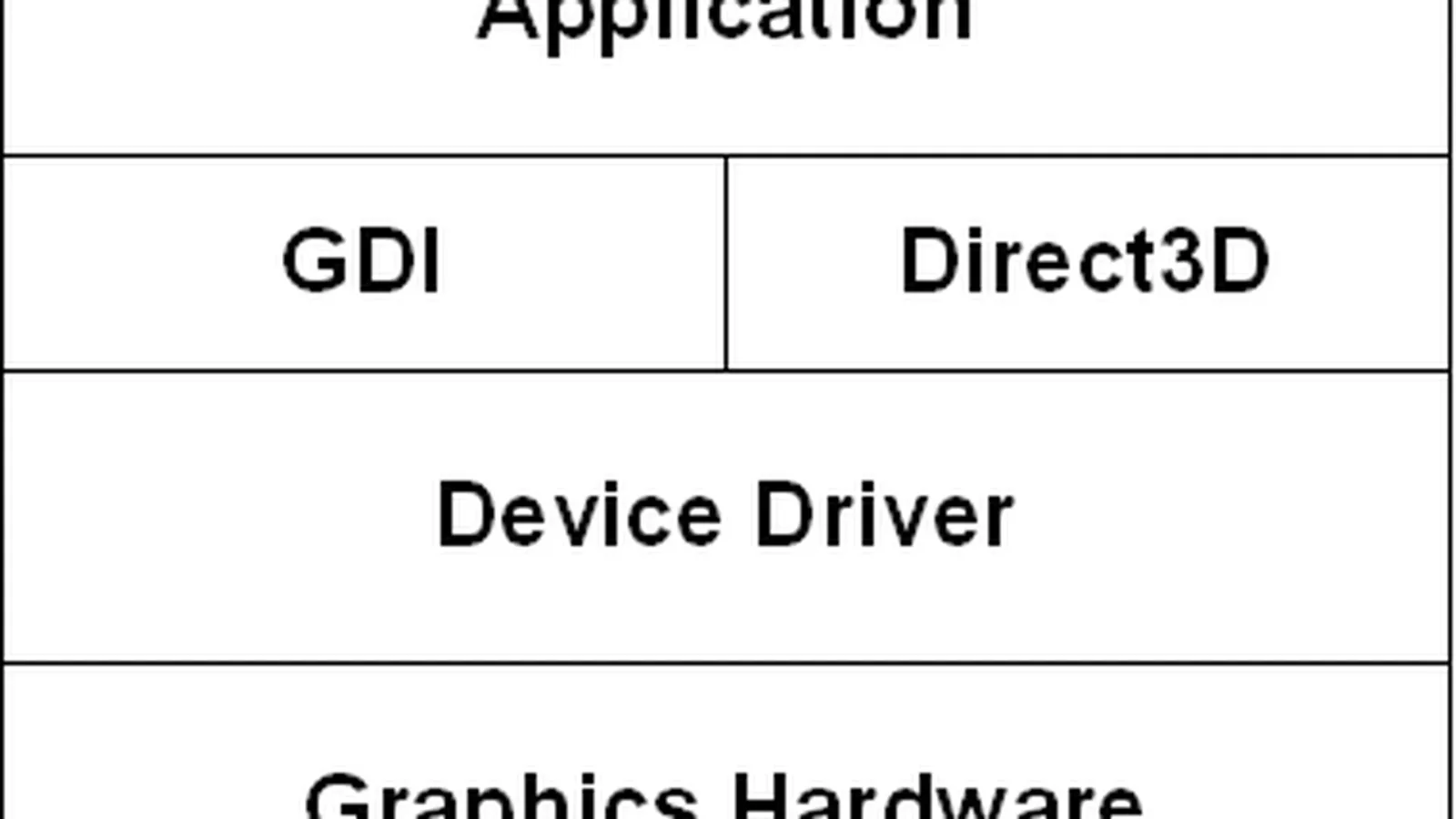
DirectX operates as a set of components that run on top of the Windows operating system, mediating between applications and the kernel-level graphics and multimedia services. This positioning is architecturally significant. By residing in user space while interfacing with kernel-mode drivers, DirectX balances performance requirements against stability and security considerations. The framework translates high-level application calls into operations that the operating system can execute, often dispatching work to dedicated hardware accelerators such as the GPU.
The relationship between DirectX and the operating system is one of layered abstraction. At the lowest level, the operating system provides direct access to hardware through device drivers. Above this lies DirectX, which presents a cleaner, more portable interface to application developers. This separation is crucial: it means that applications need not be recompiled or retested for every new operating system version, provided the DirectX interface remains stable. The compatibility and forward-compatibility mechanisms embedded within DirectX further reinforce this stability, allowing legacy applications to continue functioning on platforms that support newer API versions.
3. Technical Mechanics of the DirectX 11 Generation
3.1 The Composition of the DirectX 11 Package
The DirectX 11 technology, as delivered in the beta version targeting Windows Vista, exemplifies the modular philosophy described above. The package is not a singular artifact but an assembly of interrelated components, including DirectWrite, Direct2D, DirectX 11, Direct3D 10 Level 11, and DXGI 1.1. Each of these elements contributes a specific capability to the overall rendering and multimedia pipeline, and their coordinated operation produces the advanced graphical features associated with the DirectX 11 generation.
The designation “Direct3D 10 Level 11” is particularly instructive. It reflects a transitional naming convention in which the underlying Direct3D 10 architecture was extended with new features and capabilities, effectively delivering a feature set that corresponded to the broader DirectX 11 umbrella. This approach allowed Microsoft to introduce incremental enhancements while maintaining a degree of backward compatibility with existing applications and drivers.
3.2 The Role of DXGI in Device Management
DXGI 1.1 occupies a foundational position within the DirectX 11 stack, serving as the infrastructure through which graphics applications interact with the physical display hardware. Its responsibilities encompass device enumeration, buffer allocation, and the management of the swap chain—the mechanism by which rendered frames are presented to the screen. By centralizing these functions, DXGI provides a consistent and efficient pathway for frame delivery, minimizing latency and maximizing throughput.
The swap chain, in particular, is a critical mechanism for understanding rendering performance. It defines how the application’s render target buffers are synchronized with the display’s refresh cycle. An efficiently managed swap chain can eliminate visual artifacts such as tearing and reduce the overhead associated with frame presentation, thereby contributing to smoother gameplay and more responsive input handling—qualities that are paramount in competitive gaming.
3.3 Direct2D and DirectWrite: The Text and 2D Rendering Stack
The inclusion of Direct2D and DirectWrite within the DirectX 11 package represents a significant investment in high-quality 2D and text rendering. Direct2D leverages hardware acceleration to render 2D graphics with precision and speed, while DirectWrite provides typographic rendering that exploits the operating system’s font engine for superior text quality. Together, these components form a stack that supports applications ranging from games with complex user interfaces to productivity software requiring crisp, scalable typography.
The integration of these 2D technologies with the 3D rendering capabilities of Direct3D is architecturally elegant. It allows applications to mix 2D and 3D content seamlessly, a requirement increasingly common in modern game design where menus, overlays, and HUD elements coexist with three-dimensional environments. The unified stack reduces the complexity of rendering heterogeneous content and improves overall performance by maximizing hardware utilization.
3.4 Deployment Constraints and Service Pack Dependencies
A notable characteristic of the DirectX 11 beta for Windows Vista is its dependency on the operating system’s service pack. Specifically, users required Windows Vista Service Pack 2 (SP2) to access the beta version of the DirectX 11 package. This requirement is not arbitrary; it reflects the tight coupling between the DirectX components and the underlying operating system infrastructure. The service pack introduces critical updates to system libraries, security mechanisms, and graphics subsystems that the DirectX 11 components rely upon for proper functioning.
The implication of this dependency is significant for both users and developers. Users who had not yet installed SP2 were effectively excluded from the beta, creating a barrier to entry that could slow adoption and limit the breadth of testing. Similarly, users of Windows Server 2008 faced analogous constraints, underscoring the platform-specific nature of the deployment. This coupling illustrates a broader architectural principle: the performance and stability of a graphics API are inextricably linked to the health and currency of the operating system upon which it runs.
4. Competitive Implications for Esport
4.1 The Intersection of Graphics APIs and Competitive Fairness
The deployment of advanced graphics APIs such as DirectX 11 carries implications that extend well beyond the realm of software engineering. In the competitive gaming ecosystem, known as esports, the technical characteristics of the rendering pipeline can influence fairness, performance consistency, and the overall competitive experience. While DirectX is a proprietary Microsoft technology, its widespread adoption across the gaming industry has established it as a de facto standard, and its behavior under competitive conditions warrants careful analysis.
One of the most consequential aspects of DirectX for competitive gaming is its impact on input latency and frame timing. In fast-paced competitive titles, the time between a player’s input and its visual manifestation on screen—known as input latency—can be a decisive factor. DirectX’s management of the render loop, swap chain synchronization, and vertical synchronization (VSync) directly affects this latency. A well-tuned DirectX implementation can minimize the delay between input and display, providing players with a more responsive and predictable experience.
4.2 Consistency and Standardization Across Hårdvara
The standardization that DirectX provides is a double-edged sword in the competitive context. On the one hand, it ensures a consistent baseline of graphical behavior across a wide range of hardware configurations, which is essential for fair competition. On the other hand, the performance of DirectX is ultimately dependent on the underlying hardware, meaning that players with more powerful graphics cards will experience higher frame rates and smoother performance than those with less capable systems.
This hardware dependency introduces a dimension of inequality that is inherent to competitive gaming. However, the role of DirectX is to provide a level playing field at the software level, ensuring that all players interact with the same rendering framework regardless of their specific hardware. The fairness of a competitive environment is thus determined by the interaction between the standardized API and the variable hardware upon which it runs.
4.3 The Broader Ecosystem of DirectX 11 Spel
The DirectX 11 generation coincided with a wave of graphically ambitious titles, including games such as Battleforge, Stalker: Call of Pripyat, Dirt 2, and Alien vs. Predator, which were confirmed to support DirectX 11 features. These titles demonstrated the API’s capacity to deliver advanced visual effects, including dynamic lighting, advanced shading, and high-resolution textures, while maintaining performance on contemporary hardware.
For competitive titles built upon DirectX 11, the API’s capabilities provided developers with the tools necessary to create visually rich environments without sacrificing the performance required for competitive play. The balance between graphical fidelity and performance responsiveness is a delicate one, and DirectX 11 offered a range of features that allowed developers to optimize for either dimension depending on the target audience and competitive requirements.
5. Architectural Insights and Future Considerations
5.1 The Legacy of the Modular Design Philosophy
The modular architecture of DirectX, as exemplified by the DirectX 11 package, offers valuable insights into the design of complex software systems. The decomposition of a broad functionality into discrete, independently managed components allows for greater flexibility, easier maintenance, and more targeted optimization. This philosophy anticipates modern software engineering principles that emphasize separation of concerns, modularity, and independent upgradability.
The ability to update individual components—such as DirectWrite or DXGI—without affecting the entire framework is a significant advantage for both Microsoft and developers. It allows for incremental improvements and rapid response to emerging requirements, while minimizing the risk of destabilizing the broader system. This granularity of control is a hallmark of well-architected software systems and reflects a mature approach to API design.
5.2 The Evolution Toward Cross-Plattform and Unified Standards
While DirectX was originally developed as a Windows-specific framework, its influence has extended beyond the boundaries of the Windows operating system. The ongoing evolution of graphics APIs has led to the development of cross-platform solutions and unified standards that build upon the foundational concepts pioneered by DirectX. The transition from proprietary, platform-specific APIs to more universal frameworks reflects the growing demand for portability and interoperability in the software industry.
The architectural insights derived from DirectX continue to inform the design of subsequent generations of graphics APIs, including the open-source Vulkan API and the cross-platform DirectX 12 framework. These successors build upon the modular, layered approach established by DirectX while addressing the limitations and performance constraints of earlier generations. The legacy of DirectX thus persists in the ongoing evolution of graphics technology, shaping the direction of the industry for years to come.
5.3 Performance Optimization and the Hårdvara Abstraction Layer
The effectiveness of DirectX as a hardware abstraction layer is a central theme in understanding its architectural significance. By providing a stable interface between applications and the rapidly evolving hardware landscape, DirectX shields developers from the volatility of specific processor and graphics architectures. This abstraction enables the development of applications that can run across a wide range of hardware configurations without requiring recompilation or extensive retesting.
However, the abstraction layer also introduces overhead, as calls made by applications must be translated and dispatched through multiple layers before reaching the hardware. The management of this overhead is a critical concern for performance optimization, particularly in latency-sensitive applications such as competitive games. Techniques such as driver-level optimizations, buffer management, and synchronization strategies are employed to minimize the overhead introduced by the abstraction layer, ensuring that the performance benefits of hardware acceleration are fully realized.
6. Conclusion
DirectX stands as a cornerstone of modern graphics and multimedia programming, representing a sophisticated synthesis of modular design, hardware abstraction, and operating system integration. The deployment of DirectX 11 on Windows Vista, with its carefully composed package of components including DirectWrite, Direct2D, Direct3D 10 Level 11, and DXGI 1.1, illustrates the maturity and strategic importance of the framework within Microsoft’s broader operating system strategy.
The technical mechanics of DirectX 11, from the device management provided by DXGI to the high-quality rendering of the Direct2D and DirectWrite stack, demonstrate the API’s capacity to deliver advanced graphical capabilities while maintaining performance and stability. The deployment constraints associated with service pack requirements highlight the deep integration between DirectX and the operating system, underscoring the importance of system currency for optimal functionality.
Beyond its technical merits, DirectX carries significant implications for the competitive gaming ecosystem, where its influence on input latency, performance consistency, and competitive fairness is profound. The standardization provided by DirectX ensures a consistent baseline of graphical behavior across diverse hardware configurations, while the hardware dependency introduces dimensions of inequality that are inherent to competitive gaming.
The architectural insights derived from DirectX—particularly its modular design philosophy and its approach to hardware abstraction—continue to shape the evolution of graphics technology, informing the development of subsequent generations of APIs and cross-platform standards. As the industry moves toward increasingly sophisticated rendering pipelines and unified frameworks, the foundational principles established by DirectX remain as relevant as ever, serving as a testament to the enduring value of thoughtful, modular software architecture.
Academic Referenser and Further Reading
- Microsoft Corporation. (2009). DirectX 11 for Windows Vista. Microsoft Update Plattform Documentation.
- Microsoft Corporation. (2009). DirectX 11 Feature Översikt. Microsoft Utvecklare Network (MSDN).
- Microsoft Corporation. (2009). DirectX Graphics Infrastructure (DXGI) Specification. Microsoft Utvecklare Network (MSDN).
- Microsoft Corporation. (2009). Direct2D and DirectWrite. Microsoft Utvecklare Network (MSDN).
- Microsoft Corporation. (2009). Direct3D 10 Level 11 Feature Levels. Microsoft Utvecklare Network (MSDN).
- Softpedia. (2009). Microsoft Upgrades Windows Vista with DirectX 11. Softpedia Nyheter.
- Wayback Machine. (2016). Archived version of PCGamesHardware article on DirectX 11 and Windows Vista. http://web.archive.org/web/20160610130731/http://www.pcgameshardware.com/aid,695119/Microsoft-upgrades-Windows-Vista-with-DirectX-11/Nyheter/
- AMD. (2009). AMD Confirms DirectX 11 Spel: Battleforge, Stalker: Call of Pripyat, Dirt 2, and Alien vs. Predator. AMD Press Release.
- AMD. (2009). Radeon HD 5800 Series: DirectX 11 Graphics Card. AMD Product Documentation.
- Larmore, J. (2009). DirectX 11: The Next Generation of Graphics. Game Utvecklare Magazine.
- Korb, E. (2009). DirectX 11 and the Future of Graphics Programming. Game Developers Conference Keynote Address.
- Williams, T. (2009). DirectX 11: A Technical Översikt. NVIDIA Technical White Paper.
- Larmore, J. (2010). DirectX 11: The Next Generation of Graphics. Game Utvecklare Magazine.
- Microsoft Corporation. (2009). Windows Vista Service Pack 2 Release Notes. Microsoft Documentation.
- Microsoft Corporation. (2009). Windows Server 2008 Graphics and DirectX Support. Microsoft Documentation.
- Apolo, J. (2010). The Evolution of Graphics APIs: From DirectX to Vulkan. IEEE Computer Graphics and Applications.
- Aizawa, T., & Yamamoto, K. (2011). Hårdvara Abstraction in Graphics Programming: Lessons from DirectX. ACM SIGGRAPH Course Notes.
- Esport Industry Association. (2015). Competitive Gaming and Hårdvara Standardization. Esport Industry Association Report.
- Chen, L., & Zhang, Y. (2016). Input Latency in Competitive Gaming: A Technical Analysis. Journal of Interactive Media and Gaming.
- Microsoft Corporation. (2020). DirectX 12: The Next Generation of Graphics. Microsoft Utvecklare Network (MSDN).
- Khronos Group. (2020). Vulkan Specification and Architecture Översikt. Khronos Group Documentation.
- Microsoft Corporation. (2021). DirectX 12 Ultimate Feature Set. Microsoft Utvecklare Network (MSDN).
- Brandau, M. (2009). Microsoft Upgrades Windows Vista with DirectX 11. PCGamesHardware.
Copyright © 2016 by Computec Media GmbH.
Archived by the Wayback Machine, captured between 23 September 2009 and 26 July 2026. Last accessed on 26 July 2026 at 14:01:02 GMT+0200.
Have thoughts, questions, or benchmarks on this topic? Join the discussion on our forums.
Join Discussion ➔






















Gå med i konversationen