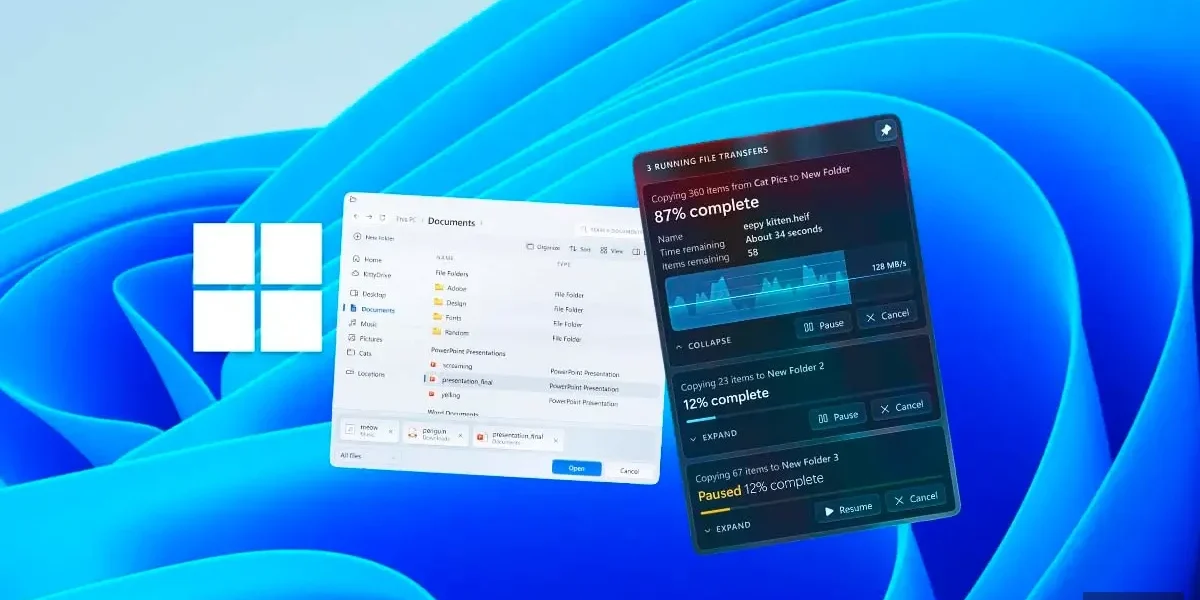
Microsoft has taken a decisive step toward modernizing its flagship operating system by announcing that it is overhauling every legacy dialog box still present in Windows 11. The company plans to replace the dated, clunky windows with sleek, contemporary interfaces built from scratch using the modern WinUI 3 framework, signaling the end of the era of retro‑styled pop‑ups.
Early signs of the upgrade are already visible, such as a dark mode for file transfers, but the ultimate goal is a cohesive visual overhaul that boosts performance, optimizes memory usage, and delivers a unified aesthetic across the entire system in the forthcoming major update.
According to Windows Latest, the initiative has been a collaborative effort, with the user community playing a pivotal role in highlighting the need for change. A recent discussion on X highlighted how tech enthusiasts were frustrated by the persistence of antiquated dialog boxes—like the classic “Open File” prompt that appears when searching for a folder or path on a hard drive. Their vocal feedback prompted Microsoft to tag several employees and push for an urgent visual refresh of these long‑overlooked elements.
In a surprising and joyful turn of events for many, a high-ranking executive from the company has directly addressed these concerns and confirmed that indeed, an enormous redesign effort is underway at the company’s offices. Windows Latest recalls that March Rogers, who serves as Associate Design Director at Microsoft, clarified the situation by explaining that the team is reviewing each window to update them to today’s standards. Furthermore, the new copy-paste file window has been completed internally and the classic file search window is the next major objective.
It is natural for users to worry about new interfaces and modern designs affecting the speed of their computers, especially considering that early versions of these applications often consumed more memory and slowed down the system. However, the reality is different now, as the May 2026 update of Windows 11 has demonstrated that the code has evolved significantly and is now much more efficient and lightweight than in its previous versions.
The definitive proof of this technological advance can be found in the famous “Run” window, which was developed decades ago and is now being completely rewritten in this new format. According to Microsoft’s measurements, the average load time of the old window is 103 milliseconds, while the modern version loads in just 94 milliseconds.
Although it may seem like a minor difference on paper, Windows Latest suggests that this information confirms that the new graphical environments are no longer an additional burden for PCs. If implemented correctly, this transformation will not compromise the performance of our equipment. This is because recent conversations with project leaders indicate that this transformation is being carried out with great care, and Microsoft is moving forward steadily, working closely with developers and partners to ensure that every corner of the screen feels agile, modern, and ready for the future.
The news comes as a relief to many gamers who have been concerned about the potential impact of these new graphical environments on their systems’ performance. It also underscores Microsoft’s commitment to working closely with developers and partners to ensure a smooth and enjoyable gaming experience for its users.
News Source: Tarreo






Comments
Be the first to comment.