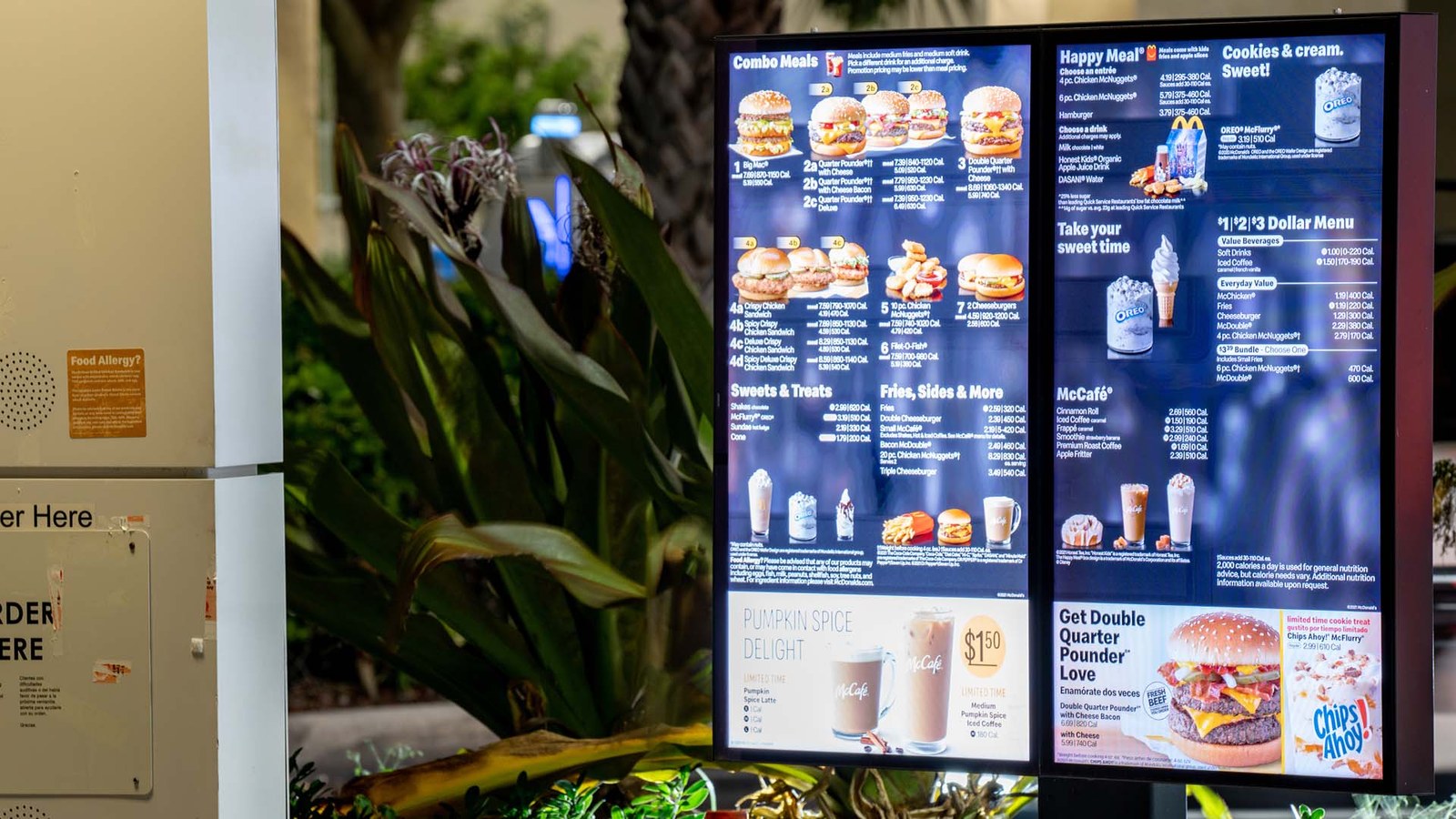
The initiative centers on the large menu boards that flank McDonald’s drive-thru lanes, screens that have long served as the primary point of contact between the brand and the customer waiting in their vehicle. Under the new setup, once a patron completes their order, the board will cycle through promotional content from outside partners rather than McDonald’s own menu. The concept relies on a simple observation: customers are largely trapped in their cars with nowhere to look, making the waiting period a captive audience for advertisers.

“This limited menu board advertising pilot at select company-owned restaurants is exploring ways to share post-purchase content that customers may find helpful, relevant, or interesting, while ensuring the McDonald’s experience remains at the center of every visit.”
McDonald’s spokesperson
The timing of the test is telling. McDonald’s has repeatedly signaled intentions to invest in improving food quality and expanding its menu, but those initiatives require capital and time. In the interim, the company appears willing to pursue quicker revenue streams by turning its real estate into an advertising platform. The drive-thru lane, once a purely operational function, is now being recast as a commercial opportunity, with the menu board transformed from a menu into a billboard.
The reaction from observers has been swift and largely skeptical. Critics point to the broader trend of corporations filling every available moment of modern life with advertising, from in-car displays to digital storefronts. The McDonald’s experiment fits neatly into this pattern, drawing comparisons to similar moves by other brands that have begun inserting ads into spaces previously considered private or neutral.
What makes the drive-thru case particularly notable is the lack of alternatives for the customer. Unlike a restaurant interior, where a patron can step away, the drive-thru lane offers no escape from the screens flanking the lane. The ads are not merely optional; they are effectively mandatory for anyone waiting to collect their order, which raises questions about the fairness of monetizing a moment the customer did not choose to spend.
The Business Case Behind the Screens
McDonald’s has long grappled with declining foot traffic and softening demand, factors driven by higher prices, wage pressures, and ongoing concerns about food quality. The company has acknowledged the need to reinvest in its product offering, but such improvements are slow to materialize. Advertising revenue, by contrast, can be pursued immediately, which explains the appeal of the menu board pilot.
The strategy also reflects a wider shift in how fast-food chains view their physical locations. Restaurants are increasingly treated as assets that can generate income beyond the sale of food, with advertising, data collection, and brand partnerships all becoming part of the equation. For McDonald’s, the menu board represents one of the most visible and accessible of these opportunities, requiring minimal infrastructure to activate.
Industry watchers note that the pilot’s results will likely shape how aggressively the company pursues similar ventures. If consumers respond positively—or if advertisers prove willing to pay for the reach—the model could expand well beyond company-owned locations, potentially reaching franchise partners and other restaurant formats.
Looking Ahead
The pilot remains in its early stages, confined to a handful of company-owned restaurants, with no official timeline for a wider rollout. McDonald’s has not disclosed specific advertisers involved in the test or the terms of the partnerships, leaving the commercial details largely in the shadows.
As the trial continues, the industry will be watching closely to see whether the concept gains traction or faces pushback. The outcome may well set a precedent for how fast-food chains—and other service businesses—approach advertising in shared, unavoidable spaces. For now, the message is clear: the next time you order a drive-thru, the menu board may have something to sell you before you even get your food.
Have thoughts, questions, or benchmarks on this topic? Join the discussion on our forums.
Join Discussion ➔






















参与讨论