Please note: Press Start may earn a commission on purchases made through links on our site, at no additional cost to you.
Fighting titles often compel players to choose a specific playstyle. Some are simple enough for newcomers to enjoy a casual session with friends, while others become so mechanically intricate that players start visualizing trigonometric formulas and algebraic expressions. After a 45‑minute session with Marvel Tokon: Fighting Souls at PlayStation AU’s headquarters, I’m convinced Arc System Works has struck the perfect balance.
Within minutes, I was joyfully hurling Magneto’s magnetic wreckage and unleashing a barrage of lasers as Iron Man, yet each bout revealed deeper strategic nuances I had only just begun to grasp. The game is sleek, instantly gratifying, and beneath the comic‑book mayhem it appears poised to become a magnet for hardcore fighting‑game enthusiasts—and even for those who have drifted away from titles like Marvel Rivals.
Its approachability shows up almost instantly. After just a handful of rounds, I was effortlessly chaining dazzling combos, summoning assists, and deploying Ultimate Skills without the impression of having signed up for a university course on quarter‑circle inputs. Arc System Works has deliberately crafted Marvel Tokon so that newcomers can savor the illusion of competence before mastering the exhaustive command list, and the execution is flawless.
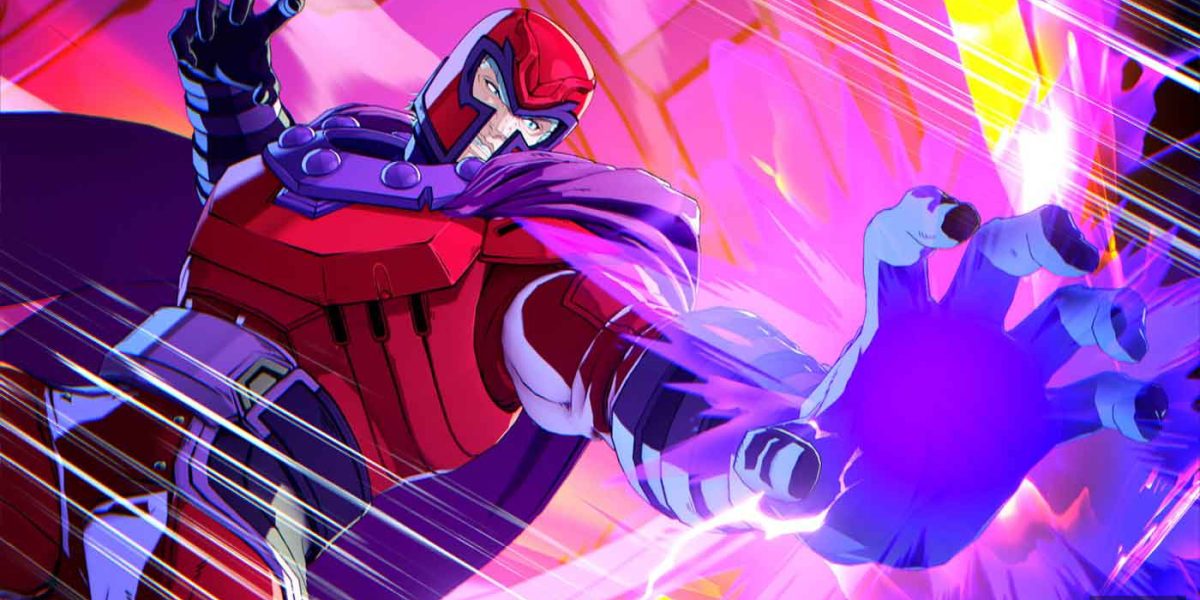
In my latest session, I found myself drawn to Magneto, not only because he stands out as one of Marvel’s most intriguing figures, but also due to the recent narrative developments that have made him even more relevant. Arc System Works has delivered a moveset that truly matches his charisma. At first glance, he fits the classic “keep‑away” mold, peppering foes with magnetic projectiles from multiple angles while comfortably dictating neutral tempo. Yet, after a handful of bouts, it becomes clear that those fireballs are merely the prelude to a far more cunning strategy.
Magneto’s entire arsenal hinges on gathering floating shards of metal that accumulate across the battlefield as he strikes. These fragments are more than mere visual flair—they are tangible resources. The denser the debris, the more potent his supers become, and he can even absorb the junk to don a metallic shell that deflects projectiles and bolsters his attacks. Every move now carries an additional layer of resource management: do you scatter hazards to fuel future offense, convert them into defensive armor, or keep building toward an even more devastating payoff? This elegant design feels like a natural extension of playing Magneto, rather than a contrived complexity.
What truly excites me is how Magneto willingly abandons his patient zoning when the moment arises. Several of his moves yank opponents across the stage, dragging them straight into his waiting fists and opening up nasty strike‑and‑throw mix‑ups. One instant you’re meticulously controlling space, and the next you’re thrust into aggressive grappling, forcing split‑second decisions at point‑blank range. Though I only scratched the surface in my hands‑on, Magneto already feels poised to become one of those characters that players devote hundreds of hours mastering, because each mechanic seamlessly feeds into the next.
If Magneto became my go‑to, Iron Man quickly emerged as the character I’d spend months attempting—and failing—to master. His kit is a stark contrast. Rather than methodically controlling space from the ground, Tony Stark darts around the stage like a billionaire mosquito armed with military‑grade weaponry. Repulsor blasts, chest beams, and delayed Smart Missiles constantly bombard opponents with multiple threats, while his Free Flight ability lets him cancel movement and reposition in ways that make defending feel akin to predicting a fly in a kitchen.
I’ve repeatedly unleashed a barrage of missiles, watching opponents freeze as they scramble to decide which threat to tackle first, only to have me swoop in from a fresh angle while they’re still reeling from the original attack.
What truly captivated me was not the sheer damage, but how Iron Man’s toolkit organically promotes teamwork. His beam assists carve out breathing room, projectile assists maintain relentless pressure, and his mobility opens a plethora of opportunities for teammates to capitalize. Even in my somewhat inept hands, it was crystal clear that Iron Man isn’t merely a powerful individual; he elevates the entire squad.
This observation extended across the entire lineup. Each fighter boasts a distinct identity that transcends flashy animations and signature powers. Ghost Rider’s colossal chain normals dominate vast swaths of the battlefield, Ms. Marvel’s contortions lock defenders into impossible angles, while Storm, Doctor Doom, and Magik each inject their own flavor of controlled chaos.
With only fourteen characters, it’s impossible to form deep opinions on every contender, yet the roster’s diversity is unmistakable. Arc System Works has deftly avoided the pitfall of recycling the same archetype in different skins.
This is particularly heartening given that Marvel Tokon’s success hinges on its four‑character framework.
While the first comparison that springs to mind is Marvel vs. Capcom, a side‑by‑side mental replay reveals that the parallels are surprisingly superficial. It’s not a frantic dance through four health bars while the screen explodes with chaotic action. Instead, each squad feels like a carefully curated toolkit, where assists, ultimate abilities, and team composition carry as much weight as individual execution.
❓ Frequently Asked Questions (FAQ)
What is Marvel Tokon: Fighting Souls Hands and what makes it unique among fighting games?
Marvel Tokon: Fighting Souls Hands is a new fighting title from Arc System Works that blends comic‑book characters like Magneto and Iron Man with a fresh, accessible combat system. Its uniqueness lies in its tight, responsive mechanics that allow casual players to pick up and play instantly, while still offering deep combo chains, assist summons, and ultimate skills that reward strategic thinking and skill progression.
How does the game balance accessibility for casual players with depth for competitive players?
The game achieves balance by providing an intuitive control scheme that lets newcomers enjoy a casual session, yet it layers in complex mechanics such as trigonometric‑level combo timing, assist mechanics, and ultimate skill deployment. These features are revealed gradually, so even after a short play session players can start chaining combos and exploring deeper strategies without feeling overwhelmed.
Are there any potential benefits for the fighting game community from Marvel Tokon's design approach?
Yes, Marvel Tokon's approach could broaden the fighting‑game audience by acting as a bridge between casual gamers and hardcore enthusiasts. By proving that accessibility and depth can coexist, it may influence future titles to prioritize user‑friendly entry points while still offering competitive depth, potentially expanding the community and encouraging players who have drifted away from older series to return.
News Source: Com



Comments
Be the first to comment.