
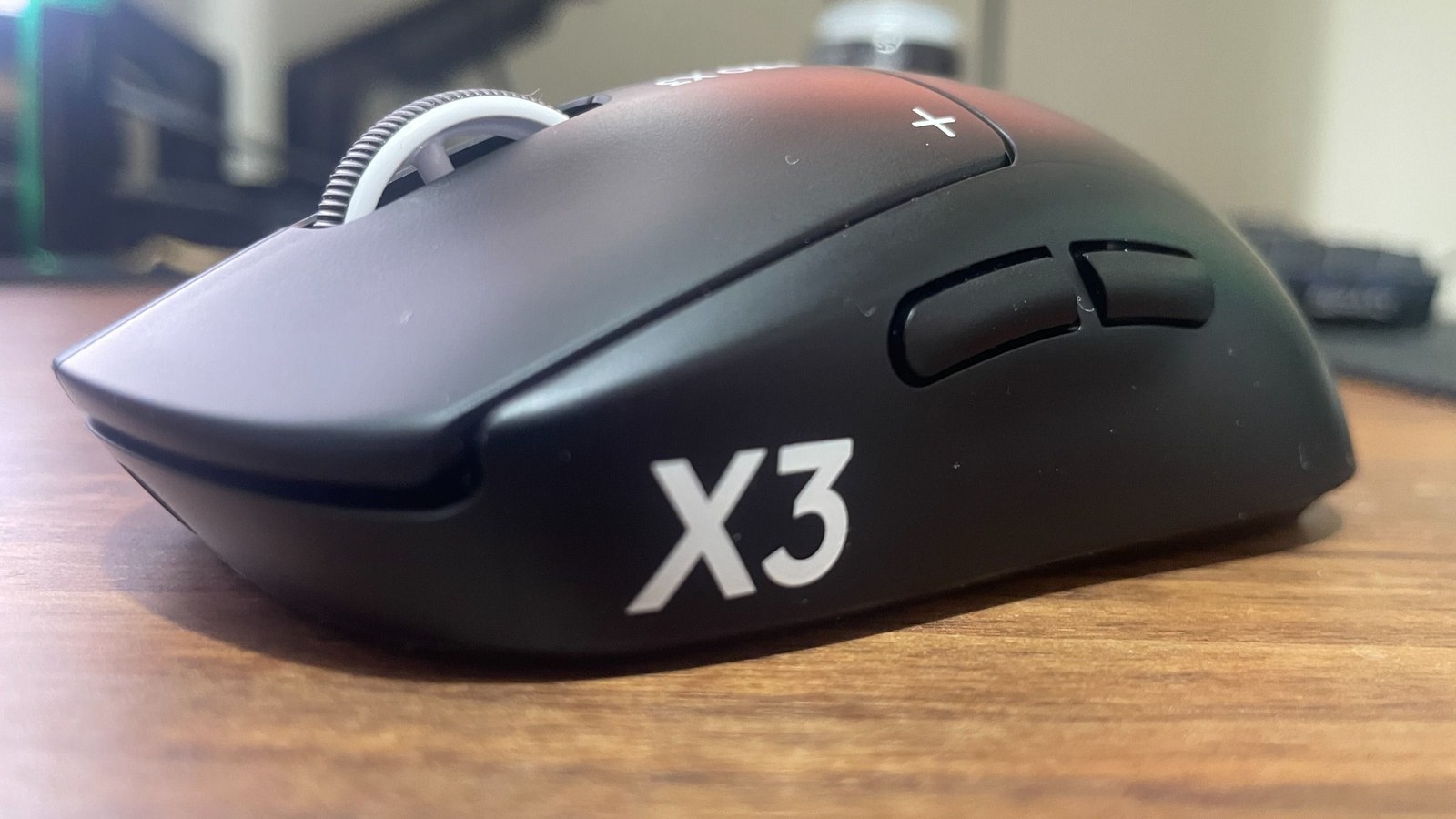
Logitech has released the G Pro X3 Superstrike, a refined successor to the G Pro X Superstrike 2 that fixes the predecessor’s most glaring flaw—its front-heavy balance—just seven months after the original launched. The new mouse retains the revolutionary analogue switches and haptic feedback that made its predecessor a sensation, but adds a more balanced weight distribution and a 50% longer battery life, prompting questions about whether Logitech should have simply waited to launch the improved version in the first place.
When Logitech unveiled the X Superstrike earlier this year, it marked the first time a gaming mouse had made its switches genuinely analogue, pairing that innovation with haptic feedback to simulate the sensation of a physical click. The technology enables adjustable actuation, letting players shorten the distance between deciding to click and the mouse registering the input, with haptics ensuring the click is felt precisely at the moment of actuation. That was the genuinely revolutionary element, and it is the feature the X3 carries forward.
Yet the original was never without its shortcomings. During hands-on testing, the reviewer was thoroughly impressed, but the flaws grew more apparent over time. In terms of shape, weight, side buttons, and scroll wheel, the X3 is essentially identical to the X2. The side buttons remain mushy, the scroll wheel struggles with long-presses, and—specifically in the case of the original Superstrike rather than the Superlight 2—the design is notably top-heavy thanks to its internal components.
The most widely felt problem was the front-heavy weighting, which can introduce drag and make the mouse feel less smooth when picking it up and moving it. For a premium mouse aimed squarely at competitive gamers who demand precise balance, this was a significant issue for many users, even if it never bothered the reviewer too much personally.
A Small Step, a Big Price Tag
Stepping up to the X3, Logitech has addressed the weighting problem while shaving a couple of grams off the overall mass—dropping to 57 grams outside of Europe, though it remains 59 grams in Europe. Battery life has improved by roughly 50%, reaching 135 hours at 1 kHz polling, assuming a clicking cadence of just shy of once per second. The sensor has also received a modest upgrade, with a bump to 48K DPI from the X2’s 44K, along with increases in acceleration and maximum speed, though nothing transformative.
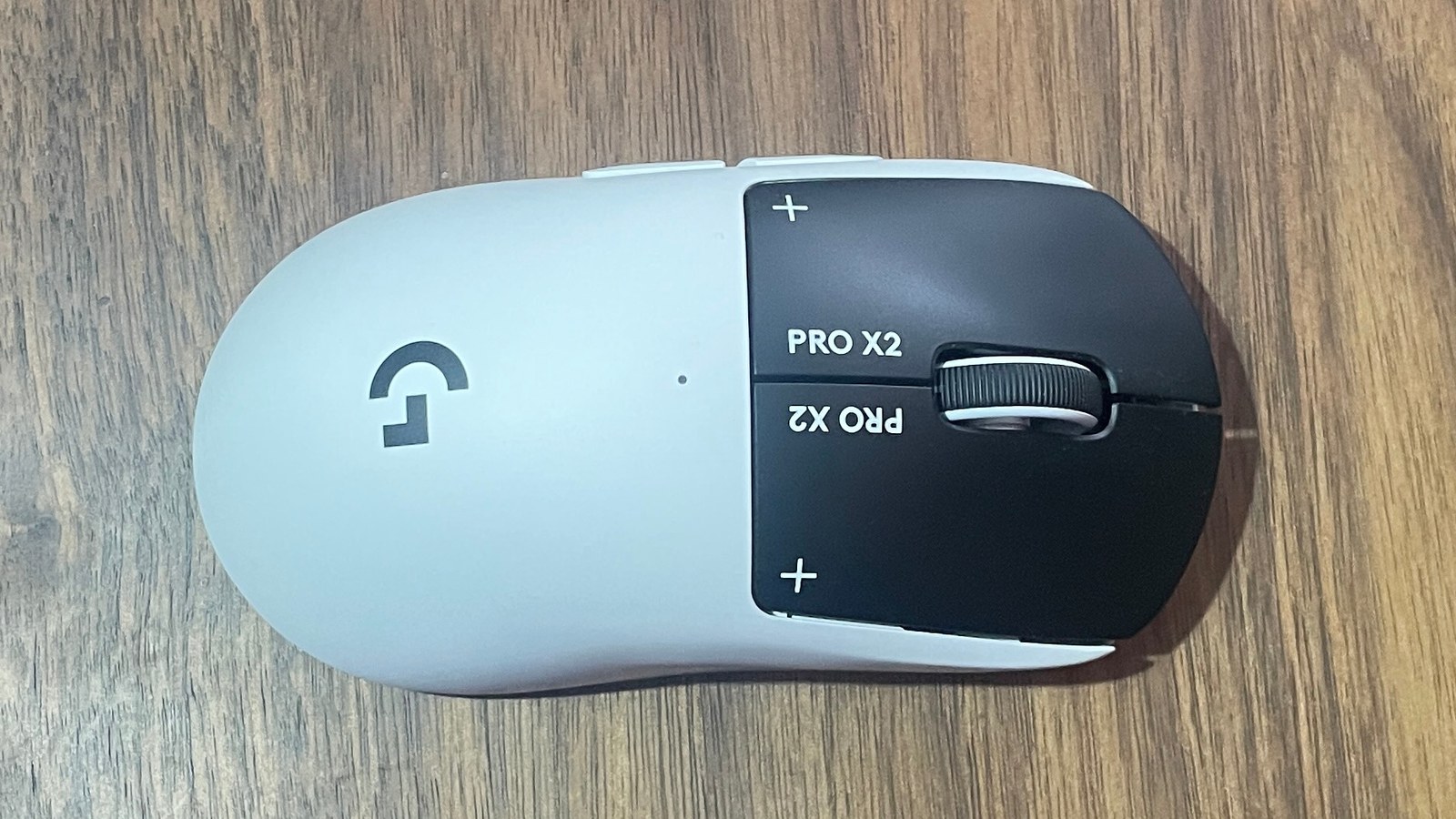
In terms of feel, the X3 is almost indistinguishable from the original X2 Superstrike—except for the more balanced weighting. The reviewer has used it for several days and frequently forgets it is not simply the X2, with the improved balance only occasionally registering during work or gaming sessions. The X3 also introduces different colour options: Midnight Black or Magenta Eclipse, a pink-and-black variant. The reviewer expressed puzzlement that the original white-and-black combination is unavailable for the X3, though the black version sits comfortably under the palm.
Ultimately, the X3 arrives just seven months after the X2’s launch, costing an extra $20 at $200/€190, and while it is a better mouse, it feels like the X2 improved in a couple of simple ways.
The Timing That Bitter Taste
It is the timeframe that makes the release difficult to swallow. Logitech must surely have known back in February that a new version was on the cards, which—if true—means it was hyping up and selling a very expensive mouse it knew would very soon be superseded by a slightly more expensive one that essentially matches it while eliminating a couple of pain points. It is a better mouse, but it feels as though Logitech could have waited a few months to deliver a more well-rounded product.
Logitech G’s Head of Engineering Regis Croisonnier addressed the reasoning behind the rapid release:
“Usually when you start to talk about the technology or prototype, between the time we have the prototype and the time we implement it in a product, I would say the average time is between two to three years. Here, we knew we had a golden nugget in our hands, right? We wanted to move fast, so we took all the shortcuts we could.”
Regis Croisonnier, Logitech G Head of Engineering
According to Croisonnier, the company believed it was important to get the analogue switch technology into the Superstrike as quickly as possible, even at the cost of a more polished product a few months later. But that leaves a lingering question for the community: what about the players who bought the X2 Superstrike and may now be kicking themselves for not waiting a little longer?
Looking Ahead
Logitech has emphasized that the technology is bleeding-edge, so buyers of the X2 presumably had some inkling they were paying a premium for innovation that could become cheaper or migrate to other mice before long. The Chinese market, in particular, is never far behind cloning popular designs, and other analogue switch technology has already begun to surface. Still, that does not mean the company could have foreseen an essentially finished X2 arriving just seven months later.
Where the line would be drawn is difficult to say. A release a year, or a year and a half later, might have felt more palatable. That is not to suggest Logitech should have delayed the X3, but perhaps it could have skipped the X2 entirely and waited until the product reached its current form.
Whatever the rationale, and however defensible it may be for Logitech, it does not quite erase the bitter taste. The X3 Superstrike is a better mouse, but the question of timing remains the one thing standing between it and universal acclaim.



2 comments
[…] Article: Logitech’s G Pro X3 Superstrike Renders Its Own Predecessor Obsolete in Seven Months → Kaynak: PC Gamer […]
[…] Article: Logitech’s G Pro X3 Superstrike Renders Its Own Predecessor Obsolete in Seven Months → Kaynak: IGN […]