
Japanese developer Level-5 issued a public apology and detailed explanation on X/Twitter after fans identified what they believed to be generative AI in footage from its recent showcase, turning excitement over the studio’s long-awaited comeback into one of gaming’s most heated controversies this week.
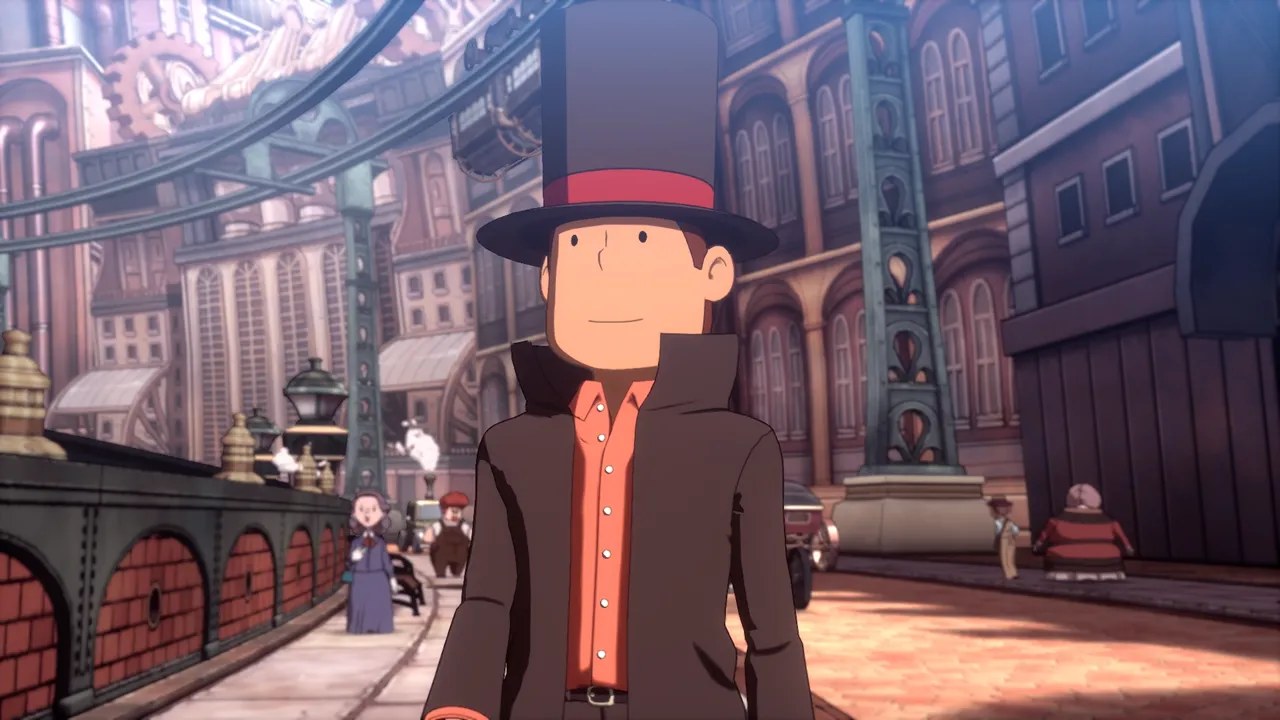
The backlash followed “Level5 Vision 2026 II: Dreams,” a roughly 50-minute presentation aired earlier this week that offered first looks at upcoming titles including the Professor Layton remake, Yo-Kai Watch 2: Haunted Domain, and DecaPolice. Rather than focusing on the games themselves, viewers spent much of their attention scrutinizing background scenes for what they suspected were multiple examples of AI-generated imagery.
A Showcase Overshadowed by Concerns
The controversy quickly spread across social media as players compared original artwork with new footage, flagging inconsistencies and strange details. Some pointed to changes in character appearances, questioning whether figures like Nathan from Yo-Kai Watch had been altered through generative tools. The debate centered less on the quality of any single game and more on the fundamental question of whether Level-5 had crossed a line.
“I was SO excited when Level-5 announced their big comeback with Professor Layton, Decapolice, Yo-Kai Watch, and more,” one fan wrote. “But seeing this much blatant genAI being used across their games… yeah, this ain’t it.” Another added: “You were a beautiful studio. Now you are nothing more than a disappointment to us. We don’t want this AI st.”
The CEO’s Response
Akihiro Hino, Level-5’s president and CEO who hosted the showcase alongside his own animated avatar, took to X/Twitter to address the growing backlash directly. His message served as both an apology and a defense of the studio’s practices, confirming that Level-5 had indeed used generative AI for certain aspects of development.

I described Level-5’s heavy use of AI as “experimentation with the latest technology,” adding that the team “sincerely apologizes to anyone who found this off-putting.” However, please be assured that all elements defining the appeal and individuality of our released titles—such as the scenario, character designs, and foundational settings—are created entirely by human hands. We utilize AI primarily to streamline the process of digitizing human-created assets; for instance, accurately converting original artwork into 3D polygon models.
Akihiro Hino, Level-5 President and CEO
Hino argued that time saved through AI-driven efficiencies had allowed creators to focus more on “the true essence of creativity,” insisting the finished versions of games like Professor Layton and the Curious Village would still please fans. He revealed that part of the reason for leaning heavily on generative technology this time was a desire to shrink development cycles for major titles from five years down to two.
Fanbacklash Deepens
The explanation has done little to calm an already frustrated community, with replies continuing to criticize any use of generative AI during production. One popular response argued that the technology relies on stolen artwork: “Generative AI is trained on the stolen works of countless artists by tech companies to profit off their work, with the intent of replacing artists. By using it you replaced artists.”
Others emphasized creative quality over speed. A post written in Japanese resonated with many fans: “I believe the human heart matters more than speed to market; surely it is better to take five years without using AI. If even a single asset is created using AI, the nagging worry—’Is this image, piece of music, or line of dialogue made by AI or a human?’—would never go away. Isn’t preserving that trust the most important thing?”
Looking Ahead
Hino did not outline a specific plan for how Level-5 will adjust its development approach going forward, instead framing the situation as “a learning opportunity for the future.” He encouraged fans to look forward to the studio’s next presentation.
For now, the studio remains committed to its upcoming slate. Professor Layton and the Curious Village, a remake of the original 2007 game, is slated to arrive on PC and consoles in 2027. Meanwhile, another new entry in the series, The New World of Steam, is due out this December.























1 comment