

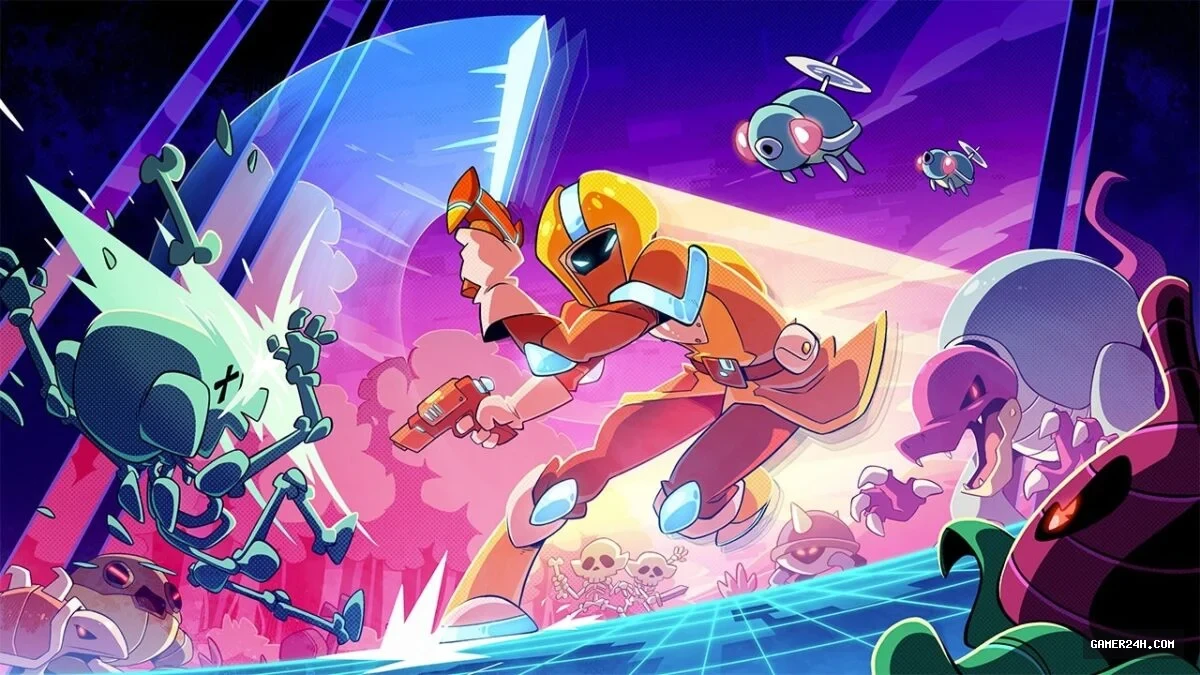
Chivalware is a compact roguelike that blends tile‑matching mechanics with real‑time combat, letting players chain matches to charge powerful attacks and outmaneuver foes. Its polished visuals, pleasant soundtrack, and razor‑sharp gameplay loop evoke a mash‑up of Mega Man Battle Network and Shovel Knight Pocket Dungeon, and the demo released on Steam this week has already won me over.
Battles unfold on an 8×4 grid split into two halves. Your side is populated with squares representing distinct weapons and abilities. By linking three or more identical squares, you trigger a charge that fills your meter. Once full, you can unleash a devastating attack on enemies. The system starts off approachable, but as the battles grow frantic and your build becomes more intricate, the pace spikes dramatically.
Between skirmishes, the game follows classic roguelike conventions: you pick up power‑ups, choose the next room, shop for upgrades, and ultimately confront a formidable boss. While the arsenal of weapons and perks offers some variety, the core match‑3 mechanic remains largely unchanged, which keeps the experience from evolving into something even more compelling.

The title is slated for release by the end of 2026. It’s worth noting that Regal Pigeon is not a newcomer; the developer previously launched the 2D top‑down bullet‑hell roguelike Neophyte in Early Access. Neophyte, a similarly stripped‑down title, garnered praise for its $3 price point, though it recently faced a wave of negative reviews after Regal Pigeon announced it was moving on from the project.
Although Neophyte outperformed the developer’s expectations in its debut, the sales figures fell short of what would be required to maintain ongoing support. Coupled with a codebase that proved difficult to extend—leading to frequent crashes and bugs—the project’s future was jeopardized.
Consequently, the developer has had to take on additional work to cover living expenses, leaving little bandwidth to continue refining Neophyte.
News Source: Kotaku
Have thoughts, questions, or benchmarks on this topic? Join the discussion on our forums.
Join Discussion ➔






















Join the conversation