

Lauren Morton
When my party approached Redcliffe Village in Dragon Age: Origins, my reluctant sidekick Alistair stopped the group for a big confession about a secret he’d been keeping from me. I finally realized how massive and complex the story was, how many contingencies had been planned, written, and voice acted. That’s the moment I knew I wanted to join the games industry. After BioWare’s closure was announced this week, I reached out to other industry professionals to share their memories of the BioWare game that led them into their careers—some at BioWare itself.
Early BioWare
(Image credit: BioWare)

Chris Tihor
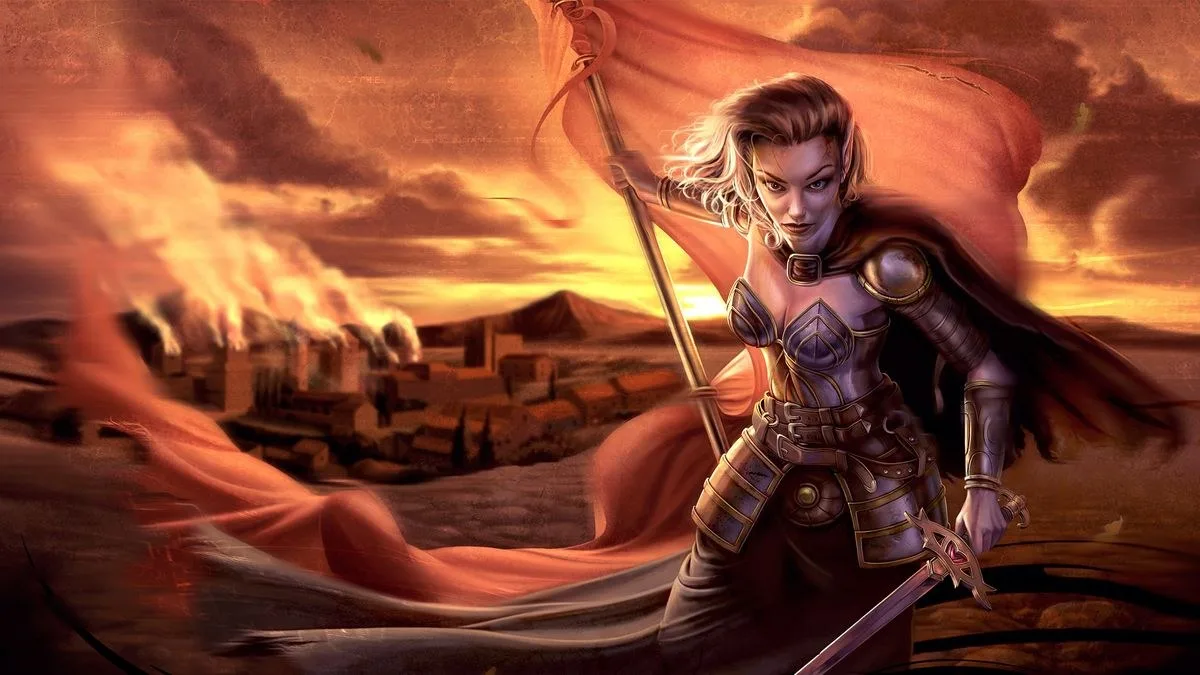
Back in the early 2000s, when I was just starting my game writing career, I was a huge fan of Neverwinter Nights. I heard that BioWare was running a NWN writing contest with the prize being a chance to work for them, and I thought “Why not?” Although I did not win the big prize, I did place 2nd in the community vote category. I’m forever grateful to BioWare for giving me the opportunity to put my work in front of so many supportive players. The encouragement I felt gave me the confidence to successfully pursue this career that I love.
Luke Scull
It was actually Jade Empire that made me think “I want to be a game designer.” Watching the credits roll, I was astonished by the plot twists and cinematography and music, and how the overall experience (which certainly wasn’t perfect from a gameplay perspective, looking back) ignited the feeling in me that I had just witnessed a kind of magic that could not be replicated in any other medium. I actually applied for a Senior Writer position at BioWare a month or two later. I was nowhere near ready for such a role and thankfully didn’t get it—but, for the first time in my life, I had felt a calling.
Neverwinter Nights provided a toolset to create my own stories, and in doing so, I learned that I possessed some rough degree of talent. In the crucible of the Neverwinter Vault and the judgment of my peers, I sharpened that rough talent into something more refined until I was given my very first professional game contract by Neverwinter Nights lead designer Rob Bartel. That led to me joining Ossian Studios, eventually going on to write a successful fantasy trilogy, and of course, eventually coming full circle and returning to Neverwinter Nights Enhanced Edition to continue the story of the OC.
Star Wars: Knights of the Old Republic
(Image credit: BioWare)
Chris Hepler
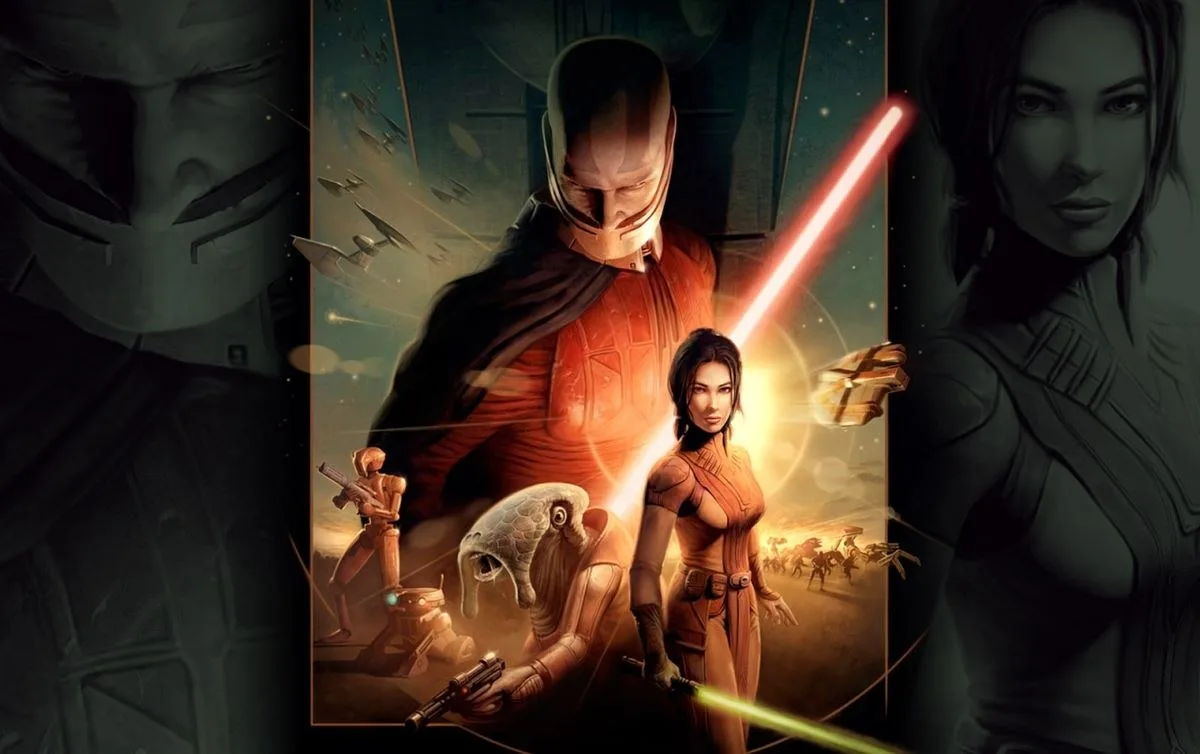
KotOR: Even more than the reveal, talking Evil Bastila down. Her lines about how Jedi must not have attachments because “there is no emotion, there is peace,” but her love for me transcended those rules: nothing made her feel more safe and at peace. It was 2004-ish and I thought it hit harder than the stories Lucas was telling with the prequels. And KotOR did what no movie could do: The player completed the story. Was the past too powerful, or was redemption possible? My wife and I, a screenwriting team back then, applied to be writers at BioWare at GDC 2005. We started work late September.
Lisa Schaeffer
BioWare entered my life alongside an Xbox and a selection of video games I inherited, including Star Wars: Knights of the Old Republic. KotOR, and its sequel, Obsidian’s The Sith Lords, unlocked in my mind that games could impact you beyond what’s on the screen. Hope, redemption, hurt, conflict, an epic story about choices and change and living through the consequences not just for Revan or the Exile, but their companions and the world around them. I made it my goal to help share those stories. I still want to.
Claire Sharkey
The reveal of Revan in Knights of the Old Republic put me on the path to writing. I wanted to write something that would make someone feel true shock, but in that wonderful way that doesn’t kick them out of a story and makes them feel like a real character in a world being greeted with a huge revelation that impacts everything they knew.
Justin Smith
I remember playing Star Wars: Knights of the Old Republic in high school in 2003 and reaching a point where I wanted to play through the entire game again just to see how different dialogue choices could change the story and my relationships with other characters. That curiosity about choice-based storytelling sparked my passion for gaming and eventually led me to work at EA in 2010. I have been launching games through influencer marketing ever since.
Robert Arzola
Star Wars: Knights of the Old Republic was the game that got me into writing music in general and in games. When I started making my first of many characters in the series, the music playing, the first choices for my character, it all felt massive. It was an epic moment in my life because I thought, “I want to do this. I want to write music for games like this.” I still hum the music from that moment and the series. It’s basically a core memory that lit the spark that propelled me to where I am now.
Dragon Age
(Image credit: BioWare)
Aysha U. Farah
In the quest “Bait and Switch” from Dragon Age 2, you check your mail at your house and seem to get a simple fetch quest. When you get to the location, you find the guy you’re supposed to be meeting is in the process of being killed by a gorgeous elf with glowing tattoos. The fact that a major (and my favorite) character in the game was introduced by a missable quest you triggered by checking the mail made me feel like the world in DA2 was infinite, and anything could happen. It’s what really made me say “I want to do this for a living.”
Ellis Devereux
It was right at the beginning of Dragon Age: Origins, battling darkspawn at the Tower of Ishal—where you lose. All hope is gone, but you have to pick up the pieces and save the world. This was the first time I felt powerless in a game, which was groundbreaking for me, but it was also like the game itself was trusting me with its world, asking me to try my best while knowing things might go wrong. I want to share my worlds with players too, and be with them when they find hope and agency in the darkness.
Mass Effect
(Image credit: Electronic Arts)
Alex Teeple
Loading up Mass Effect 1 for the first time, you’re greeted not by a bombastic action track, but a slow, somber theme over a quiet picture of Earth. Vigil’s Theme. I was just a kid, but in that moment it hit me hard: Games weren’t just distractions… they were as much a way to evoke emotion as movies or books. That one song told me that there was an entire world out there, stories you could explore and experience. And that’s when I knew that there was nothing else I wanted as a career; I wanted to tell those stories.
The sniper scene in Mass Effect 3 rewired my brain chemistry. A day before the climactic battle, and I’m drinking beers while having a shooting contest with Garrus, a character who’s been my best friend since the first game. My instinct was to bullseye every shot, when I realize one or both of us will be dead by tomorrow. So when the option to intentionally miss the last shot appeared, I didn’t hesitate to mess it up. I put the controller down and realized I needed to create moments like that. To give players something akin to what I had just experienced.
My distinct “ah-ha” moment from Mass Effect occurred when I entered an elevator on The Citadel. I remember thinking that the floors were so massive and I wondered how they were doing this without a loading screen. I had played plenty of Kingdom Hearts and Final Fantasy games for the PS2, and they were littered with them. As Wrex and Ashley Williams exchanged barbs on one elevator trip, the thought occurred to me and I googled to confirm: these were the loading screens.
What astonished me was not only was this an immersive way to handle loading screens, but that there were so many different dialogue options in these elevators. I would cycle through different character combinations and see what popped up. They very easily could have had one or two different dialogue options, but chose to go above and beyond and that’s always impressed me. I have never thought about games the same since.
(Image credit: EA)
It may surprise people to learn that what changed my perspective on gamedev was a scene from Mass Effect Andromeda. Liam puts together a friendly football (soccer) match at Prodromos with the Initiative colonists and their angaran neighbors. It’s not a major scene, being less than two minutes in length. It’s not just fun, but inclusive. No grand battle of good versus evil. No fighting literal titans with guns. Just humans and aliens playing a sport together, and no one bats an eye. A future where everyone has a place, even if they’re a different species or from another galaxy.
I grew up obsessed with BioWare, especially Dragon Age and Mass Effect. Being able to shape those stories, from big moral decisions and romances to sidequests and haircuts, made them feel personal and mine. I remember playing Mass Effect 2’s final mission for the first time, and being amazed (and horrified) by the consequences of my actions. I was obsessed with exploring every choice and outcome, because it all felt so much more personal than any film or book. I think trying to understand that magic drove me to study video games and their impact on players, eventually leading to my career in video games communications. I owe BioWare a lot.
Mass Effect. Rest assured that the experience of exploring a brand-new galaxy with characters that will live with me forever, alongside THOSE graphics, means it will always be one of my favourite games. Specifically, arriving and exploring the Citadel: learning about new alien species, the Krogan wars and the human conflicts, was some of the best lore discovery I have experienced. Match that with an unforgettable soundtrack that pulsed from the Presidium down to the nightclubs, exploring that area for the very first time inspired me to want to contribute to the industry that helped make that moment for me.
I purchased a copy of Mass Effect 2 some months after release, when I was 12 years old. I became utterly immersed in the game and fell completely in love with the universe, the narrative and the characters. I became obsessed, far more engrossed than I had been with any media before. From that point on, I knew I wanted to work in games in some shape or form, and I’ve never looked back. It’s impossible to overstate how much of an impact BioWare games have had on my life in many regards.
Have thoughts, questions, or benchmarks on this topic? Join the discussion on our forums.
Join Discussion ➔






















1 comment