

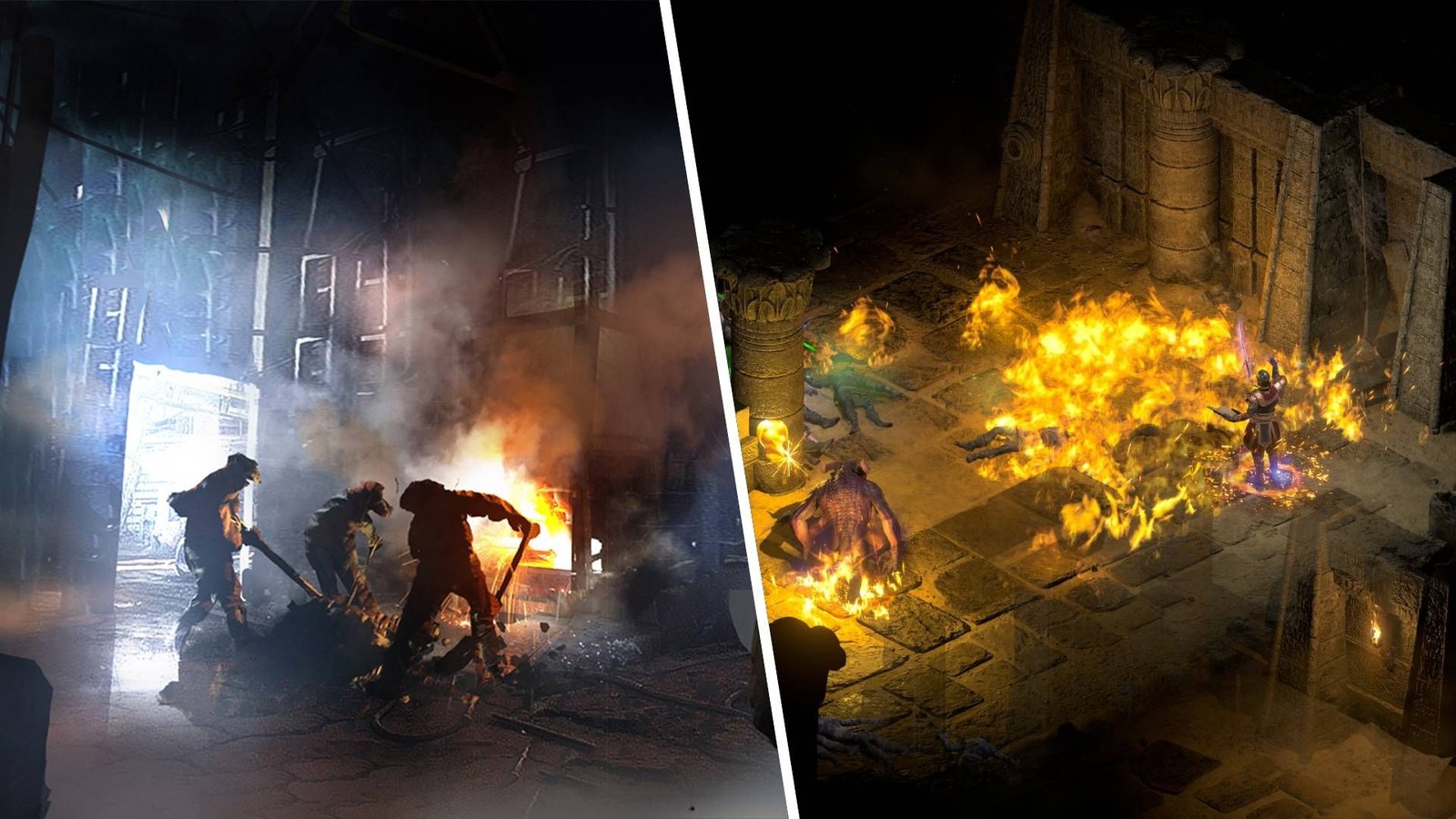
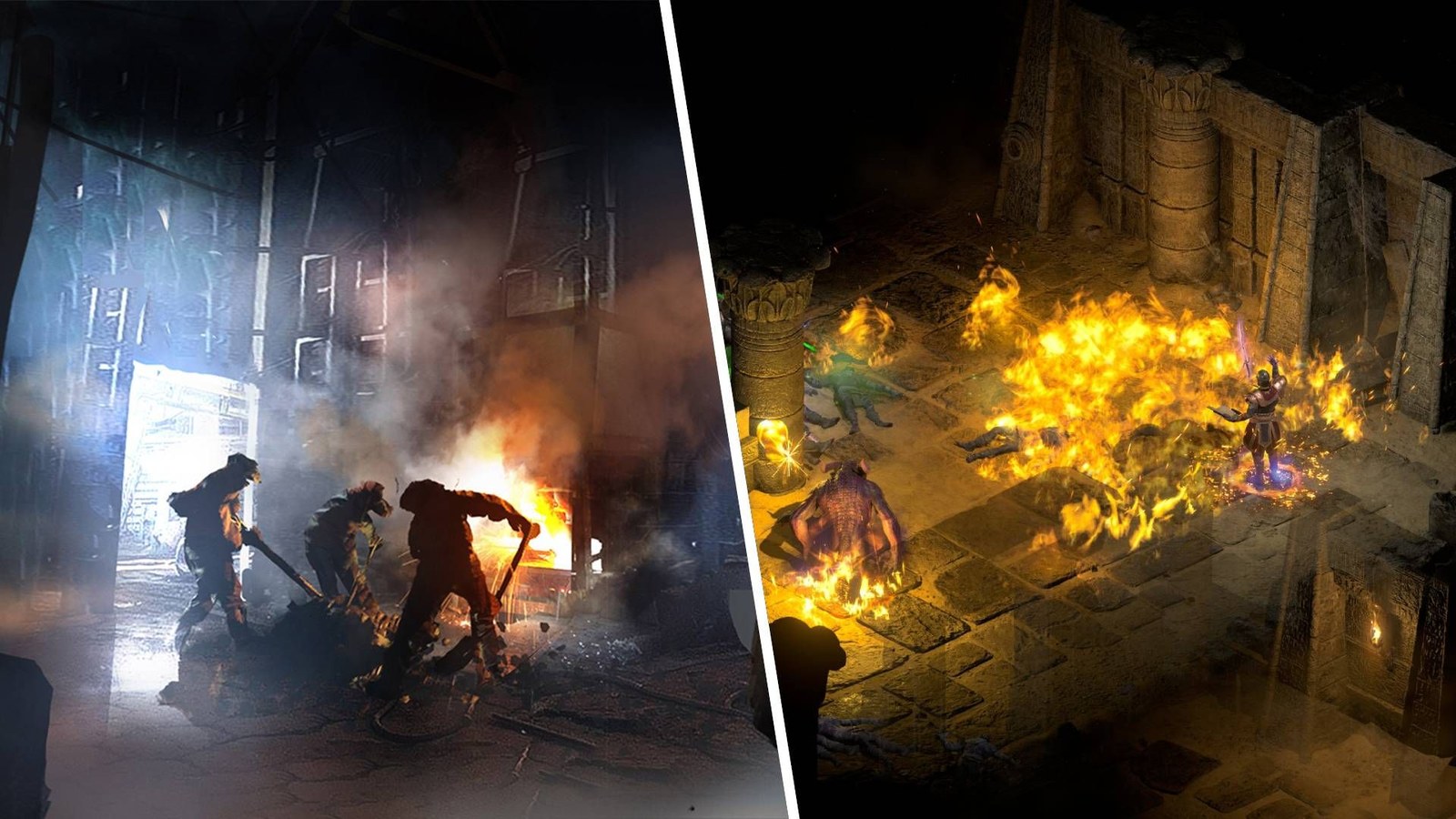
A new feature from PC Gamer has traced a surprisingly long line of causality connecting the soot-choked factories of 18th-century Britain to the meteor spells and clouds of daggers that players have been unleashing on their enemies for decades. In its “Causality Chain” series, the outlet argues that every time a gamer casts an area-of-effect ability in titles like Diablo 2 or Baldur’s Gate 3, they are participating in a chain of history that stretches back to the Industrial Revolution and the literary imagination of J.R.R. Tolkien. The piece maps the arc from agrarian Britain through the birth of fantasy fiction, tabletop gaming, and early digital role-playing games, ultimately arriving at the moment players “managed to set fire to five goblins at once and felt quite good about how clever they were.”
The narrative begins with the technological upheaval of the late 18th century, when advances to the steam engine and the substitution of coke for charcoal in blast furnaces transformed daily life across Britain. During this era, skilled craftsmen were replaced by machine tools and the factory system became widespread. The article then pivots to the literary consequences of that industrialization, using Tolkien’s own childhood as the crucial turning point in the causality chain.
From the Shire to the Black Country
In 1896, the four-year-old Tolkien moved with his family from Birmingham to rural Worcestershire, where he discovered a love for the English countryside that would later inform his writing. His aunt’s farm, Bag End, gave its name to the Baggins’ home, while places like Moseley Bog in Shire Country Park inspired the Old Forest of the Shire. Tolkien would later describe the area to a journalist as “a kind of lost paradise,” an idyll that had survived industrialization—though, as he warned, not for long.
That transformation is captured in the term “the Black Country,” which still describes the soot-darkened Midlands to this day. Caitlin Moran’s novel How to Build a Girl features a working-class Midlands man explaining the change to his literate daughter: “When I was a kid, you’d come up this hill, and all of that – and he gestures to the valley in front of us – was on fire. The foundries and the forges and the ironworks. The potteries. The whole place glowed – sheets of sparks, fifty foot high. The fires never went out. It looked like hell. Mordor. That’s what your Lord of the Rings is about.”
The Devilry of Saruman
When The Lord of the Rings was published in 1954, Tolkien’s wizards embodied his feelings about industrialization. Saruman, who turns to evil, constructs smoke-billowing factories around the tower of Orthanc and later in Hobbiton itself, and uses magical fire to create an explosive substance capable of knocking down walls. Meanwhile, Gandalf uses his magic to create pretty fireworks—though he is capable of far more, telling the Balrog that he is “a servant of the Secret Fire, wielder of the flame of Anor.” Yet time and again he prefers subtlety to explosions.
The Devilry of Saruman
Fire of Wrath
Perhaps because Gandalf uses magical fire so rarely and so dramatically, it ends up being cemented as a defining trait in the mind of at least one wargamer. Leonard Patt’s Rules for Middle Earth, developed for the New England Wargamers Association, were published in their zine The Courier in 1970 and influenced game designers for decades to come. Patt’s description of the “fire ball” is the first depiction of a magical spell with an area-of-effect rule, and incidentally the first appearance of a saving throw:
Backdraft
Two years later, Dungeons & Dragons was published by TSR, built on the fantasy supplement for the Chainmail wargame by Gary Gygax and Jeff Perren, which in turn built on Patt’s Rules for Middle Earth. The fireball spell has a burst radius of 2 inches in original Dungeons & Dragons, which translates to 20 feet if you are not playing with miniatures, and will “conform to the shape of the space,” meaning it can blow back if cast into a small dungeon room—a rule that, the article notes, “led to the death of many 5th-level magic users.”
Screen Burn
In 1975, university student Daniel Lawrence converted D&D to digital form on a PDP-10 mainframe computer. Initially called DND, though later renamed Telengard for a commercial release, it is one of the first videogame RPGs and it does contain a fireball spell. There is no area of effect, however, as all combat in DND/Telengard is one-on-one.
Friendly Fire
By the 1980s, early videogames simulated area-of-effect in various ways. The Wizardry games have spells that target half or all of the enemies in a given group, and Ultima 3’s noxum spell lets you cast multiple fireballs, each targeting a separate individual. In 1985, Ultima 4’s tremor spell affects every enemy on screen. Wizard’s Crown in 1986 has a fireball that affects enemies in the squares around its target, and 1988’s Ultima 5 adds cone-shaped spells.
That same year, SSI picked up the licence to make official D&D games and released Pool of Radiance. The first RPG in the Gold Box series, it uses the Advanced Dungeons & Dragons 1st edition rules, complete with a true area-of-effect fireball spell that can easily cook your own party members if you are not careful—just like Tolkien warned us would happen.
Looking Ahead
While the article is a work of cultural history rather than a product announcement, its central thesis resonates with players of modern RPGs who have grown up expecting spells to detonate in a radius rather than strike a single target. The chain of causality PC Gamer has assembled—steam engines, Tolkien’s childhood, wargaming rules, and the digital conversion of fantasy—ultimately explains why the area-of-effect spell remains such a beloved and dangerous staple of the genre. As the outlet’s own framing suggests, the next time you unleash a cloud of daggers or a meteor on a horde of enemies, you are not merely being clever. You are tipping a domino that has been falling since the Industrial Revolution.



2 comments
[…] Article: How the Industrial Revolution Taught Video Games to Burn Enemies in Bunches → Kaynak: Polygon […]
[…] Article: How the Industrial Revolution Taught Video Games to Burn Enemies in Bunches → Kaynak: Polygon […]